On a chilly afternoon in Kabul I pulled up to a small auto repair shop to check warning lights that flashed across my dashboard. The shop’s balding, middle-aged mechanic wiped his hands on an oil-stained rag, strolled over and leaned into my car’s engine.
As we chatted over the clatter of tools, he told me he had fought as a soldier for the U.S.-backed government in some of the bloodiest battles of the long, failed war to prevent the Taliban’s return to power.
Moments later, the mechanic stepped away to inspect another car driven by a Taliban official who wore a military-style jacket over the traditional long Afghan tunic. Five years ago these two men might have tried to kill each other. Now, they stood together over an open hood, calmly discussing an engine problem. Neither mentioned the war; neither needed to.
That moment last winter offered a glimpse under the hood of today’s Afghanistan — the war is over now, and Afghans are getting on with the prosaic work of reconciling and building a future for themselves.
Western strategy has not caught up with this reality, and five years after the U.S.-backed government finally collapsed with the fall of Kabul on Aug. 15, 2021, that strategy has become a relic.
The United States has frozen billions of dollars in reserves badly needed by the country and sanctions have largely cut off Afghanistan from the international banking system, making it harder for families overseas to send money home. International aid has fallen sharply and U.S. assistance inside Afghanistan ceased altogether in 2025.
Outrage over the Taliban’s authoritarian rule and denial of basic rights for women is justified. Isolating the country only punishes the millions of ordinary Afghans who are trying to put old divisions aside and move forward.
My own family’s history has been bound up in the struggles that have shaped Afghanistan — and in their consequences.
My grandfather, Gulbuddin Hekmatyar, led one of the most powerful mujahedeen factions in the war against the Soviet-backed regime in the 1980s. He fought rival forces during the civil war of the 1990s, and he later led an insurgency against the U.S.-backed government before a peace agreement was signed in 2016. My father, Ghairat Baheer, was imprisoned multiple times by the Soviet-backed government and was a top official in my grandfather’s party. He would later spend nearly six years in American detention.
Many in my generation are determined to leave behind the animosities that defined our forebears’ lives.
After being raised overseas, I returned to Afghanistan in 2018. I am among a network of younger Afghans intent on contributing to the future of the country we see as home. Both before and after the Taliban returned to power, I have spoken publicly and written about the need for Afghan reconciliation and for the Taliban and the international community to prioritize the welfare of the Afghan people. Like many others, I have advocated for the right of girls to receive an education, and I teach young Afghan women and men about civic engagement.
This is difficult, risky work.
In 2022, I was summoned by the Taliban. I arrived at an office where a table was arranged with printouts of my social media posts, interviews and articles. Taliban officials accused me of poisoning society and told me to sign a confession. I refused, arguing that people like me only had Afghanistan’s best interests at heart. After several hours, I was abruptly released without explanation.
Two years later, a young Talib who followed my work on social media invited me to another meeting. Some of the same officials who had interrogated me previously were there, but the mood was different. Over tea, we spoke candidly about education, governance and the country’s future. Though we still disagreed on many things, I was no longer treated as an enemy. The passage of time, the persistence of those pushing for change and the scale of the country’s challenges seemed to have made them more willing to listen. We were like the mechanic and the car owner, discussing a common problem.
This is something the West does not see — every day, Afghans push against the boundaries imposed upon them.
Despite severe restrictions, privately owned media outlets still operate, employing female journalists and sometimes covering sensitive issues and challenging Taliban officials. At one point, male TV presenters wore masks in solidarity with their female colleagues in protest against mandatory face coverings for women. Female doctors, nurses and midwives continue to provide essential maternal, obstetric and reproductive health care for women. And courageous educators are defying the Taliban ban on girls’ schooling after sixth grade to teach women and girls online and through other informal means.
This is possible partly because the Taliban are not the insular monolith they may appear to be. Like any political movement, there are factions that don’t agree. Some of the most influential figures in the movement are unhappy with the country’s direction, have spoken openly about the need to educate women and girls — many of them have expressed worry about the impact on their own daughters — and favor greater engagement with the United States.
Whether any of this will lead to lasting change anytime soon is unknown. What’s clear is that isolation and shrinking international aid make it harder for Afghans to make use of the limited but meaningful space they have created.
Funding shortages forced more than 440 health care facilities to close or reduce services in 2025. And after the United States terminated aid, U.N. agencies reduced their operations. Such policies are holding back Afghanistan’s economic recovery.
Turning this around doesn’t have to mean officially abandoning Western principles and recognizing the Taliban. Western governments can restore or expand support for health care, education and livelihoods through the U.N. and other independent organizations. The World Bank already does this, funding a range of programs, bypassing the Taliban government.
However painful the U.S. withdrawal remains for Americans, it’s time the United States and other countries turned the page and supported the efforts of ordinary Afghans to rebuild their lives.
Obaidullah Baheer (@obaidullabaheer) is an adjunct lecturer at the American University of Afghanistan, which has operated online since 2021. He is a Ph.D. student at the New School.
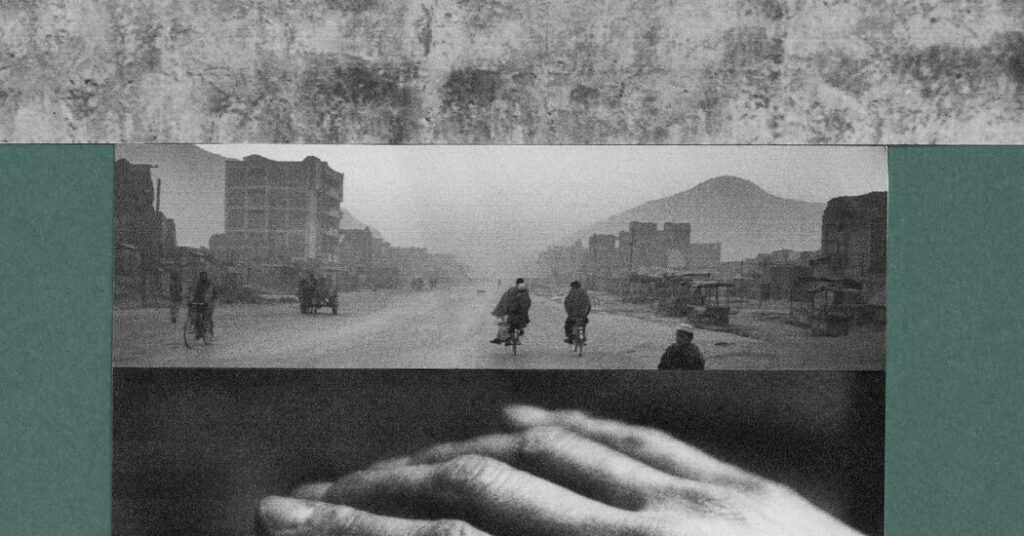
Source photographs by Derek Hudson, Laurent Hamels, and U.S. Army via Getty Images.
The Times is committed to publishing a diversity of letters to the editor. We’d like to hear what you think about this or any of our articles. Here are some tips. And here’s our email: [email protected].
Follow The New York Times Opinion section on Facebook, Instagram, TikTok, Bluesky, WhatsApp and Threads.
The post U.S. Policy on Afghanistan Is a Relic of the Past appeared first on New York Times.