Adam Marcus, senior editorial director for primary care at Medscape, and Ivan Oransky, editor in chief of the Transmitter and a journalism professor at New York University, are the co-founders of Retraction Watch.
The resignation of Jason Arday from the University of Cambridge amid credible accusations of plagiarism and other potential misconduct has critics of diversity, equity and inclusion saying “we told you so.”
Arday, 41, is a Black professor of sociology and an apparent fabulist. (See his claims of running 30 marathons in 35 days and raising $7.4 million for charity.) Yet his case says less about the supposed evils of DEI than its opponents would like to believe. What’s happening is what one might call “Occam’s racism,” the lazy use of race to explain a truly colorblind phenomenon.
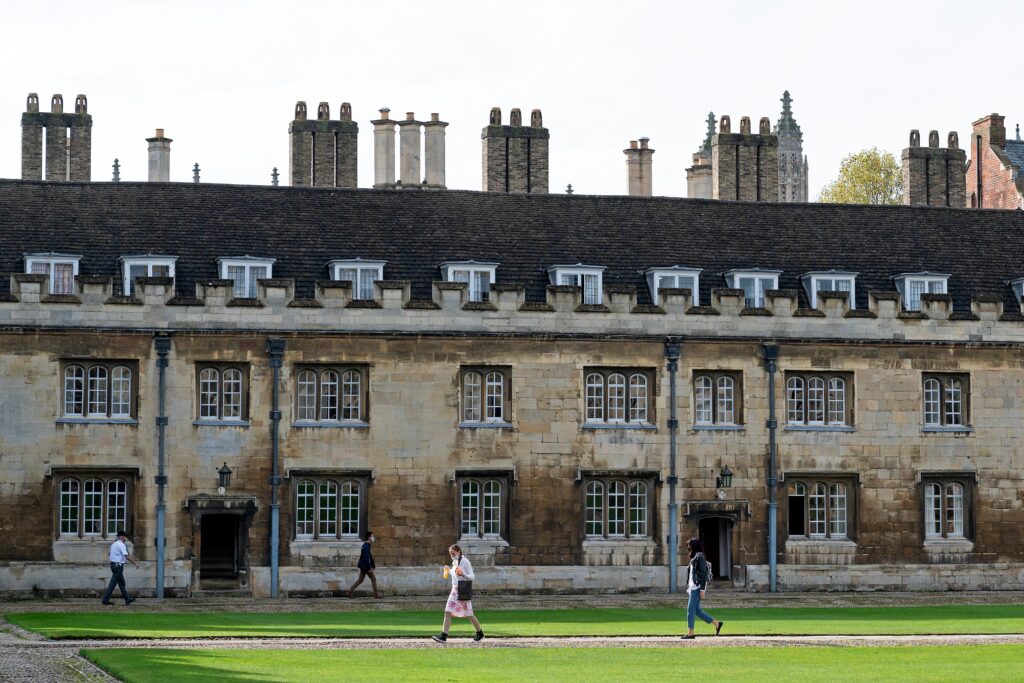
Cambridge clearly failed to vet Arday when it hired him in 2023. Running plagiarism checks is now table stakes for high schoolers. The public should expect the same at the world’s most prestigious universities. The more troubling problem, however, is that such institutions stubbornly protect faculty, regardless of race, even after signs of misconduct have come to light. In the long run, the instinct to deny, deflect and defend not only helps race-baiters in their mission but also corrodes the public’s trust in academia and science.
When Retraction Watch, the news organization we co-founded in 2010, called Cambridge for comment about what one of our reporters and others had found in Arday’s record, a spokesperson said that the professor was a “victim of a vile campaign to undermine his credibility.” Arday, the university added, had been cleared of “allegations of plagiarism regarding his thesis and journal publications.”
Cambridge had been aware of those allegations since at least 2023 but by all accounts punted, deferring any public investigation to Liverpool John Moores University, where Arday completed his PhD. As our outlet noted: The professor, meanwhile, evidently hired a defamation law firm to scare off the Times Higher Education, which in 2025 spiked a comprehensive story about him. A police officer reportedly instructed Jack Grove, a journalist for that site, not to contact Arday again “because it was affecting his mental health.”
Cambridge in recent days learned that Arday’s research contained “impossible” evidence, among other irregularities, and evidently decided it couldn’t withstand the drumbeat of news coverage. The university announced on Aug. 5 that it was opening an investigation. Arday resigned hours later.
That narrative rhymes with the story of Claudine Gay, the first Black president of Harvard University, which initially downplayed allegations of plagiarism in her work. In her case, as in Arday’s, petitions circulated among fellow academics to support her and condemn critics as racist. Gay resigned her position but remains a tenured professor at the university. But if history is any indication, Cambridge and Harvard probably would have dug in just as fiercely had Arday and Gay not been Black.
Consider Paolo Macchiarini, a world-famous surgeon at Sweden’s Karolinska Institutet. The medical school cleared him of wrongdoing in 2015 after several colleagues had raised questions about data fabrication in his work. The institute apparently investigated Macchiarini again only after Vanity Fair painted him the following year as a Lothario, suggesting it took a different kind of bad behavior to convince the university to do the right thing. The institute fired him for misconduct but not before three people on whom he’d performed experimental surgeries died. A Swedish court sentenced him in 2023 to 2½ years in prison for gross assault in those cases.
A more egregious example is that of Anil Potti, who was researching cancer therapies at Duke University in 2008 when a medical student approached the institution with red flags about the integrity of his studies. (Other experts had previously been unable to replicate some of Potti’s findings and published papers stating as much.)
Duke allegedly spurned those concerns and allowed Potti’s trials on patients to continue for roughly two more years, until a publication called “The Cancer Letter” found evidence that he had lied on his CV and grant applications. A federal probe into Potti, who left the university in 2010, eventually concluded that he’d made up data on funding applications — seven years after the initial concerns about him were raised.
As a 2017 report from the National Academies of Sciences, Engineering, and Medicine concluded: “Effective steps on the part of Duke … were delayed for years, and were finally triggered only by the disclosure of Potti’s resume falsification.” But Duke would continue to make similar mistakes in other cases, leading to sanctions by the National Institutes of Health and a $112.5 million settlement with the government over allegations of research misconduct.
Defending the indefensible when a scholar’s record is as problematic as Arday’s may seem absurd. But the reflex is reminiscent of the “noble lies” told during the covid-19 pandemic. Though Anthony S. Fauci and other officials had an impossible task, they didn’t help themselves by speaking in absolutes about such things as the necessity of social distancing outdoors or the effectiveness of new vaccines.
We see now the consequences of those missteps. Members of Congress have long tried to score political points by making researchers look out of touch. William Proxmire created the Golden Fleece Award in 1975 to highlight what he considered wasteful spending on meaningless science. Today, Republican lawmakers aren’t satisfied with ridicule or even a few clawed-back grants. They appear to think their constituents want to put Fauci and company in jail. Polls suggest otherwise, but one thing is clear: The public has a growing antipathy toward science and public health, and their trust in both is plunging.
The public sees academics writ large in a similar way, and much of that animus is unfair. But when universities deny that there are problems in their midst, only to have the truth uncovered years later, they’re scoring avoidable own goals.
In any case, contra some critics, the lessons of the Arday affair transcend the role of DEI in universities. They strike at the heart of what such institutions should be: outposts of truth-seeking and transparency, not Fortress Faculty.
The post The Jason Arday scandal isn’t as simple as DEI gone wrong appeared first on Washington Post.