The city of New Haven, Conn., agreed on Tuesday that it would pay $30.5 million to settle federal lawsuits filed by two men who were wrongfully convicted of murder more than 25 years ago.
In the early morning on Jan. 24, 1999, Vernon Horn and a young woman stopped by a deli, just after a customer had been fatally shot in the back and the store owner had been shot in the shoulder. Three masked men had stormed into the shop, opened fire, and then stole more than $2,000 before fleeing.
Mr. Horn, then 17, had been with the young woman at the home of his friend, Marquis Jackson, 19. The two young men had gone to a club earlier that night, before Mr. Jackson left to see another woman.
But the police set their sights on Mr. Horn and Mr. Jackson after the lead detective in the case became convinced of their guilt under a theory that perpetrators usually return to the scene of a crime.
They were both convicted of killing 22-year-old Caprice Hardy — Mr. Horn was sentenced to 70 years in prison and Mr. Jackson to 45 years. But they were freed in 2018 after federal public defenders reinvestigated the case and found that New Haven police officers had withheld crucial evidence.
Each man will get $15.25 million as part of the federal lawsuit settlement with New Haven. Mr. Horn had already received $4.8 million from the state for the wrongful conviction. Mr. Jackson had received $5.3 million.
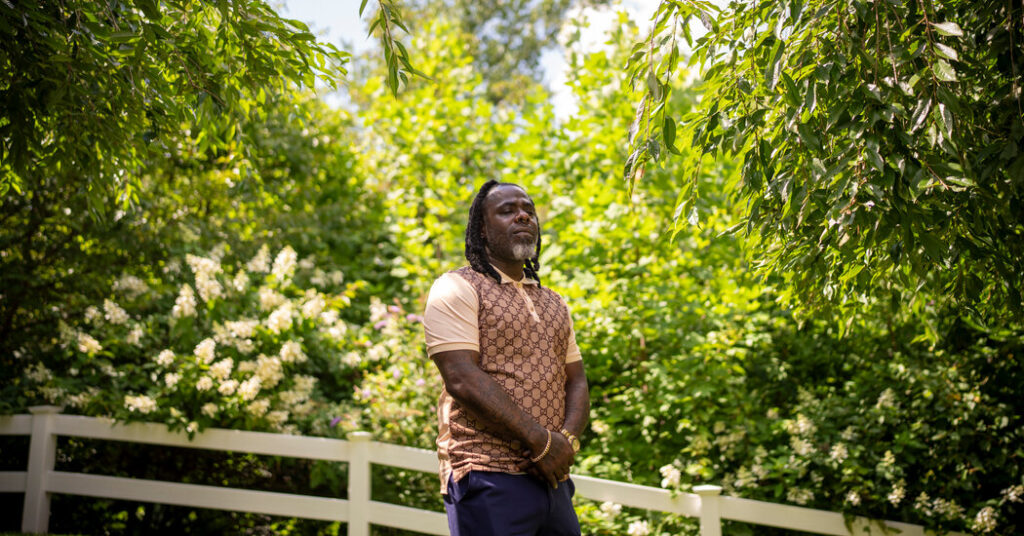
“It’s bittersweet,” said Mr. Horn, now 45. “I’m so elated. I’m grateful. I’m happy it’s over.”
Mr. Horn’s fateful trip to the deli marked him as a suspect, and Mr. Jackson was swept into the investigation simply because he had been hanging out with him, the two men’s lawyers said in their federal complaints.
“Bad luck and terrible policing then turned into some seriously disturbing policing,” said Ilann Maazel, one of Mr. Horn’s lawyers.
One judge said the police engaged in tactics that kept jurors from hearing evidence that would have given them serious doubts about the case. Most notably, they failed to hand over to prosecutors 137 pages of records, including those from a phone stolen from the deli that night that showed calls between the actual culprits and members of a Bridgeport gang they were part of. A detective kept the records in the basement of her house for 17 years, providing them only after an investigator working for one of Mr. Horn’s lawyers asked about them.
Investigators told one witness that if he did not help implicate Mr. Horn, the witness could be charged with murder, and they also relied on eyewitness identification from people who were on drugs that night or did not get a good look at the gunmen, according to court records.
Both Mr. Horn and Mr. Jackson were released after the state attorney for New Haven filed a motion to vacate their convictions.
A spokesman for the New Haven Police Department referred questions to Mayor Justin Elicker’s office. In a statement announcing the settlement, Mr. Elicker, who was elected in 2019, after Mr. Horn and Mr. Jackson were released, apologized to the men and said “no amount of money can give them back the years they’ve lost.”
The city, Mr. Elicker said, has “an obligation to do what we think is right, to account for any miscarriage of justice and to provide Mr. Horn and Mr. Jackson with some sense of peace moving forward.”
Mr. Jackson, now 47 and the father of two girls, still resides in New Haven, in the same house where he was living in 1999. He recalled how the police had kicked down the door to arrest him. After his release, he bought the house, which he said was dilapidated and under foreclosure, and renovated it.
“I’m happy,” Mr. Jackson said. “I just want to move on.”
Mr. Horn, who remains in Connecticut but no longer lives in New Haven, said he plans to open a hair salon and is focused on helping to raise his 8-year-old daughter. She was born after he was initially released from prison in 2014, when a judge agreed he had not gotten a fair trial.
The state appealed and he was put back in prison in 2016, when his daughter was about 10 months old. Mr. Horn said he did not see his daughter for two years until his release in 2018, and he had become so depressed he went on a hunger strike.
“I just didn’t want to live anymore,” he said. “Don’t think just because a dollar comes that this trauma is gone and I’m healed.”
Kirsten Noyes contributed research.
The post New Haven to Pay $30.5 Million to 2 Men Wrongfully Convicted of Murder appeared first on New York Times.