Much of Europe was roasting on Friday in a dangerous heat wave — the fifth on the continent since May — with wildfires ablaze in parts of its western and central regions.
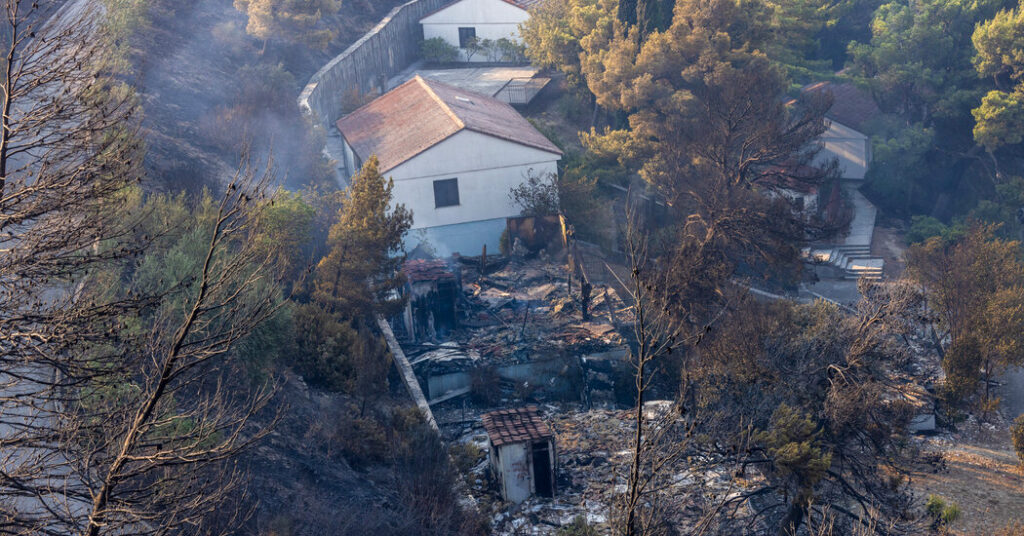
Successive heat waves have parched much of Europe’s vegetation, creating a tinderbox for wildfires. On Friday, firefighters in Britain, Spain, Germany and Croatia battled flames that threatened to engulf homes and that forced thousands to evacuate.
The heat, some of which has been linked to climate change, is driven by an area of high pressure known as a heat dome. After battering Western Europe this week, extreme temperatures are shifting east, into the Czech Republic, Germany and Poland.
The scorching weather has strained infrastructure and severely disrupted everyday life and public services in several countries. Temperatures are forecast to slowly increase in Central Europe through the weekend and decrease to the west, as cooler Atlantic air and thunderstorms whip in from the west.
The fire risk remains high across parts of Europe
The heat has intensified the severe threat of wildfires across Europe. Fires have burned more than 1.4 million acres across the European Union so far this year — less than the area that was scorched by this time in 2025, the worst year on record, but double the 20-year average.
-
A fire spread overnight between two towns on Croatia’s coast, injuring at least 36 people, destroying dozens of homes, and forcing about 1,000 people — mostly tourists — to evacuate, local media reported. The fire started in Lokva Rogoznica and spread nearly five miles to the town of Omis, Croatia’s HRT reported. The blaze was under control by Friday morning, according to local firefighters.
-
In Spain, a wildfire outside the coastal city of Huelva has burned more than 76,600 acres. Authorities expressed fears that it could spread east toward Seville, the broadcaster RTVE reported. In the northeast, outside the city of Huesca, firefighters ordered people to evacuate and tried to save a historic monastery threatened by flames.
-
More than 2,000 people in Germany were forced to evacuate their village as a wildfire spread through a forest of Kreis Düren, a district near the country’s border with Belgium border, the broadcaster WDR reported on Friday.
-
In Britain, more than 100 firefighters battled a blaze that burned at least six properties in the West Midlands region on Thursday, the local fire service said.
-
The European Forest Fire Information System said that a large area of Central Europe, stretching from Germany through Poland and into the Balkans, as well as parts of Britain, Ireland, France and Sweden, would remain under “very extreme” fire conditions at least through next week.
How hot will it get?
-
High temperature warnings were in effect across Europe on Friday, with the most severe red-level warnings in portions of Italy and Switzerland.
-
Scorching heat has spread across Italy since last week and will continue on Friday and through the weekend, with much of the country likely to see temperatures between 35 and 39 degrees Celsius (95 and 102 Fahrenheit), according to the Italian Air Force Meteorological Service. Rains could cool some areas, at least temporarily, on Sunday.
-
Germany’s weather service, the Deutscher Wetterdienst, predicted that the highest temperatures on Friday and Saturday could reach up to 38 degrees Celsius (100 Fahrenheit), particularly in the west and the southwest. Sunday was likely to be cooler, with rain in the forecast.
-
Britain has been baking for days. The Met Office, the country’s weather service, said the country was on track for its warmest summer on record for average temperature, breaking a record set just last year. Friday was forecast to be slightly cooler, with the hottest temperatures reaching 34 degrees Celsius (93 Fahrenheit). A cold front was expected to pull fresh air into the country on Saturday, creating less humid conditions, forecasters said..
-
Cooler weather was finally coming to parts of Spain. AEMET, the country’s weather service, said to expect temperatures above 30 degrees Celsius (86 Fahrenheit) across much of the country on Friday and through the weekend. But it forecast afternoon highs around 25 degrees Celsius (77 degrees Fahrenheit) on the north coast.
-
Météo-France, France’s weather service, reported that the peak of the heat wave was Thursday, but that afternoon highs between 35 and 40 degrees Celsius (95 and 104 Fahrenheit) were still expected across much of the country on Friday. Temperatures are predicted to fall gradually in the coming days.
Here’s how to cool off.
Staying cool and hydrating often are the two most important things to do to avoid feeling sick and discomfort in extreme heat. Here are some other ways to keep cool:
-
Block out the windows in your home with a blanket or a darker sheet during the day to keep the heat out. At night, keep windows open and run fans to circulate the air.
-
Spritz your skin with a mist of cool or room-temperature water or wipe your forehead with a cool cloth. Cold showers can also help you cool down.
-
If you need to be outdoors, put ice cubes in your water bottle and drink cool liquids.
The post More Wildfires and Extreme Heat Roil Europe, but Relief Is on the Horizon appeared first on New York Times.