Food and Drug Administration investigators traveled to Taylor Farms’ operation in Mexico for the first time this week to start inspecting the facilities linked to the largest cyclospora outbreak in the U.S., according to four people with knowledge of the matter, who spoke on the condition of anonymity to discuss an ongoing investigation.
Donald Prater, the FDA’s acting deputy commissioner for food, confirmed in an interview Friday that inspectors were on-site at the processing facility and plan to be in the fields next.
Given the scale of the outbreak, food-safety experts and some former top FDA officials said the agency should have gone to Mexico sooner than nearly a month after officials publicly connected the company’s shredded lettuce to an outbreak that has sickened nearly 10,000 people. Though Mexican officials and the company have conducted their own testing on the farm, some food-safety experts worry the conditions that may have contributed to the contamination are gone, complicating investigative efforts. The company said it suspended all production on that facility on July 18.
Prater said the lettuce that sickened people was probably grown and potentially contaminated weeks before any illnesses were detected, adding that the parasite’s long incubation time adds to that delay.
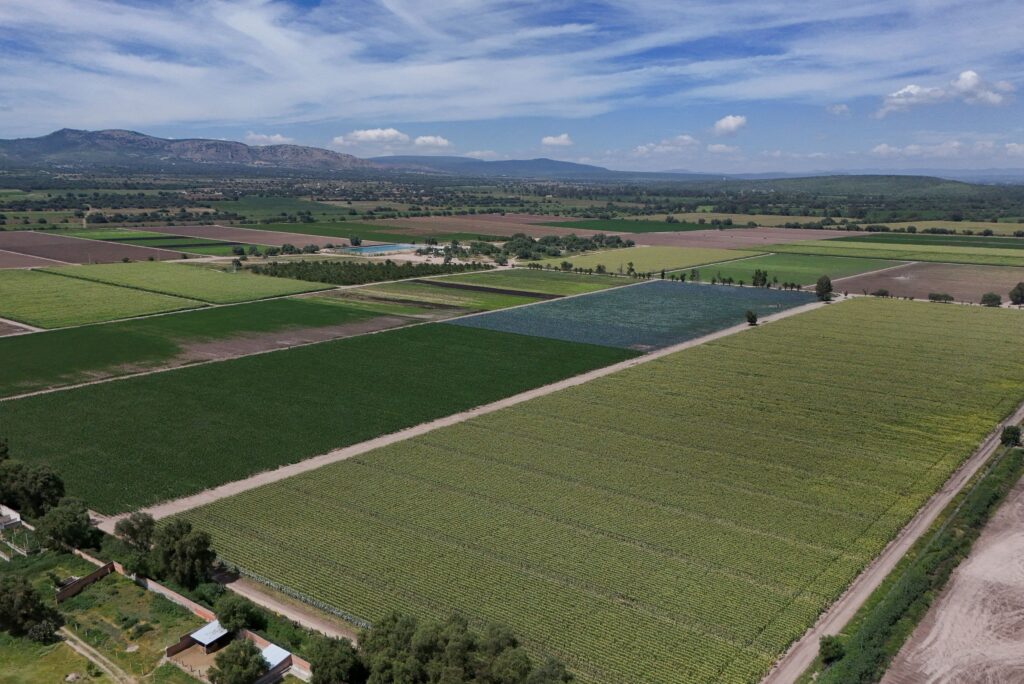
The FDA tried to reconstruct conditions that existed when the lettuce was actually being grown and harvested before sending investigators into the field, he said. That includes gathering information for tracing the product back to its source and examining historical weather patterns and — increasingly — satellite imagery, as well as obtaining testing supplies and laboratory space.
“If you just go out the door to do an investigation without having this information, without having the knowledge of where were the products actually likely grown, then you could actually not use your resources as effectively as you could,” Prater said. His comments reflect the FDA’s latest account of the investigation.
He said agricultural water is historically a potential source of contamination for cyclospora and that the FDA is “looking carefully at the available data to be able to understand what could have happened.”
At least 3.1 million pounds of lettuce linked to the farm have been recalled, compared to the largest prior cyclospora recall of nearly 31,000 pounds of parsley last September, according to a Washington Post analysis of FDA enforcement data.
“Ideally, as soon as [the FDA] traced it back to the source, they would be out there working with the facility and specifically working with Taylor Farms to do a root-cause analysis so that we can understand what happened,” said Barbara Kowalcyk, director of George Washington University’s Institute for Food Safety and Nutrition Security. “That’s really what’s going to drive prevention going forward.”
Mexican officials conducted a sanitary inspection and visit at Taylor Farms’ processing facility from July 18 to July 20, according to the Mexican government. Lettuce and water samples collected tested negative for the parasite and other contaminants, and an assessment of workers’ health conditions didn’t find any red flags.
Prater said the parasite is “exceedingly difficult to find in large volumes of samples or large volumes of product.” He said the number of samples “required to have confidence in locating a pathogen with that prevalence are really significant. It is possible to test a lot of samples in contaminated product and still not be able to find it.”
He also said the contamination can be unevenly distributed through a large batch of food, so a sample taken from one portion may test clean even when contamination is present elsewhere.
Taylor Fresh Foods did not respond to a request for comment about inspections by Mexican authorities or the FDA, but on its website the company has said its own testing of approximately 2,000 samples taken in central Mexico since May has returned zero positive results.
Nationwide outbreaks of cyclospora this summer sickened people in 47 states, hospitalized 740 and resulted in the deaths of two people in Michigan, according to the Centers for Disease Control and Prevention. The specific outbreak involving shredded lettuce from Taylor Farms de Mexico has now been linked to 17 states, after Maine and Massachusetts were added Thursday.
Not just Taco Bell
CDC and state investigators said interviews with patients about what they ate converged around lettuce.
“At a certain point in our traceback, it started to appear that all of the convergence was focusing on iceberg lettuce,” Prater said. “At that time, we thought that the iceberg lettuce could explain many or most of the cases, and then we looked to see who was the supplier of the iceberg lettuce. That’s how we identified Taylor Farms as the likely source of the outbreak.”
Taylor Fresh Foods has said federal officials first provided data potentially linking its lettuce from central Mexico to the cyclospora outbreak on July 15. The company said it raised “legitimate scientific questions around the government’s assumptions, methodology, and cluster” analysis during a call that day with FDA, CDC and health officials in Michigan, the hardest-hit state.
The next day, the company said these questions were discussed again with government officials, including from the FDA, the Department of Health and Human Services and the White House. Later that evening, federal officials announced that shredded iceberg lettuce served at some Taco Bell restaurants had been linked to the outbreak and identified a single unnamed supplier in Mexico.
On July 17, Taylor Fresh Foods publicly announced a recall it said was broader than the lots suggested by the FDA’s investigation.
The company said it followed specific food-recall communications protocol reviewed and approved by the FDA. The FDA said distribution of recalled iceberg lettuce products from Taylor Fresh Foods from June 29 through July 16 was confirmed in 31 states.
Even as investigators try to determine how the lettuce became contaminated, the scale of how widely the recalled products traveled after leaving Taylor Farms’ Mexico operation is becoming clearer.
FDA enforcement records show recalled products were packaged for nine food service and retail operations, according to FDA data. They show 236,192 cases of products sold in dozens of configurations ranging from bags of shredded and chopped iceberg lettuce to salad mixes that combined iceberg with romaine, carrots and red cabbage. Some were sold under Taylor Farms or food-service brands, while others were packaged for particular customers.
Earlier in the outbreak, Sysco, one of the world’s largest food distributors, Walmart, Jack in the Box and Taco Bell said they immediately removed products as a precaution.
But FDA enforcement records indicate other recalled product was packaged for Subway and Yum Brands, which owns Taco Bell, KFC and Pizza Hut. Cross Valley Farms, owned by US Foods; Markon; and Peak Fresh Produce, a Performance Foodservice brand, were also named in FDA records as potentially impacted.
Yum Brands, Subway and the food distributors did not respond to requests for comment.
The variety of products and package sizes illustrates how lettuce from a single supplier can move through numerous channels before reaching consumers.
A sprawling investigation
The timing of the FDA investigation illustrates a fundamental challenge in solving foodborne outbreaks: Investigators must trace illnesses through a sprawling food distribution system and identify a likely source quickly enough to find evidence of what went wrong — a task that can become still more difficult when the suspected source is outside the United States. Cyclospora is one of the hardest foodborne pathogens to trace to its source and is hard to detect. There’s a lag between when people consume the parasite and when symptoms appear, further complicating the effort.
“Every day and every hour matters,” said Frank Yiannas, who previously served as the FDA’s deputy commissioner for food policy and response during the first Trump administration and the Biden administration.
During inspections, investigators typically sample agricultural water, soil, equipment and other parts of the growing and processing environment; examine sanitation and harvesting practices; and trace contaminated produce back to particular farms and fields. Even though the plant has been shut for a month, Prater said investigators want to review records that would show how the company is complying with food safety practices and go back in time to show what was happening.
The United States and Mexico have a unique relationship when it comes to ensuring the safety of fruits and vegetables. Since 2014, the two countries have had a partnership focused on ensuring the safety of produce traded across the border, preventing foodborne illnesses and improving data sharing.
However, the culprit, or culprits, behind the contamination of shredded iceberg lettuce have not yet been found. Trevor Suslow — a food safety expert who is helping investigate the cyclospora outbreak as a consultant for Taylor Farms and has an emeritus faculty position at the University of California at Davis — said he headed down this week to Salinas, California, where Taylor Farms is headquartered, to continue to review data and records as the search for the potential contaminant continues.
Cyclospora, a parasite causing watery diarrhea with frequent bowel movements, is generally transmitted when infected human feces contaminate food or water. It usually takes roughly a week after a person is infected before they get sick, though this can range from two days to two weeks or more.
Cyclospora is a relatively new pathogen; it was first described by scientists in the late 1970s and got its scientific name in the early 1990s. That means research is still fairly sparse compared to other foodborne pathogens.
“This is one of the areas where we really do have a need to advance much faster and research far more, as it continues to be something that we face every summer,” said Steven Mandernach, the executive director of the nonprofit Association of Food and Drug Officials who led the investigation of two cyclospora outbreaks as an Iowa food safety state official.
Data Methodology
The Washington Post reviewed product details for all cyclospora-related FDA recalls to estimate minimum total weights for each recall event. Data for recalls initiated on Aug. 13, 2018, and June 19, 2020, did not include specific product weight information, so were not included in the analysis.
The post FDA travels to Mexico a month after linking Taylor Farms to cyclospora outbreak appeared first on Washington Post.