This is an edition of the Books Briefing, our editors’ weekly guide to the best in books. Sign up for it here.
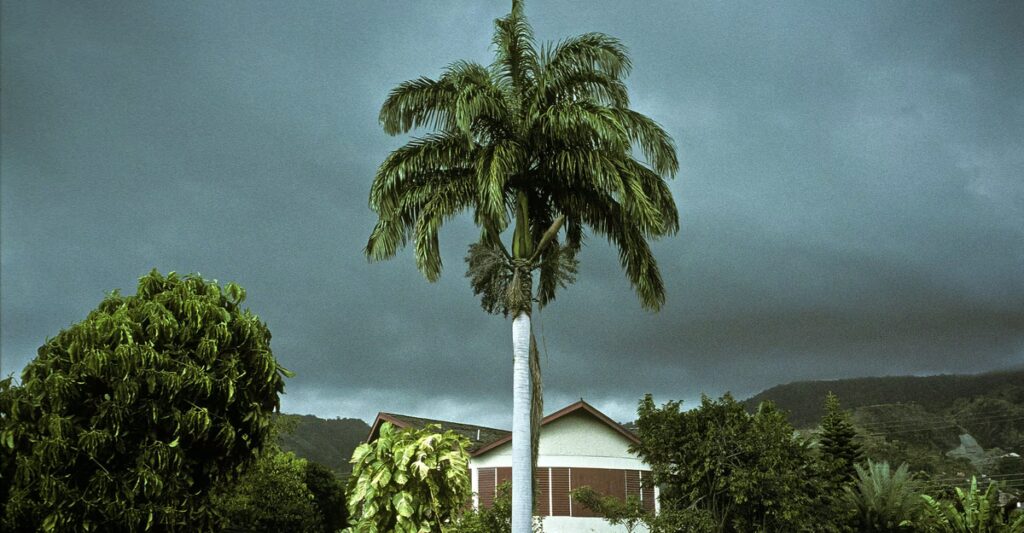
Before his latest book, Marlon James hadn’t written a novel set in Jamaica in more than a decade. In the years following his Booker Prize–winning A Brief History of Seven Killings, the author focused on his Dark Star Trilogy, set in a fantasy universe. But after that long literary detour, he returned to the land of his birth in his new novel, The Disappearers—which is set primarily in Kingston and follows a group of characters, all queer Jamaican men, who meet while rehearsing a play that will never be seen.
First, here are four new stories from The Atlantic’s Books section:
- Hard-luck men in hardscrabble towns
- “Disunion,” a short story by Kurt Andersen
- A deeply layered novel about masculinity
- “Stance,” a poem by Deborah Garrison
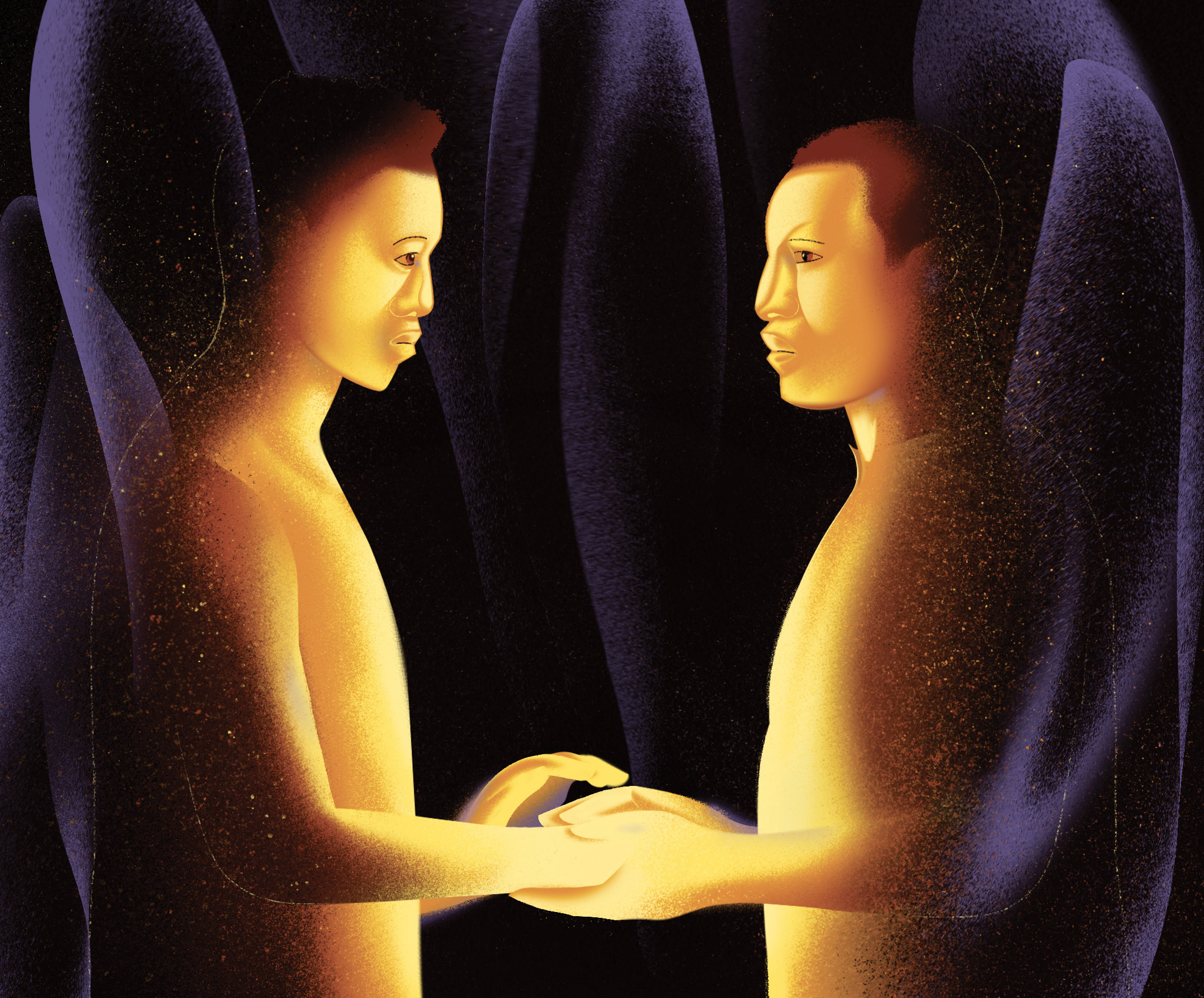
For this group, which gathers in secret in 1988, seeing and being seen are matters of life and death. The Kingston they inhabit is murderously homophobic, and accordingly, the novel can be quite bleak. But The Disappearers offers some delights too. Recently, in her article about the book forThe Atlantic, Stephanie Burt noted that “the novel opens up many pleasures for literary readers,” who may recognize the numerous titles and references sprinkled throughout. I was deeply affected by how, almost universally, the characters seek out anything that proves that gay life exists on a larger scale. Lowbrow works, such as porn films and magazines, are most accessible; Playgirl and Hustler are name-checked. The songs of Boy George, Sylvester, and Prince are lifelines—the homoerotic cover of Prince’s 1988 album, Lovesexy, is an especially powerful beacon. Many of the characters are well read, and they name-drop gay novels such as Andrew Holleran’s Dancer From the Dance and E. M. Forster’s Maurice. For one of the men in particular, the type of hustling, defiant gay life that John Rechy describes in his nonfiction book The Sexual Outlaw is pivotal.
The play they put on, a 1967 drama called Fortune and Men’s Eyes, explores homosexuality among a group of prisoners. Some of its characters see sex as a means for gaining or establishing power; others, as a convenient way to access pleasure. Some are what a modern audience might recognize as gay, whereas others choose partners largely because of their proximity. The cast share the characters’ disparate attitudes toward queerness. But in the Jamaica they live in, there is no room for nuance; any man seen as homosexual is a target for violence. Brutality will soon come to the rehearsal room.
In a way, James has written a gay novel about the uses of a gay novel. When his characters invoke Oscar Wilde and Edmund White, Hadrian and Michelangelo, they’re proving, to themselves and to the reader, that queer life existed long before they came around. But James is not an unskeptical cheerleader for the healing power of visibility and representation. The Disappearers’ major theme, after all, is that being recognized can be a bad thing: Owning these books is a hazard. Buying Lovesexy as a man in 1988 Kingston invites vigilantism. Staging Fortune and Men’s Eyes puts its cast and crew in danger.
So why try to do it? The director and ringleader, Havelock Titus, asks himself this question more than a decade after those hopeful rehearsals. He knew, even at the time, that the effort was a risk. He still doesn’t know “what success would have meant,” because the unstaged play “never had the chance to become a failure.” But Havelock knows on some level that he did it because, just like those who came before him, he wanted to create some kind of evidence that gay men communed and survived in his time and place. In short, he was tired of being erased.
Marlon James Returns to Realism, and to Jamaica
By Stephanie Burt
In his new novel, gay men struggle to escape violence in Kingston.
What to Read
The Age of Reform, by Richard Hofstadter
History can’t fully explain the present or predict the future, but it can help us understand the patterns of contemporary politics and the likely paths ahead. In 1955, Hofstadter, one of the great American historians of the 20th century, published The Age of Reform—a political and social history of the years 1890 to 1940, the period of populism, progressivism, and the New Deal. Rapid technological change, monopoly power, deep inequality, endemic corruption, mass immigration, nativist demagogues, the transformation of both political parties, repeated efforts at reform, recurring spasms of reaction: Perhaps no other age so resembles our own. Hofstadter is brilliant at analyzing types that feel quite familiar to us today—the crusading urban progressive, the small-town conspiracy theorist. He was a liberal who sympathized with the passion for progress while unsentimentally diagnosing its illiberal ideas and motives. The fevered moralism of that age seems a long way from the paralyzing cynicism of ours. But reading Hofstadter will remind you that reform and reaction not only follow each other, but also often coexist in the same moment; neither ever has the last word. Americans are always dreaming of a better country, and some have actually made it so. — George Packer
From our list: What’s the one book that explains American politics today?
Out Next Week
 Finding Renée Richards, by Julie Kliegman
The Jackal: The Rise and Fall of Carlos, the World’s First Super-Terrorist, by Joby Warrick
The Book of Chuck, by LaToya Watkins
Your Weekend Read

Bring Back the Blue-Book Exam
By Walt Hunter
Universities find themselves in a surprising position. The only reliable way to evaluate what students have learned may be to bring back pen and paper. Faculty are reverting to in-person, handwritten assignments and timed essays—anything that keeps assessments offline. The unlikely hero of the day is the blue book, sales of which are up by as much as 80 percent for some universities since 2023.
When you buy a book using a link in this newsletter, we receive a commission. Thank you for supporting The Atlantic.
Sign up for The Wonder Reader, a Saturday newsletter in which our editors recommend stories to spark your curiosity and fill you with delight.
Explore all of our newsletters.
The post A Bleak, Violent Novel’s Unexpected Delights appeared first on The Atlantic.