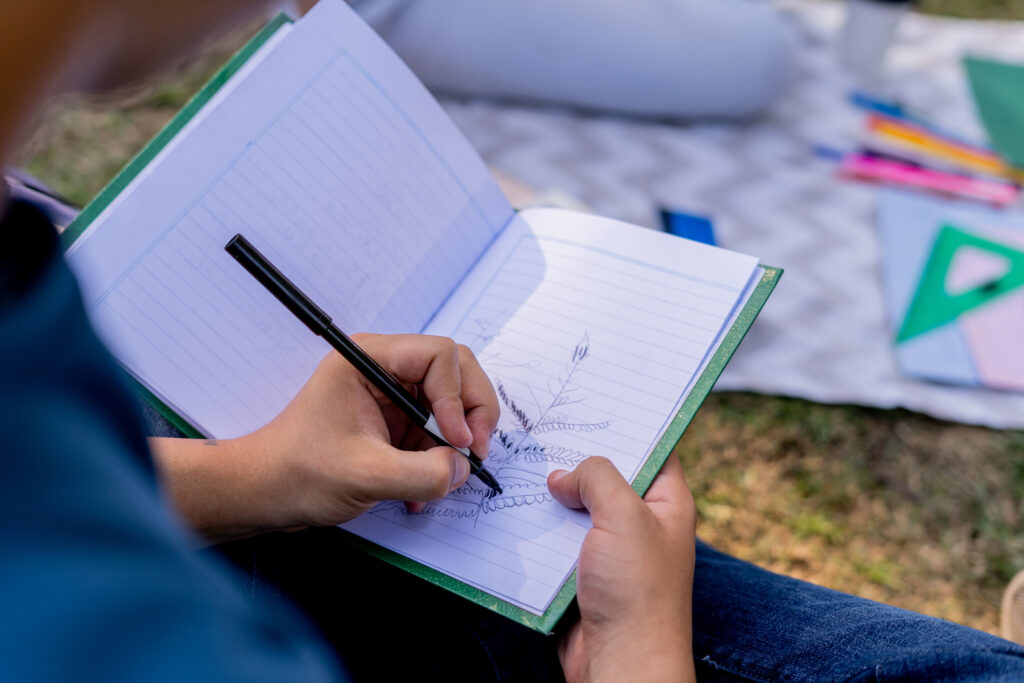
Remember back in 2015 when everyone you knew suddenly owned a coloring book? It was a massive cultural moment, and these books that promised instant stress relief dominated bestseller lists.
Fast-forward to today, and drawing is having a similar moment in the sun. Take a quick scroll through TikTok or Instagram, and you’ll find tons of videos under hashtags like “doodling,” “sensory drawing” and “art therapy.”
This resurgence comes on the heels of social media’s current obsession with nervous system regulation, which refers to your body’s ability to respond to stress and return to a calm baseline afterward. “We live in a stressful economic and political climate,” said Reina Lombardi, art therapist and founder of Florida Art Therapy Services. “Many families are experiencing heightened levels of distress that keep them up at night.”
Lombardi adds that smartphones, specifically, play a huge role in nervous system dysregulation. “They capitalize on ‘gamification’ design, using notifications to arouse our nervous systems and keep us engaged. These devices are always on and tethered to us.”
As a result, people are searching for simple, effective ways to get out of a perpetual fight-or-flight mode. And as it turns out, spending just 10 minutes with a pencil and a piece of paper might be one of the easiest ways to do it.
How drawing resets your nervous system
When you experience stress, your body’s sympathetic nervous system (a.k.a. the fight-or-flight response) becomes activated, said Soma Sengupta, neurologist in chief and chair of neurology at Tufts Medical Center. This system prepares your body to respond to perceived threats by increasing your heart rate, muscle tension, blood pressure and the release of stress hormones such as cortisol, she explained.
“Drawing can help shift attention away from stressful thoughts and encourage activation of the parasympathetic nervous system, sometimes called the ‘rest and digest’ system,” Sengupta said. “This system promotes recovery by slowing heart rate, reducing muscle tension and helping the body return to a calmer physiological state.”
Drawing, she explained, actively engages your brain through coordinated movement, vision, attention and decision-making. This combination creates a calming sensory experience while providing the mind with a constructive focus.
Several brain systems work together during a drawing session, according to Sengupta, which helps explain why it can feel so beneficial.
First, drawing requires concentration on shapes, colors, lines and hand movements, plus constant communication between the eyes, hands and motor planning regions of the brain, she explained. This focus and coordination helps to anchor your attention in the present, keeping your brain from straying toward negative thoughts like worry or overthinking.
Working on coordination also strengthens sensory awareness, Sengupta said, which is the ability to consciously notice information coming through your senses: sight, hearing, touch, smell, taste and internal bodily sensations. Some research shows that sensory awareness may reduce anxiety and promote relaxation.
Visual art also provides a nonverbal way to express emotions. Instead of explaining feelings with words, emotions can be represented through images, colors, patterns or symbols. This process may help people better understand and regulate emotional experiences, according to Sengupta.
Completing a drawing or seeing a piece of art gradually develop can activate the brain’s reward system, producing modest releases of dopamine associated with motivation, satisfaction and positive reinforcement, Sengupta said.
If you enjoy drawing, you may feel like you get into a “flow state.” This is when a person becomes fully immersed in an activity that is appropriately challenging, according to Sengupta. During a flow state, self-consciousness decreases, concentration increases, and many people experience a reduction in stress and anxiety, she said.
Just a few minutes of doodling can do the trick
You don’t have to be an artist crafting a masterpiece to reap the calming benefits of drawing.
“The calming effects [of drawing] appear to result primarily from sustained attention, repetitive movement and engagement with the creative process, rather than from producing a work of art,” Sengupta said. Even just drawing lines, squiggles or geometric shapes can provide many of the same benefits, she explained.
While drawing can create stress for those who don’t feel competent doing it, therapeutic value may still exist simply through the act of practicing something that feels uncomfortable, according to Lombardi. This builds what she called “distress tolerance.”
“Avoidance is often a key factor in chronic stress, so engaging in self-regulating activities — even when they feel challenging — increases our ability to cope adaptively,” Lombardi said.
There’s little research on how long you should draw to feel calmer. A small 2016 study in Art Therapy found that 45 minutes of art-making reduced participants’ cortisol levels. But Sengupta said shorter sessions can do the trick, noting that even a brief creative practice — just 10 minutes — is long enough to interrupt the body’s stress response without feeling like another overwhelming task on an already busy day.
Indeed, anywhere from five to 20 minutes of drawing may interrupt racing thoughts, reduce immediate stress and improve mood, according to Sengupta.
“Many of the therapy sessions I facilitate only last an hour. Often, we are only engaged in the creative process for 20 minutes, yet clients report positive shifts both somatically and emotionally,” Lombardi said.
If drawing isn’t your thing, don’t worry — you can still reap these rewards from other art forms.
“Some people respond better to clay, while others find it easier to lose themselves in the process of painting,” Lombardi said. “What matters most is finding the media that facilitates that process for you.”
The post How 10 minutes of drawing can reset your nervous system appeared first on Washington Post.