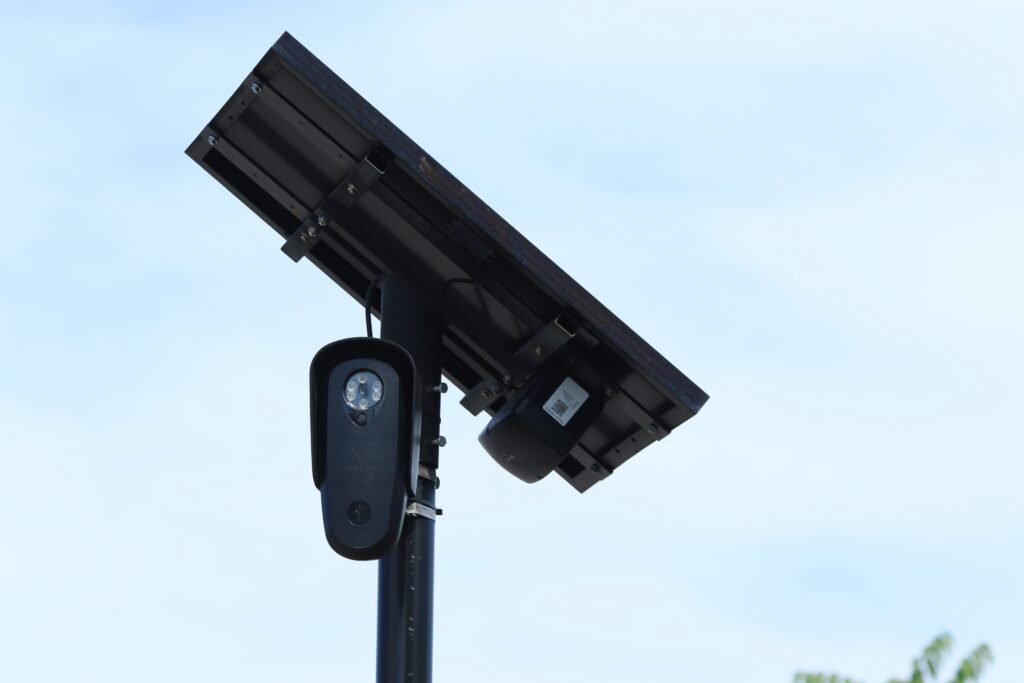
The country’s most prominent seller of automated license-plate readers said Thursday it will enact major changes in hopes of more proactively preventing abuse by police officers.
Flock, the maker of a vast roadside camera network that maps cars’ movements into a database searchable by law enforcement, said it would for the first time start requiring officers to label every search with a criminal case number and automatically review all searches for “abnormal activity,” a previously voluntary feature that the company said was used by about a third of its 7,000 law enforcement agencies nationwide.
Flock also said it would reduce the default setting for how long license-plate data is stored, from 30 days to seven, and give police departments more control over how their data is shared with other agencies.
The announcement comes roughly a week after The Washington Post reported that at least 50 officers had been accused, charged with or convicted of misusing Flock’s system and other license-plate readers to spy on people’s locations, including to stalk their girlfriends and ex-wives. Since publication, The Post has confirmed more than a dozen additional cases of license-plate-reader misuse.
The case number and automated-review features were previously offered to agencies as optional settings. Policing experts and civil liberties advocates identified those two features in The Post report as key product shifts that could help combat misuse.
Flock chief executive Garrett Langley said in an interview that the changes reflected the system’s “continual evolution of Flock’s responsibility to the communities we help serve.” Company executives, he said, had declined to mandate them sooner because they expected more local officials would activate the anti-abuse features on their own.
“I had this hope that local lawmakers at the state and local level would move very quickly and they’d look at the things that we’re recommending as optional and say, ‘Great, we’re going to force it.’ And they haven’t,” he said. “Instead of waiting, we said, ‘Look, we should just move faster.’”
Max Isaacs, director of technology law and policy at the New York University School of Law’s Policing Project, said the shift was a “welcome change” but that he questioned what had taken the company so long to implement it.
“There is no reason the system shouldn’t have been designed that way to begin with,” he said of the case number requirement. “Ultimately, though, this kind of safeguard should be required by law. It’s completely backward that we are relying on this one company to implement the kinds of things that ought to just be standard everywhere.”
Flock, which is based in Atlanta, has installed more than 120,000 of the artificial-intelligence-enabled cameras across the U.S. since 2017. The company said the 20 billion plate scans recorded every month by its cameras have helped officers investigate 1 million crimes a year.
AltThough Flock’s training guides encourage officers to use the search tool exclusively for official police work, the company only began offering agencies the option to require that officers tag every search with a criminal case number in July 2025.
In misuse-case records reviewed by The Post, some officers frequently looked up car locations without providing any details linking the searches to legitimate criminal investigations.
In April, Flock announced an automatic review feature, known as “Audit Assistance,” and said the tool would scan officers’ searches for suspicious behavior, such as repeated targeting of a single plate or bursts of searches in the middle of the night. Flock officials declined to share the criteria the system uses to look for abnormal behavior, arguing that sharing the details would help bad actors avoid detection.
The company has announced that some officers have been charged with misusing the system following an Audit Assistance report. But Isaacs recommended treating the system with “a healthy dose of skepticism,” given that it relies on artificial intelligence, not human experts, to find suspicious conduct.
“It’s good to see vendors developing accountability features,” he said, “but until we have some evidence that this tool does what it says it does, I don’t think we should rely on it to replace any human auditing measures.”
Flock also said it would reduce the default length of time for how long plate scans are saved to seven days. Agencies can choose to ignore that default and increase their data-retention policies to as long as a year with prior approval from an elected official or governing body, the company’s evidence policy said.
It also will launch a feature called “Evidence Mode” that will allow officers to preserve license-plate data beyond that retention window “for cases that need more time,” a company announcement said.
Flock currently allows police departments to share their license-plate data with other agencies beyond city, county or state lines. But as part of the changes, the company said it would begin allowing agencies to determine the types of investigations for which its data can be shared. A city could, for example, allow its camera data to be searched for violent crimes but not for immigration enforcement, the announcement said.
Langley said he spoke to 100 police chiefs in the last week to preview the changes and that all were supportive of the shift. He argued that the cases of misuse reported by The Post showed that Flock’s long-running strategy of recording all officer searches into audit logs that agency leaders can examine to investigate misconduct helped fight abuse.
“It’s not that people abuse Flock,” he said. “It’s that Flock actually found cops that abused their power, and I want to find all of them.”
Flock said it was still considering additional changes, including a function that would automatically lock out officers whose activity met the “criteria for abnormal behavior” until their searches were reviewed by an agency administrator, according to the announcement.
In some towns, however, the agency’s Flock administrators are the police chiefs themselves, and some chiefs have been fired or charged with criminal misconduct in cases of Flock misuse previously reported by The Post. Langley said he hoped that, given the “increased level of attention” to the problem, local mayors and city managers would take a more proactive role in pushing for regular agencywide audits or supervision by outside law enforcement.
Marci Bakely, an Air Force veteran in Georgia whose police chief ex-boyfriend searched her plate hundreds of times and was charged with stalking and misuse of a license-plate reader, said in an interview that she hoped the changes would curb abuse but that she worried it was mostly a “temporary Band-Aid” to shield the company from criticism.
“They knew before that stuff like this would happen. So now they want to wait until after it’s been brought to the public’s eye?” she said. “Now it’s a big deal, whereas before it didn’t mean anything? They weren’t worried about it, but now it’s been brought to the light.”
The post Flock unveils changes after Post report on police misuse of its network appeared first on Washington Post.