The mysterious strikes targeting multiple Ecuadorian fishing boats near the Galápagos Islands this year were carried out as part of a covert CIA program, The Washington Post has learned.
While many details about the agency’s involvement were not clear, one person with knowledge of the matter said the strikes were part of a “covert action” program, a type of secret operation overseas that is approved by the president but where the role of the U.S. government is not publicly acknowledged. The person spoke on the condition of anonymity because of the subject’s sensitivity.
No agency or government has claimed responsibility for the incidents, including the disappearance in January of a fishing vessel and eight of its crew members.
The CIA’s involvement adds a new and secretive dimension to the Trump administration’s otherwise highly publicized campaign against alleged drug traffickers at sea. It was not clear whether other actors were involved, such as private contractors or authorities from other countries.
The CIA declined to comment for this report. Several members of congressional intelligence committees contacted by The Post declined to comment.
The strikes are separate from the Pentagon’s campaign against alleged drug boats that began last fall. Those strikes have been fiercely criticized by human rights groups and some Democratic lawmakers, who say they are extrajudicial murders. The administration has justified the strikes by equating “narco-terrorists” with militants assaulting the United States.
The eight missing Ecuadorian nationals were aboard a 52-foot longline fishing boat called the Fiorella. The men on two boats that were struck in March, the Negra Francisca Duarte II and the Don Maca, all survived.
In interviews with The Post, survivors said that small quadcopter drones either dropped munitions on the vessels or detonated by crashing into them. The men said they were then taken aboard a nearby ship, hooded and cuffed by armed men, and transported to El Salvador — only to be returned later without explanation to Ecuador.
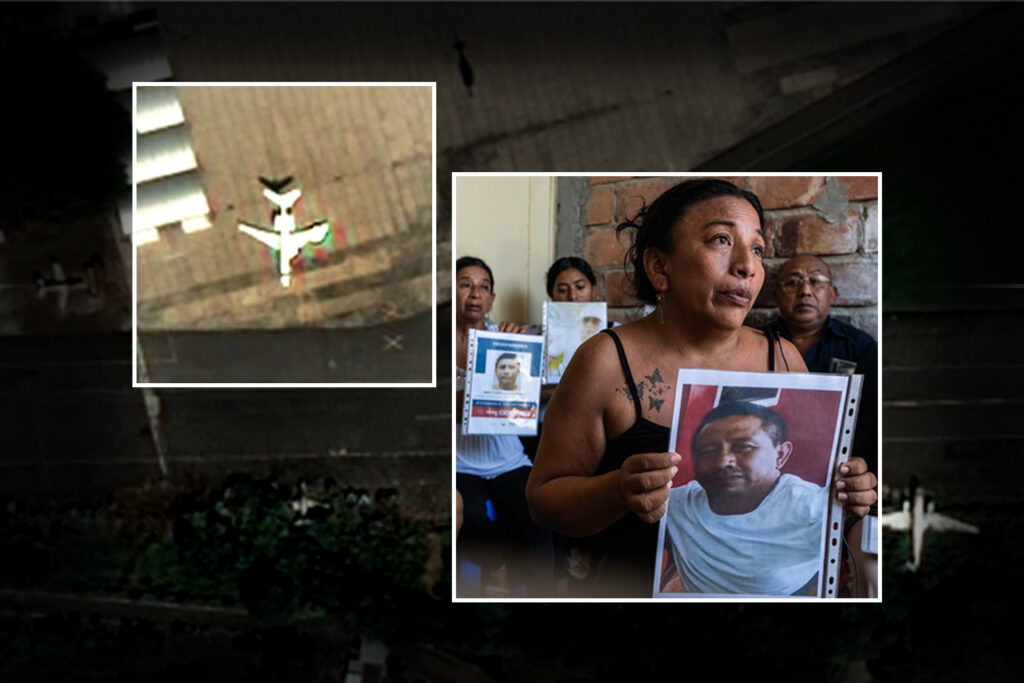
In each of the incidents, a high-end business jet equipped with specialized surveillance technology flew from El Salvador in the direction of the fishing vessels on the days of the strikes and in the days prior, according to flight- and ship-tracking data. Details about the plane, and the pattern of its flights before the incidents, suggest that it may be linked to the secret CIA program.
Radio communications and flight-tracking data reviewed by The Post show the plane, a Cessna Citation Longitude, arriving in El Salvador from Tennessee with a crew of six in November.
It flew under a U.S. registration number, according to radio transmissions, and taxied to a military section of the airport upon landing. Available Federal Aviation Administration documents show no aircraft registered to that number.
The FAA requires all active aircraft to be registered with the agency, with exceptions that include periods of ownership transfer and “aircraft of the national defense forces of the United States,” according to federal law.
That registration number had been reserved by a company that has no obvious website and lists its address as a mailbox at a UPS store in Virginia, records show.
Photos show that the plane has been equipped with surveillance technology, including a “belly radome” — an enclosure on the underside to shield radar equipment. The New York Times reported on the plane Wednesday.
The plane operated out of Ilopango International Airport, a small airport that was a hub for covert U.S.-backed operations in Nicaragua in the 1980s. The airport, on the outskirts of San Salvador, is separate from El Salvador’s main international airport, where the U.S. military maintains an official outpost.
On Jan. 20, the day the Fiorella vanished, communications with the tower captured the plane’s departure shortly before dawn. “FENIX 701,” the pilot said in English with an American accent, “departing runway three-three.”
The three incidents have alarmed human rights organizations, spurred a probe by a prosecutor in Ecuador and left some Democratic lawmakers in Washington pushing for answers. In response to questions from The Post, the U.S. military denied knowledge of the incidents. Ecuador’s armed forces did not respond.
The Salvadoran government did not respond to requests for comment. After the attack on the Negra Francisca Duarte II, El Salvador’s navy said it had conducted a “humanitarian” operation to transport 16 shipwreck survivors, all Ecuadorian nationals. Two of them were injured, with one of them burned on his back, and were taken to a hospital, the navy said.
A clandestine campaign
The attacks on the Don Maca and the Negra Francisca Duarte II bear little resemblance to the Pentagon’s ongoing campaign against suspected drug traffickers in the Caribbean and eastern Pacific. Those strikes, which have killed 221 people since September, have targeted smaller “go-fast” boats and semi-submersibles. The strikes have been conducted openly by the U.S. military using a mix of drones and manned aircraft, including the AC-130J attack plane favored by commandos. Vessels also have been destroyed with laser-guided bombs and precision missiles, The Post previously reported.
The administration has provided no evidence of trafficking in those strikes and has released few details about where and how the boats were targeted. It has refused bipartisan calls by Congress to release a video showing a U.S. military strike killing two shipwrecked people who survived an initial attack on their vessel. But as critics push for more transparency about those attacks, the CIA’s program signals an entirely secretive phase of the boat-strike campaign.
It is unclear why, as the Trump administration touts its military attacks against alleged drug boats, it would engage in a separate clandestine effort targeting vessels, said former U.S. officials who previously worked in the region.
“It begs the question about why you would need to do this,” one of the former officials said. “What would be the purpose of the secrecy?”
President Donald Trump has granted the CIA new authorities to counter narcotics trafficking, signing an authorization for covert action aimed at countering transnational criminal organizations, including through lethal force, The Post has reported. The agency has surged resources and personnel to Latin America. In Venezuela, CIA operatives on the ground helped locate and track then-President Nicolás Maduro, who was seized in January by U.S. Special Operations Forces and detained on narco-terrorism charges. The agency has also expanded its operations in the Caribbean and Mexico, where two CIA officers died in a car accident in April as they returned from the scene of a counternarcotics raid with Mexican security officials.
While the Fiorella’s last known location was 300 miles from Ecuador’s shores in international waters, the Negra Francisca Duarte II was inside Ecuador’s exclusive economic zone surrounding the Galápagos Islands. The Don Maca was just outside the economic zone.
No evidence has publicly emerged that the crew members were involved in drug trafficking, and survivors have told The Post they were merely fishing. But the Galápagos Islands have increasingly become a hub for drug traffickers, where local fishermen are known to pick up jobs delivering gas to smugglers heading to the United States.
In the days before the Fiorella disappeared, the crew noticed drones in the sky and a plane circling above, Dimas Ignacio Álvarez, one of two survivors from the crew, told The Post.
Flight-tracking data shows that FENIX 701 flew toward the Fiorella’s location on Jan. 17, 18 and 20. On the last of those flights, it traveled 750 miles toward the Fiorella before disappearing from publicly available flight-tracking data — probably having entered an area with sparse coverage, as is common over vast oceans.
The FENIX 701 reappeared in the data an hour before it touched down at Ilopango at 9:30 a.m.
Roughly 2½ hours later, at about midday, the Fiorella broadcast its location for the final time.
Álvarez said he and another crew member were out on a skiff setting fishing lines that day when they saw a plume of smoke beyond the horizon. The next morning, as they searched for the Fiorella, they filmed an object bobbing on the water.
“There’s the flag from the ship,” one said in the video. “We’re lost, and the ship is lost.”
Explosions rock the Don Maca
The Don Maca set out from the coastal Ecuadorian city of Manta on March 18. As the 65-foot boat sailed along a route that would take it north of the Galápagos Islands, its crew of 20 was on high alert.
They were aware of the Fiorella’s disappearance two months earlier. And the Negra Francisca Duarte II had been attacked just one day before. So when they noticed drones nearby, they grew worried that they were being watched, a crew member and the boat’s owner told The Post.
On March 25, one of the men recorded a video of an unidentifiable white aircraft in the distance and sent it to his father. Although The Post could not confirm precisely when it was recorded, the video was shared in a chat during a time when FENIX 701 was in the air, according to a review of time-stamps in screenshots of text messages.
At night the crew members noticed a boat nearby with a red light, which they assumed was a patrol boat, fisherman Jhonny Palacios said in an interview. “But we felt reassured, because we were just fishing,” he said. “We felt confident the patrol would keep us safe, or something like that, but it was the exact opposite. They were our enemies.”
The following morning, FENIX 701 departed Ilopango airport and — as it had on two previous days — flew in the direction of the Don Maca, which was sailing about 850 miles away. “FENIX 701,” the pilot said to the tower. “So long, we’ll see you soon.” And just like on those days, its transponder stopped registering as it headed over the Pacific.
The plane returned to Ilopango at 1 p.m.
Four hours later, as the cook aboard the Don Maca was making ceviche, he spotted a drone and waved at it, Palacios said. The drone appeared to drop a small black tube at the time, he said. An explosion shook the boat.
The windows of the boat’s cabin shattered, Palacios said. One crew member, who had been hanging his laundry near the explosion, began bleeding from his eyes. The men rushed to the front of the boat as a second hit, from a second drone, left the boat’s motor disabled, Palacios said. A fixed-wing drone, which he estimated to be at least 13 feet long, circled above.
Palacios waved a T-shirt in the air as he pleaded for help from a nearby boat, a video shows. An alarm blared in the background. Palacios told The Post he had seen the boat before. He said it was blue with a white cabin, a winch and three shipping containers in the back.
The small quadcopter drones that crew members said were used during the attacks on the Don Maca and the Negra Francisca generally have a range of a few miles, suggesting that those piloting them were in relatively close range.
The men on the blue ship motioned for the crew of the Don Maca to approach and asked how many were injured, Palacios said. Once the fishermen were on board, they said, armed men immediately handcuffed them and covered their faces with hoods. Palacios said he got a glimpse of the men and noticed they were wearing khaki uniforms and carrying long, brown rifles. Some were tattooed. He estimated there were more than 20 people on the boat, and, with the exception of two Spanish interpreters, most seemed to be speaking English.
Despite the fact that the Don Maca had been sailing much closer to Ecuador’s Galápagos Islands, Palacios said the ship that picked them up about six hours later was a Salvadoran navy vessel. The Salvadorans told the men that they had been called by “the Americans” two days earlier — well before the boat was attacked — to pick up a group of shipwrecked people, Palacios said.
As with the crew of the Negra Francisca Duarte II just days before, the fishermen were taken to the Salvadoran city La Unión, where they were interviewed by police, and then handed over to immigration authorities in San Salvador to process their flights home, according to interviews with survivors from both ships and the attorneys representing them.
A mystery at Ilopango airport
El Salvador’s navy has long been an anti-narcotics partner for the United States and in recent years has announced several major drug seizures at sea, at times hundreds of miles off its coast. In 2000, after the U.S. withdrew from Panama, Washington signed an agreement with El Salvador to use the country’s main international airport, in Comalapa, for aerial surveillance to monitor suspected drug traffickers at sea.
The Trump administration has found a close ally in Salvadoran President Nayib Bukele, whose aggressive crackdown on the country’s gangs has led to a major reduction in homicides and inspired a wave of right-wing leaders across Latin America, including in Ecuador. But in doing so, he has imprisoned more than 1 percent of El Salvador’s population, curtailed civil liberties and consolidated his grip on power. Last year, he cut a deal with the Trump administration to detain more than 250 migrants in a megaprison where detainees said they suffered brutal abuse.
Maritime smuggling of cocaine has soared in the region’s waters, and the Bukele government has touted the navy’s recent interdictions at sea. In June, El Salvador announced its largest drug seizure in history, of nearly 6.7 tons of cocaine, from two boats in international waters.
Late last year, as the Pentagon surged troops to the region to be part of a military pressure campaign against Venezuela and to attack suspected traffickers, there was a significant uptick in U.S. military flights in and out of the Comalapa airport, a second defense official said.
The Ilopango airport, from which the FENIX 701 departed and landed, played a key role in a previous U.S.-backed covert operation in the region. In 1985 and 1986, former U.S. military and CIA officers used the airport as a hub to provide logistical and weapons support for the contras who were fighting at the time to overthrow the Sandinista government in Nicaragua.
John Feeley, a former U.S. ambassador to Panama and a onetime Marine pilot, told The Post that he questioned, among other things, why this kind of surveillance aircraft would be flying out of Ilopango rather than Comalapa.
It seemed to be part of an unusual operation, he said, “run out of a very nontraditional command.”
The base model of the Cessna Citation Longitude plane costs about $30 million. A handful of surveillance-equipped variants have been revealed by independent researchers using publicly available records. At least three were modified with special mission capabilities after leaving the factory, according to FAA airworthiness documents first analyzed by the open-source aircraft research group JANN. One of those planes appeared in 2023 in Fiji, where officials said it had been loaned by the U.S. government for use by regional leaders, according to regional news reports at the time.
On April 9, as survivors from the Negra Francisca Duarte II and the Don Maca began speaking to local media about the attacks, tracking data showed FENIX 701 lifting off from Ilopango. It didn’t head out into the Pacific. Instead, shortly after 4 p.m., it landed in San Antonio. Its whereabouts are currently unclear.
Arturo Torres contributed to this report.
The post Covert CIA program said to be behind mysterious attacks on Galápagos boats appeared first on Washington Post.