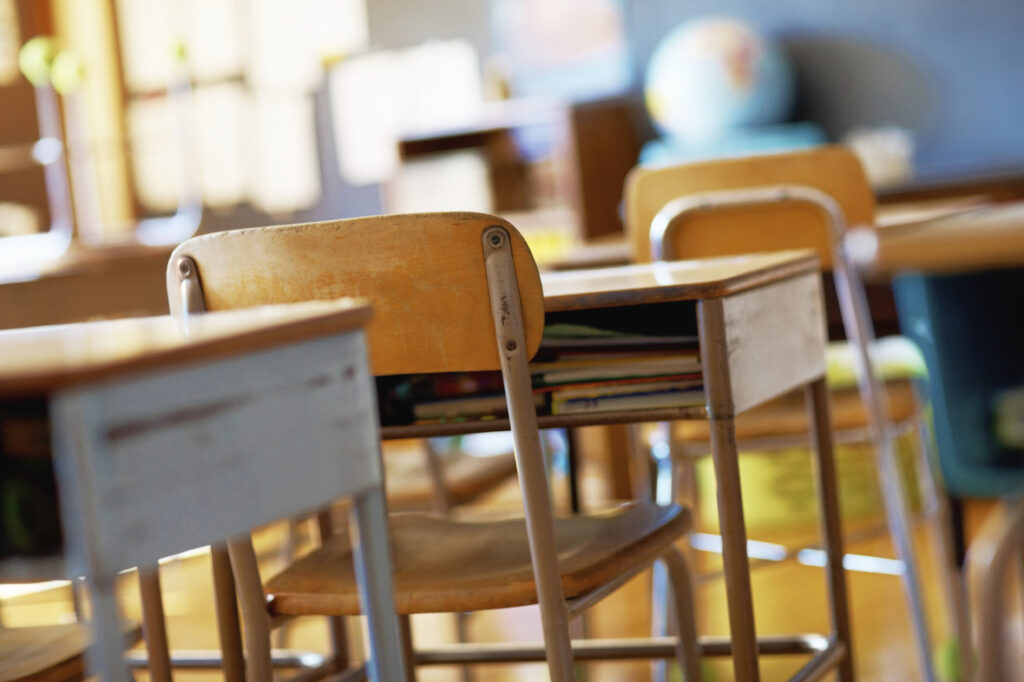
Millions of American children are regularly missing class.
Nearly a quarter of American children did not show up for school regularly last year, data shows.
Chronic absenteeism continues to decline slowly at public schools across the country but remains higher now than it was before the pandemic, according to data collected from 45 states by the American Enterprise Institute, a free-market-oriented think tank.
The proportion of students who missed 10 percent or more school days fell about one percentage point last school year to 22.6 percent. Before the pandemic, that rate was around 15 percent.
“It remains a huge issue,” Nat Malkus, deputy director of education policy at the American Enterprise Institute. “The pandemic loosened norms about regular attendance, and they haven’t tightened back.”
Malkus said he doesn’t see a way for schools to boost flagging test scores until attendance improves. In Washington, truancy in district middle schools was also linked to a surge in crime.
Many schools are trying to fill seats. Los Angeles Unified School District administrators visited families last week in an effort to boost attendance as classes resume this week. Chronic absenteeism in the nation’s second-largest district fell to 27.7 percent last school year. It was 26 percent in 2018-2019.
“While chronic absenteeism remains higher than before the pandemic, we have made significant progress in bringing the rate down,” district spokesman Britt Vaughan said.
Catch up quickly every weekday morning with a rundown of the 7 most important and interesting stories. Sign up for The 7 newsletter.
The post Chronic absenteeism remains high six years after pandemic began appeared first on Washington Post.