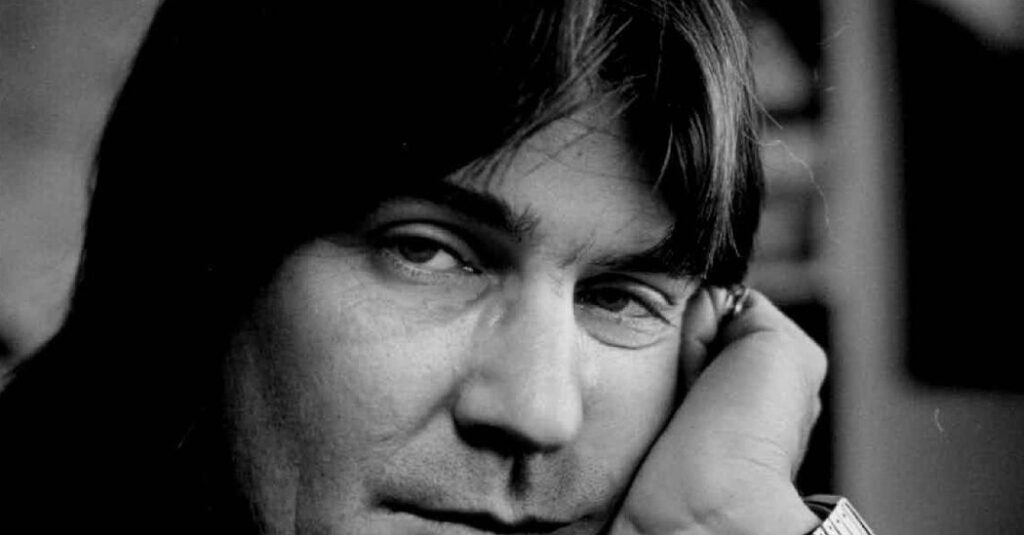
Ward L. Churchill, a professor whose firing in 2007 by the University of Colorado triggered a lawsuit that became a landmark case about academic freedom and free speech, had died. He was 78.
Mr. Churchill’s death was confirmed by his former lawyer, David Lane. Additional details were not immediately available.
Mr. Churchill had been a tenured professor at the university’s Boulder campus since 1991 and the chairman of its ethnic studies department. In 2007, a faculty panel found that he had plagiarized and falsified parts of his research on Native Americans, prompting his dismissal.
He filed a wrongful termination suit against the university, claiming that the real cause for his firing was to punish him for an essay he had written on Sept. 12, 2001, in which he argued that the United States had brought the Sept. 11 attacks on itself. He compared office workers who had been killed to Adolf Eichmann, a senior Nazi figure who was a key architect of the Holocaust.
In the essay, titled “Some People Push Back: On the Justice of Roosting Chickens,” Mr. Churchill wrote that the financial workers who died at the World Trade Center in Manhattan were not innocent bystanders, but “little Eichmanns” who were part of “a technocratic corps at the very heart of America’s global financial empire.”
When the lawsuit went to trial in March 2009, Mr. Churchill’s lawyers described the university panel’s search for professional misconduct as a pretext for a foregone decision to dismiss him.
The essay garnered little notice at the time of its publication, or when it was expanded and published as a book in November 2003. But when Mr. Churchill was invited to speak at Hamilton College in New York in 2005, the essay resurfaced and caused an uproar which prompted the organizers to cancel the event.
Under pressure, including from Governor Bill Owens of Colorado, the university formed a panel to investigate Mr. Churchill’s conduct. It concluded that he had committed serious academic misconduct, including falsifying and fabricating historical details and plagiarizing work by an environmental group and another scholar.
It reached a split verdict on whether he deserved to be dismissed, with three of its five members in favor and two recommending instead a two-year suspension.
The university’s leaders decided to fire him, prompting Mr. Churchill to launch his legal challenge.
Mr. Lane, his lawyer in that trial, said he was a victim of a “howling mob” of university administrators, conservative media and politicians “falling over themselves” to secure his removal.
In April 2009, the jury found that Mr. Churchill had been wrongfully dismissed, awarding him a symbolic $1 in damages. It found that Mr. Churchill’s political views had been a “substantial or motivating” factor in his dismissal, and that the university had not shown that he would have been dismissed anyway.
“The jury’s award is some vindication,” Mr. Churchill said of the trial’s conclusion. “I didn’t ask for money, I asked for justice.”
Afterward, Judge Larry Naves of the Denver District Court ruled that the university did not have to reinstate or compensate Mr. Churchill, a decision which was upheld by the Colorado Court of Appeals. In 2012, Mr. Churchill took his case to the Supreme Court, which affirmed the lower courts’ rulings.
Ward LeRoy Churchill was born on Oct. 2, 1947, in Urbana, Ill., to Jack LeRoy Churchill and Maralyn Lucretia Allen. They divorced when he was a year old. In a 2003 essay in an academic journal, he claimed to be of Muscogee and Creek descent through his father, and an enrolled member of the United Keetowah Band of Cherokee Indians through his mother.
The tribe said in 2005 that he was an associate member rather than a full member. A former member of the tribe’s enrollment committee said that Mr. Churchill could not prove his eligibility by blood but was granted associate status based on his advocacy.
He grew up in Elmwood, Ill., and graduated in 1965 from Elmwood Community High School, where he played football and basketball. Former classmates told The Denver Post in 2005 that he liked to debate politics, even as a teen.
He joined the United States Army in 1966, training as a light-truck driver and projectionist, then served in Vietnam. He told The Denver Post in a 1987 interview that he had attended paratrooper school and was assigned to an elite reconnaissance patrol unit, details which did not appear on his Army record.
He was discharged from the Army in 1968. He said in the 1987 interview that he became active in antiwar leftist circles in Chicago after he returned from Vietnam.
He received a bachelor’s degree in technological communications from Sangamon State University in Springfield, Ill., in 1974, and a master’s degree in communications theory in 1975.
He was hired by the University of Colorado in 1980 to be the acting director of its American Indian Equal Opportunities Program. In 1991, he became an associate professor in the communications department and received tenure. He became a full professor and transferred to the ethnic studies department in 1997.
His classes were popular enough that up to 60 students would be on the wait list, Arturo Aldama, a professor in the ethnic studies department, told The Denver Post in 2005.
He was married four times. His first wife, Dora-Lee Larson, filed to end their common-law marriage in 1984 and accused Mr. Churchill of “past violence and threats.” His second marriage to Marie Annette Jaimes, a colleague at the University of Colorado, ended in 1995. That same year, he married Leah Kelly, who was struck and killed by a car while crossing the road near Boulder in 2000, at the age of 25.
Mr. Churchill’s fourth wife, Natsu Saito, was a fellow professor in the University of Colorado’s ethnic studies department. In 2006, while he was being investigated by the university, Ms. Saito resigned to teach at Georgia State University.
She did not immediately respond to a request for comment, and no information about survivors was immediately available.
Alexandra E. Petri contributed reporting.
The post Ward Churchill, Professor Who Challenged His Dismissal, Dies at 78 appeared first on New York Times.