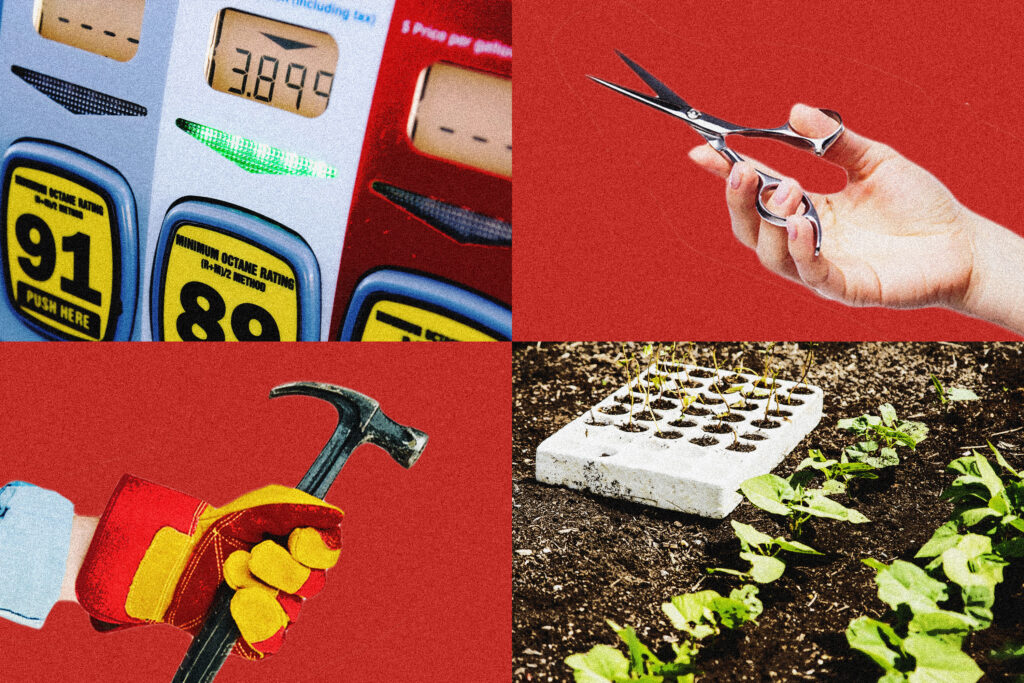
As the war in Iran barrels toward the six-month mark, many Americans are growing weary of persistent inflation and high prices at the pump. While many still hope for relief, they are starting to think about tightening their belts.
Consumers still haven’t slashed spending dramatically. Overall, spending remains resilient in the face of elevated inflation, which cooled slightly to 3.4 percent in the year ending in July, according to data released Wednesday.
Still, in interviews, families across the country say they are looking for ways to keep their budgets in check, including by curbing gas usage, eating cheaper meals and taking on DIY projects they once would have outsourced.
“It absolutely still makes sense to pay for some things, but you just have to be a lot more deliberate,” said Lydia Royce, a 38-year-old mother of two in Norman, Oklahoma who works in financial tech.
Royce said she’s privileged — her family isn’t worried about paying their mortgage or filling up their cars. But she also wants to be able to retire one day, so she’s cutting back where she can. For now, that means choosing less expensive extracurriculars for the kids, stretching out her salon appointments and learning to install a French drain herself instead of hiring an expensive landscaping team.
In Chattanooga, Tennessee, 43-year-old Sarah Bailey said her family has switched from seafood to cheaper proteins for dinner — lately, often pork. She’s drinking filtered water instead of spring water, and she’s being mindful about driving — planning purposeful, fuel-conscious routes on days full of work, errands and kid-related activities.
“I’m just moving through life a bit differently,” said Bailey, a drug and alcohol counselor and author.
The same is true for Donny Plumley, 55, a nurse in Huntington, West Virginia. He and his wife rarely eat at restaurants anymore, he said. They grow vegetables in raised beds and occasionally buy whole steer in bulk to save on groceries. Plumley also equipped his house with solar panels and conducts a penny-saving meal prep each week.
“We’re making a lot of little changes,” he said. “We have to seriously consider each thing because there’s just less money.”
This quiet economizing has yet to show up in national data. Consumer spending ticked up slightly in June, as people’s purchases continue to defy high prices. Some of the increase is simply because gas, groceries and other necessities cost more. But spending data from at least two major banks also show discretionary spending is solid, with consumers finding ways to afford extras despite rising prices.
Mark Zandi, chief economist at Moody’s Analytics, said wealthy Americans benefiting from a strong stock market are contributing heavily to the overall economic picture even as the less well-off are feeling the strain.
“The well-to-do are still driving the train,” Zandi said.
And even middle-class Americans are still reluctant to make big adjustments, said Diane Swonk, chief economist at KPMG.
“It’s not just that consumers will resist with everything in their power reductions in their standard of living, but they resist a reduction at the pace at which they accumulate stuff,” Swonk said. She added: “Even if they’re able to keep spending going, it’s not as easy and you’re not getting as many things as you once did.”
Those cracks are starting to show. In the Federal Reserve’s most recent “beige book,” a report released in July that includes anecdotal evidence of economic conditions around the country, several Fed districts reported people seeking out more affordable alternatives and cutting discretionary spending.
Meanwhile, the larger-than-usual tax refunds that helped prop up spending this spring are now gone for most families. In June, the personal savings rate — which measures how much of their disposable income people dedicate to savings — dipped to 2.7 percent, the lowest level in four years.
That’s where Chase Johnson, a 38-year-old insurance sales operations manager in Maxwell, Iowa, is feeling the pinch. He said he and his wife haven’t cut back on everyday purchases or vacations, but they expect to save about 10 percent less this year.
“We’re not going to quit living because prices are going up,” Johnson said. “The economy is the economy. We’re going to make it work either way.”
By many metrics, the U.S. economy is stable, if not inspiring. Overall growth was somewhat sluggish in the second quarter, slowing to a 1.5 percent pace, but the unemployment rate remains low. And wages are still growing, though a Washington Post analysis found paychecks are stagnant compared to a year ago when inflation is taken into account.
New data from the Bank of America Institute shows consumers remain solid financially and that, the gap between higher income and middle- and lower-income groups’ spending and wage growth is narrowing.
Still, many Americans feel the economy isn’t working for them. Multiple polls showing a decline in consumer confidence. And the cost of living has dominated campaign rhetoric in the run-up to this fall’s midterm elections, with even some Republicans joining the chorus of online complaints about a viral $20 burrito.
As the war drags on, Zandi said, people might finally have to spend down savings or rack up more debt, which could eventually lead to sagging consumer spending. But as long as the labor market remains steady, he said, it’s unlikely people will pull back too far.
And for now, consumers at all income levels are navigating higher prices well — still spending on extras, said Michelle Meyer, chief economist at Mastercard. Higher-income families have been able to spend faster, but across the board, the stable labor market has propped people up.
“There’s a lot of uncertainty,” she said. “But uncertainty is also our new normal.”
The post Some Americans say they’re starting to cut corners as inflation persists appeared first on Washington Post.