For years, luxury boats and marine equipment were going missing from southwest Florida cities, from Sarasota to Naples to Marco Island.
Even after three South Florida men were arrested in January 2010 in Sarasota in a sting to trap thieves stealing GPS devices, it would take a decade for federal authorities to link those cases to a major conspiracy that trafficked people and stolen vessels between Cuba, Mexico and the United States.
It became the focus of an F.B.I. and Homeland Security Investigations task force known as Operation Sisyphus. Eventually Raúl G. Rodríguez Castro, a grandson of former Cuban president Raúl Castro, was named as someone who helped the Quintana Roo mafia from inside Cuba, though he has not been charged.
Did anyone get caught?
In 2020, the U.S. Department of Justice indicted several Cubans based in Mexico suspected of being members of a criminal group known as the Cuban Mafia in Quintana Roo, a state in eastern Mexico. They were accused of stealing boats in southwest Florida as far back as 2009 and using them to smuggle thousands of migrants out of Cuba to Mexico and ultimately the United States.
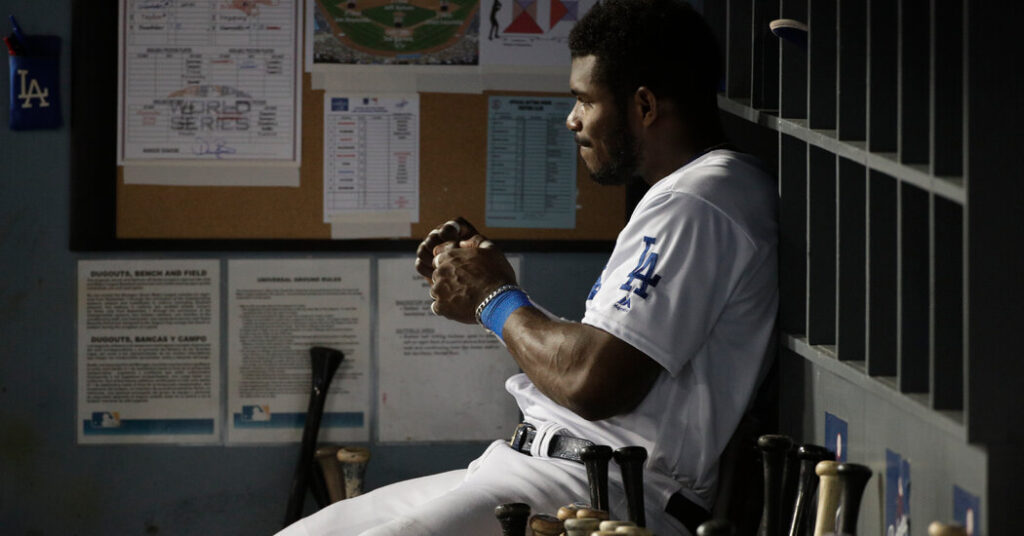
Among the migrants smuggled were professional baseball players, including shortstop Adeiny Hechavarría, who played for a variety of teams, and Los Angeles Dodgers slugger Yasiel Puig.
Did anyone get hurt?
About 25 people died during the voyages, according to court documents.
Migrants who were trafficked and could not pay the $10,000 smuggling fee were held captive in Mexico, tortured with Tasers, and their families were extorted, prosecutors said. Some women were forced to work in strip clubs, according to court records.
The traffickers would contact the victims’ relatives and threaten to torture, starve and kill their victims if the relatives refused to pay, the U.S. Department of Justice said. Those who paid the fee were sent by bus to the U.S.-Mexico border and coached on how to request political asylum.
“We would do physical punishment,” one of the traffickers, Reynaldo Crespo Márquez, testified in 2023 after pleading guilty in U.S. federal court in Miami. “Sometimes they were beaten up with a wooden board or with a Taser gun.”
Among other schemes prosecutors discovered: buying goods with stolen credit cards and smuggling them into Cuba for sale at Cuban government stores. The defendants were also charged with stealing more than 600 outboard boat engines and vessels from the Tampa area and shipping them to the migrant smugglers in Quintana Roo.
“These guys were the real pirates of the Caribbean,” said David Bolton, a veteran private investigator who said he stumbled upon the operation while working on an unrelated case and brought the issue to federal authorities.
He described the members as “ruthless killers.”
In 2009, several group members conspired to kidnap and kill a man in a dispute involving a Mexican cartel called the Zetas. His body was dismembered and disposed of at sea, according to court documents.
Members of the organization also sought to profit from drug trafficking and fraud schemes, which included smuggling boats, cars and trucks, the Justice Department said. Some boats were sold to pay off foreign officials or used as bribes, documents show.
How is the grandson of former Cuban president Raúl Castro involved?
At least six co-defendants pleaded guilty, including José Miguel González Vidal, 38.
Mr. González Vidal later said he gave a boat to Mr. Rodríguez Castro, former Cuban president Raúl Castro’s grandson, court records show.
The U.S. Department of Homeland Security called Mr. González Vidal “a career criminal” whose criminal record included multiple convictions for false imprisonment, robbery, grand theft, larceny and illegal use of credit cards. He illegally entered the United States at least twice, Homeland Security said.
A dual Cuban-Spanish citizen, he had been deported to Spain only to be extradited back to Florida to face federal RICO conspiracy charges.
He pleaded guilty in late 2023 and was sentenced to 25 years in prison.
Court records show a federal judge recently sealed his closed case, which is sometimes done when a defendant is cooperating with prosecutors. His lawyer, Juan D. Berrios, declined to comment.
The Cuban government called the accusations involving Mr. Rodríguez Castro “slander,” and Mr. Rodríguez Castro did not respond to requests for comment.
The defendant who Mr. Crespo Márquez had testified against, Javier Hernández, of Miami Beach, was found guilty for his role in the conspiracy — largely smuggling boats to Mexico — and was sentenced to eight years in prison.
In April, Mexican authorities announced they had arrested a key financier of the Quinta Roo group, Remigio Valdez-Lao, 59, who is expected to face extradition. The New York Times was unable to determine whether Mr. Valdez-Lao was represented by a lawyer.
Mr. Valdez-Lao’s name had surfaced before: he was among those arrested in 2010 in Sarasota.
The post What to Know About the Cuban Mafia in Quintana Roo appeared first on New York Times.