Shiv Parihar is a Post Opinions intern.
Advocates for high minimum wages cast themselves as fighters for the poor. But I can tell you from experience why this policy doesn’t work for the people it’s meant to help.
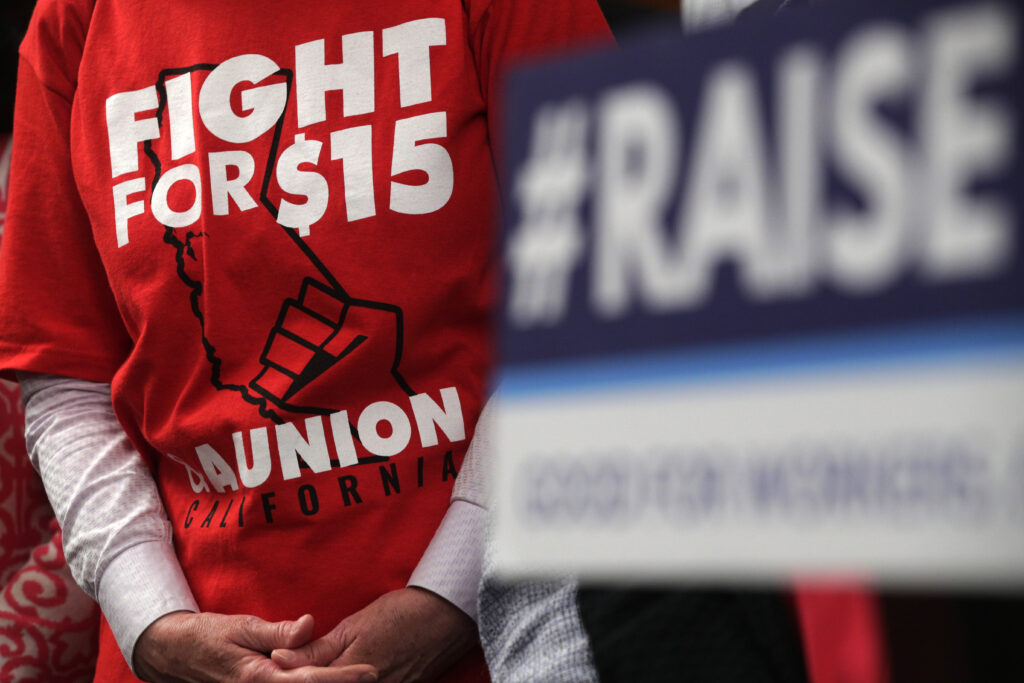
The long-running “Fight for $15” campaign has brought minimum wage increases to 17 states and Washington, D.C., since 2012. New York Mayor Zohran Mamdani, a democratic socialist, recently upped the ante by pushing for a $30-an-hour minimum.
The push faltered recently, however. In June, Oklahoma voters soundly rejected Question 832, which would have increased the state’s minimum wage to $15 by 2029. This result may seem surprising if viewed through a “fight for the poor” lens; after all, Oklahoma has the eighth-highest poverty rate in America. Yet the measure failed even in some of Oklahoma’s lowest-income counties, such as Harmon County, where three-quarters of voters rejected it.
Perhaps many residents of Harmon County know from their own lives what numerous studies have affirmed: The common-sense conclusion that higher minimum wages lead to increased unemployment. When businesses are forced to pay above-market hourly rates, they lay off workers whose labor doesn’t justify a higher cost. No one should be surprised that minimum wage increases correlate with increased homelessness.
This issue is personal for me. The jobs that these policies kill once helped keep me alive.
At 5, I was living in a Utah shelter at the height of the Great Recession. My single mother had little education or experience, but she needed work. Low-wage, entry-level positions were her path into the job market. She didn’t have a job that paid $15 an hour until 2023. If the minimum wage had been $15, she might not have had one at all.
Minimum-wage jobs were even more helpful to my father. He was a high school dropout who had been to jail. Had the minimum wage been $15, far fewer employers would have been willing to gamble on an applicant like him, especially one with a child to take care of half the week.
Utah has never raised its minimum wage above $7.25 an hour, the current federal floor. That isn’t much. But for my family, it was the difference between dinner and an empty stomach.
So I care about the poor, too, which is why I’m glad Oklahoma voters rejected a $15 minimum wage. I have no doubt there are kids in situations like mine in Harmon County. Only 0.1 percent of wage earners in Oklahoma actually work for $7.25 an hour, the current minimum in the state. Had the referendum passed, it would mostly have killed off $10, $12 and $14 per hour jobs. In a state where the average monthly rent is $920, these are living-wage jobs.
The well-intentioned supporters of minimum wage hikes think of themselves as battling for everyday Americans, and I’m sure that can feel good. But hundreds of thousands of the poorest Americans have stories like mine. The fight for $15 is a fight against us.
The post How the ‘Fight for $15’ makes life harder for families like mine appeared first on Washington Post.