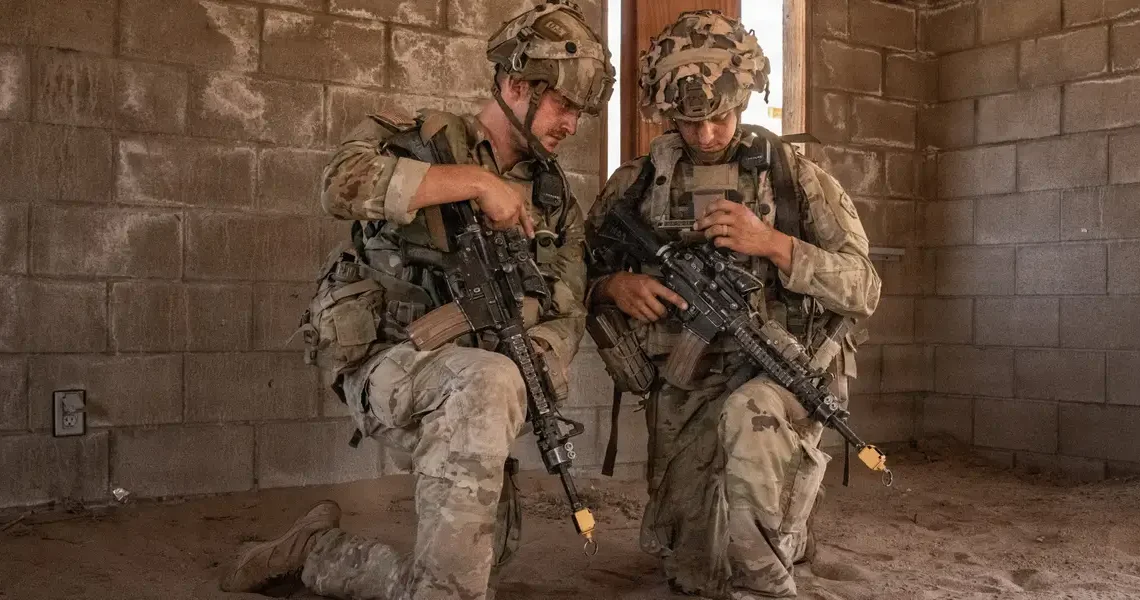
The US Army is embracing a massive digital transformation across systems and technologies, but that doesn’t mean soldiers are ready to give up their physical, analog backups any time soon.
At a recent experimentation exercise at Fort Irwin in California, soldiers tested new digital maps and communications systems that Army leaders described as a major jump forward in streamlining decision-making. But troops said they still wanted physical counterparts for redundancy, ensuring they had fallback plans if network connections were lost.
The exercise, called Project Convergence Capstone, tested nearly 100 new technologies, including aerial and ground drones, electronic warfare capabilities, and the Army’s prototype Next Generation Command and Control system, or NGC2, itself made up of a host of experimental pieces of hardware and software.
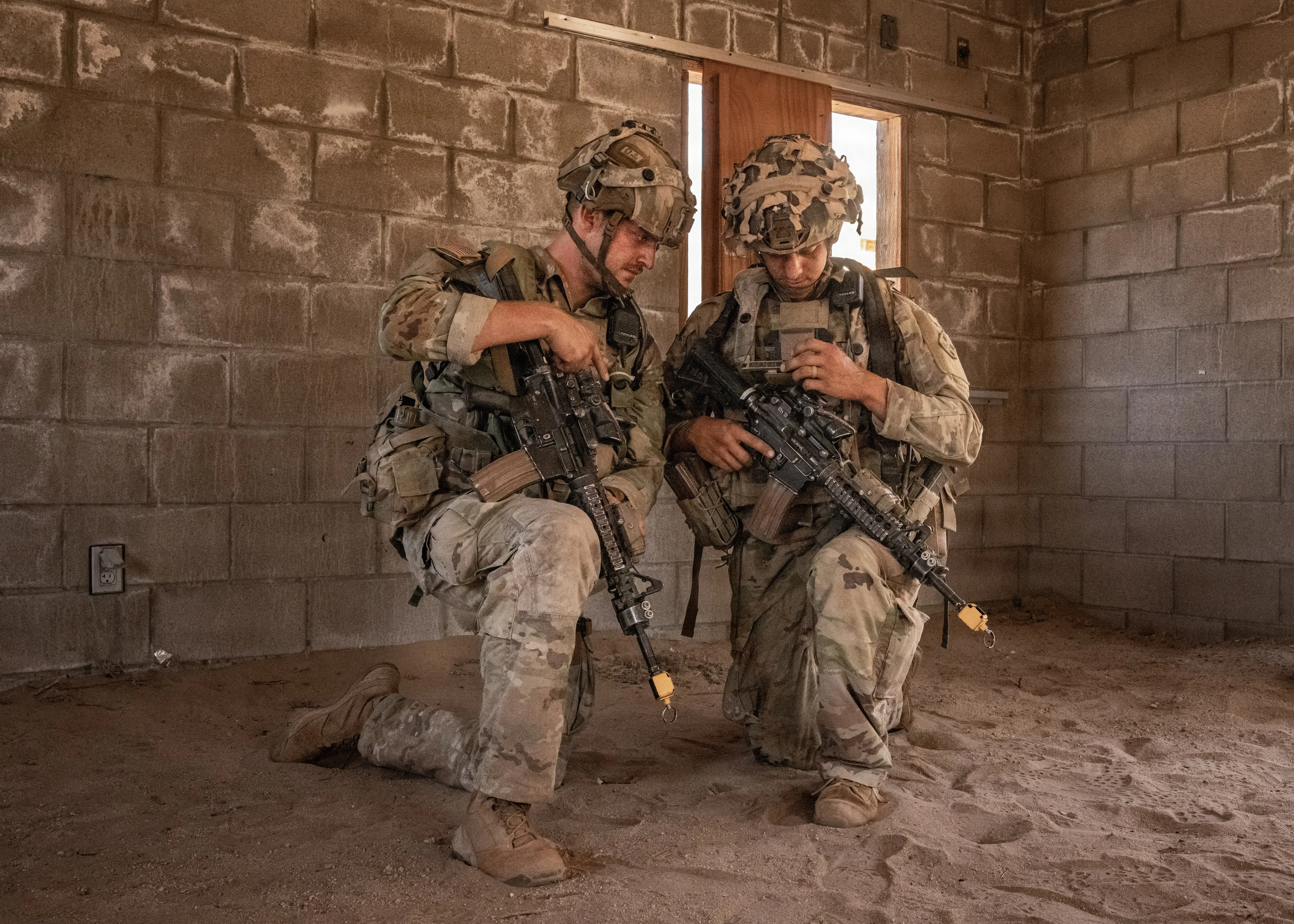
Some of the newest systems that Business Insider saw in action included NGC2’s digital map application, which allows soldiers to see the locations of friendly forces and weapons in near real time. During an urban assault scenario, a soldier was seen using the map feature on his End User Device, a Samsung phone loaded with NGC2 software and worn in a carrier on the chest.
“Now I have good situational awareness of all of my elements around the battlefield in real time,” Capt. Mohamed Elmaola with the 4th Infantry Division told Business Insider. “Digital enables me to get real-time, precise targeting feedback, which has been critical” to the fight.
That doesn’t mean Elmaola is giving up his physical map, which he carried and updated while other soldiers flew a Black Widow quadcopter to assess enemy positions. The hard copy actually had some benefits that the digital version didn’t.
“My analog copy is what I fight and live off because this gives me the totality of the story of what the enemy is doing, especially in a degraded environment,” Elmaola said.
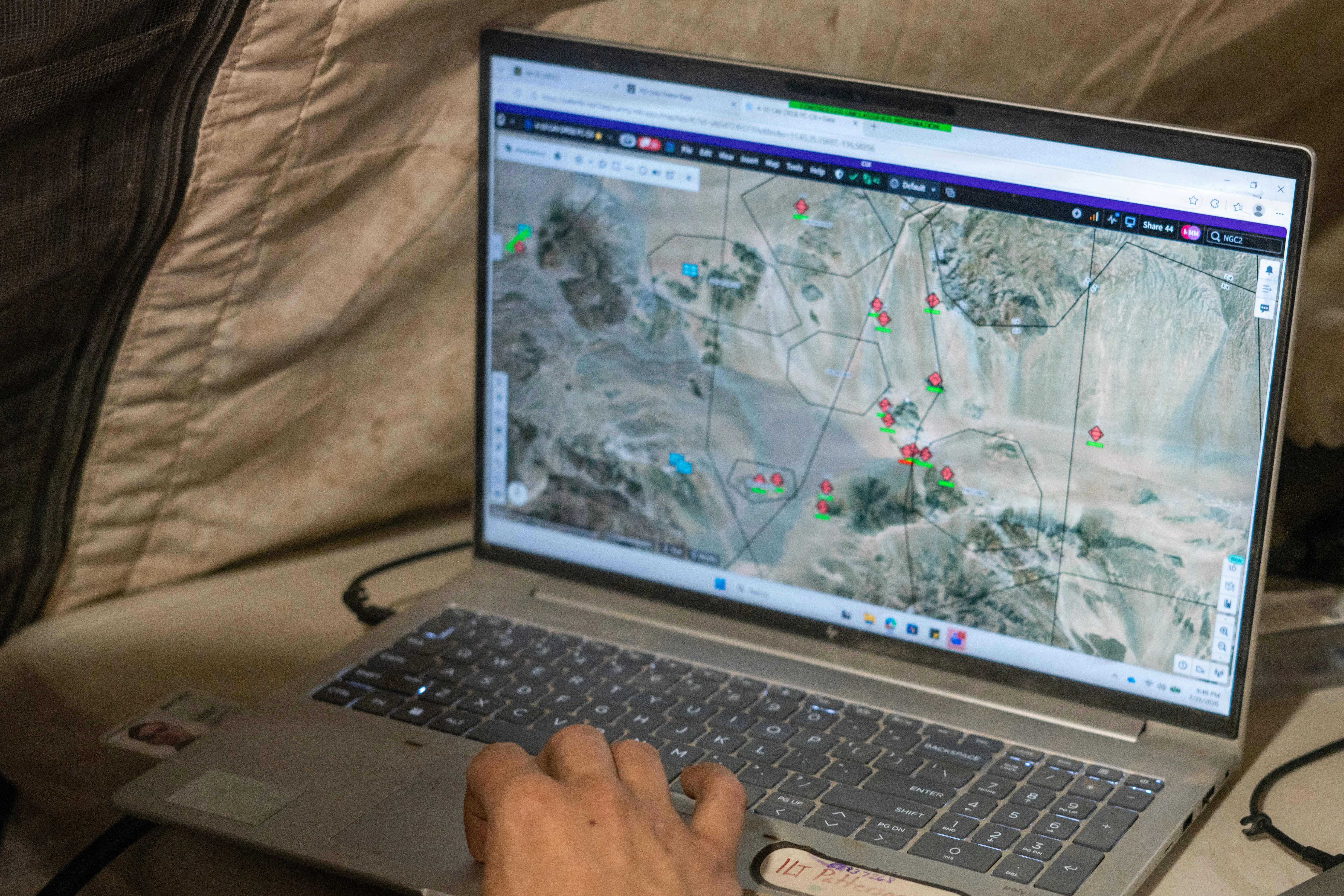
The degradation of the electromagnetic spectrum during the exercise, due to jamming and other electronic warfare effects, reinforced why Elmaola and others kept their physical maps close. If their EUDs or other digital assets went down, they’d need the analog versions to continue the fight.
The redundancy, Elmaola said, was crucial.
“This should never go away,” he added, pointing to his physical map.
Other soldiers said physical maps were familiar from training. They would use the digital map to compare against and update their analog copies, while also using it to understand the overall battlefield situation.
Some Army leaders described the use of new technology, whether on its own or alongside analog copies, as coming down to individual preference.
“I find that the way we all interact with technology is a little bit different, and we all have different preferences,” Maj. Gen. Patrick Ellis, commander of the 4th Infantry Division, said, adding that some use cases also likely came down to how comfortable soldiers were relying on technology.
Connectivity issues and the need for redundancy were major themes across the exercise, as the Army tested new digital technologies against electronic warfare and soldiers continued to fight when those systems weren’t working. Some soldiers said systems like NGC2 could still work in limited capacities while under jamming, while others said connectivity problems had completely cut off their access.
Army leaders and soldiers said feedback from the exercise, particularly on how systems performed and what soldiers found most useful, was key to moving forward. The review process will focus on key questions around what systems were intended to do and whether they met those goals.
“It is probably the most critical thing that we’re doing here, is taking observations and answering questions that we came in here to answer,” Brig. Gen. Daniel Hibner, head of the Army Joint Modernization Command, said.
Read the original article on Business Insider
The post The US Army is going digital, but soldiers still want physical backups of their battlefield maps appeared first on Business Insider.