I was recently digging through my Instagram settings, trying to disable Meta’s now-defunct feature that allowed anyone to create AI deepfakes of me without consent. Anger bubbled up inside as I tapped through the Kafkaesque opt-out process.
Rather than throwing my phone across the room, I blurted to my partner that we should leave San Francisco behind and be off-grid sheep farmers. Something analog. In that moment, anything sounded better than this ongoing, generative-AI-induced hell.
Many Americans are having similar reactions to the growing prevalence of generative AI in daily life. “The AI revolution has happened, and everybody hates it,” says Meredith Broussard, a data journalism professor at New York University and author of Artificial Unintelligence: How Computers Misunderstand the World. In a recent Gallup poll, Americans’ increased familiarity with generative AI coincides with negative attitudes about the technology. This is especially true for young people between 18 and 29, where almost half see generative AI as doing more harm than good.
While this AI backlash has been brewing for the last few years, more companies appear to be directly addressing these concerns. LinkedIn added a “seems like AI slop” button for reporting AI-generated content on the platform, despite still hosting plenty of generative AI tools. Snapchat announced that fully AI-generated videos would no longer be eligible for its discovery feed. Substack recently added an AI detection tool to police writers.
The backlash’s “why” is simple at its core. Many Americans feel like they never consented to any of this. I had no idea that my online interactions would one day be scraped en masse for AI model training. I didn’t ask for Instagram to enable deepfakes on my account. I didn’t want Google to push AI-generated answers at the top of search results. I woke up one day, and generative AI features were stuffed into every corner of all the software I rely on without my consent.
Whether it’s AI models scraping your data or noisy data centers popping up in your backyard, the AI revolution seems to be an event happening to us without making us feel like active participants.
“Consent is really important,” Broussard tells WIRED. “We can connect that to the way that women, queer people, people of color, and minorities get exploited and abused online. Tech companies have never really been sensitive to issues of consent.”
Public backlash appears to be working, at times, in getting unwanted AI features shut down. “They just roll them out and see what sticks, because nobody really knows what this is for,” says Nick Seaver, an associate professor of anthropology at Tufts University focusing on technology and society. Google recently rolled back the ability for people to use generative AI to tweak satellite images on Google Earth almost immediately after launching it, following reporting from 404 Media. Additionally, Meta turned off the aforementioned deepfaking tool for Instagram users after three days of public outcry and viral videos with millions of views criticizing the feature.
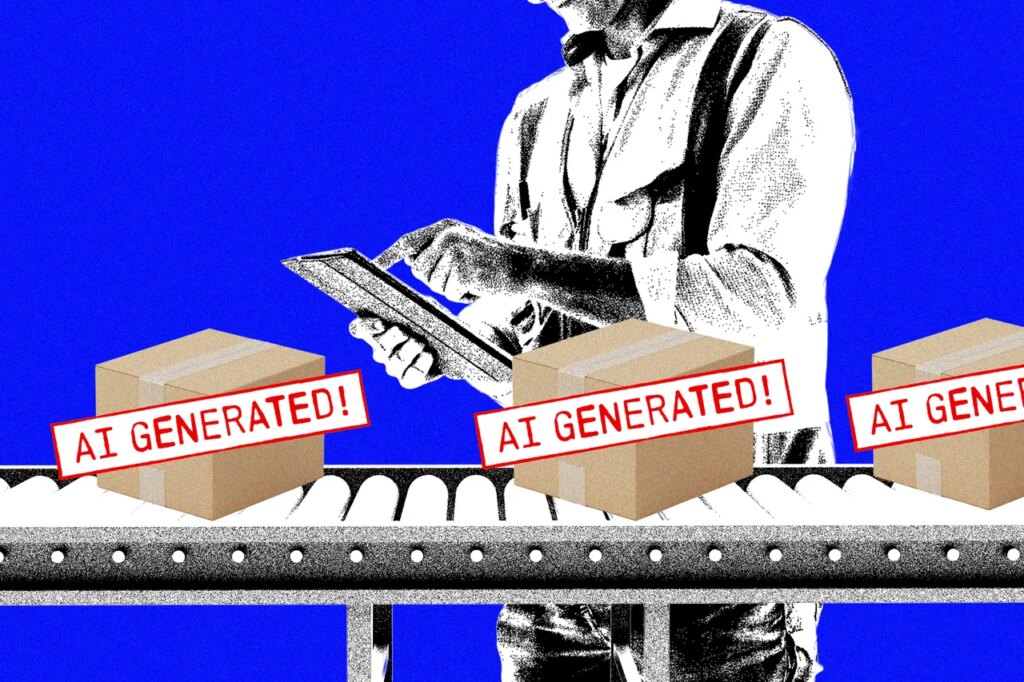
There’s also a growing rejection of generative AI in marketing materials. Many people online reacted negatively to major brands, like McDonald’s and Coca-Cola, incorporating generative AI visuals into their ad spots. Even local shops see backlash for promoting events using AI-generated posters.
Beyond online outcry, more people are starting to protest against the building of data centers that power these AI tools. “There’s a lot of pushback coalescing around data centers,” says Emily Bender, coauthor of The AI Con. “Data centers are important because they are focal points of environmental and economic damage.” Americans across the political spectrum have recently united in these data center protests.
While tech workers in San Francisco, especially software developers, have latched on to generative AI tools as central to their everyday work, many of these uses are obligatory. “Top-down mandates to use large language models are crazy,” one Block employee told me during the layoffs earlier this year at Jack Dorsey’s fintech company. “If the tool were good, we’d all just use it.” I don’t want to be forced to use specific tools at work, especially one that’s morally questionable and shown to be wrought with errors.
It’s easy to feel helpless when pushing back against the whims of giant, well-funded tech companies, but the recent rollbacks of some AI features stand as a reminder about the power of collective action. “I would definitely encourage people to organize using traditional methods as well as digital methods,” says Broussard. “Remind people that public pressure works.”
The post The AI Slop Backlash Is Actually Having an Impact appeared first on Wired.