Ask any D.C. bus operator, and they’ll probably have their fair share of horror stories from their time on the job.
Some passengers have spat on them. Others have poured unknown liquids on them or thrown bottles at their heads. Many bus operators say they’ve lost count of how many times they’ve been cursed at or threatened. Some have faced passengers brandishing weapons or have been assaulted.
“You can’t predict what’s going to happen when you work for the public,” said Terry Dabis, who has been a bus driver for 12 years.
But what can be predicted, Dabis said, is that a recent policy change by the Washington Metropolitan Area Transit Authority requiring drivers to verbally quote the $2.25 fare to passengers may make their job even riskier.
Eight current Metro employees and two former employees who work at the union representing Metro workers told The Washington Post that they are concerned that announcing the fare is ineffective and may increase the risk that bus operators will be harassed or assaulted. As a result, several drivers said they are disregarding the policy to keep themselves safe.
“It’s very disheartening to think that a company would put their operators in harm’s way by allowing this type of change,” said Dabis, who is among those refusing to quote the fare. “I just want to go home the same way that I came to work: healthy, unharmed. I love this company. I love the customers. But quoting the fare is just too much.”
Fare evasion has plagued Metro for years. In 2024, Metro said about 70 percent of bus riders didn’t pay. During fiscal year 2022, Metro estimated it lost more than $40 million in revenue due to fare evasion on bus and rail. But several bus operators said they think reminding passengers about the fare falls outside the scope of their jobs.
Decades ago, WMATA required bus operators to announce the fare, according to multiple bus drivers who worked there at the time. But about 10 years ago, Metro reversed course and banned operators from doing so to reduce the chances they would be the targets of harassment or physical abuse.
A 2017 WMATA notice to operators said fare disputes were the primary cause of operator assaults. The notice said drivers could state the fare only if the automated recording announcing it was broken or if a passenger asks what the fare is. The notice also said operators would face disciplinary action for quoting the fare outside of those scenarios.
But in May, WMATA reversed course, again requiring bus drivers to quote the fare to passengers, according to a directive to operators.
“Fare collection is essential to sustaining reliable transit service. Bus Operators must support this effort by quoting the current fare to all customers,” the directive said. Operators should say, “Hello, the fare is $2.25” to all customers, it says.
The directive added that bus operators are not expected to enforce fare collection or engage in disputes over fares. If a passenger becomes combative, the directive said drivers should not engage and instead call for assistance. (The notice also said Metro is aware of fare box reliability problems, which can frustrate fare collection efforts, but that management is working on them.)
TaLisa Carter, an American University associate professor who has studied fare evasion, said the new policy raises the chances of negative interactions.
“It does increase the risk of a passenger who doesn’t have the fare to become offensive, to become aggressive, to become hostile,” she said.
Aaron Brooks, 53, started his job as an operator more than two decades ago, back when they were expected to quote the fare. “You got things thrown at you,” he said. The number of times he’s been cursed out is “uncountable,” he said.
When WMATA changed its policy to ban quoting the fare, Brooks said he felt better protected. “Going back to it, it’s not safe,” said Brooks, who is refusing to do it.
A Metro spokesperson declined to comment on drivers declining to follow the new policy. At a Metro board meeting in May, WMATA General Manager Randy Clarke said bus operators should not enforce the fare. “They’re doing fare awareness,” he said.
Last week, Clarke announced that Metro had recorded a drop in crime for the second year in a row. Crimes such as assaults and robberies fell 12 percent compared to last year and were down 61 percent compared to 2023, Metro said.
“We are the safest Metro’s ever been. We believe we’re the safest transit agency in the country,” Clarke said.
Fare enforcement across bus and rail has also risen sharply, with the increase particularly drastic on buses. In 2023 there were seven bus fare evasion citations, Clarke said. In 2026, there were 9,600.
Metro has faced severe fiscal challenges following the pandemic. Since launching a bus fare evasion campaign a couple months ago, which includes putting more officers on buses, Clarke said fare evasion is down 10 to 12 percent, which equates to about $200,000 more per week.
“That revenue is critical to make sure the system is funded,” he said. “Fare enforcement allows us to ensure that people that are riding the system are treating our community system with respect.”
Even though crime is down, some bus drivers say the new policy still has them concerned.
Raynell Redd works in a part of D.C. where she said a lot of passengers can’t afford to pay to ride the bus. Quoting the fare to customers can embarrass them and lead to violence, Redd said.
When Redd was being trained, she said they learned the slogan: “Push ‘eight,’ don’t debate.” Paying customers are automatically counted in the system, but operators press the “eight” button to count customers who don’t pay, she said.
That slogan “was instilled in your brain,” Redd said. “We want to offer customer service, but as soon as we engage them, asking them to pay the fare, we know that it yields violence.”
Last week, Clarke said safety concerns over the fare policy were mainly coming from the union representing Metro employees, the Amalgamated Transit Union Local 689, not employees themselves.
So far, Metro has invested around $15 million in bus operator shields, Clarke said. On some buses, the driver is already entirely enclosed by a shield, and on others, the operator is about 85 percent enclosed. Clarke said operators on all buses would be entirely enclosed by around May 2027. Buses are also equipped with cameras and trigger switches for bus drivers to request emergency assistance, Clarke said.
“There is nothing that we won’t do to look after the safety of our employees,” Clarke said.
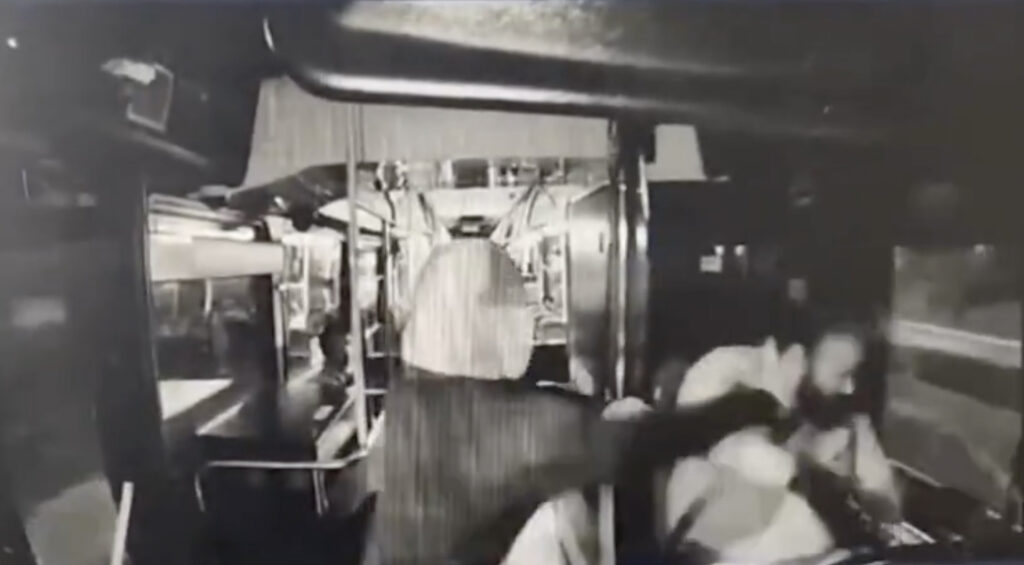
The ATU Local 689 released footage on social media last week of a masked man repeatedly pummeling a bus operator in Montgomery County, Md. earlier this month.
The driver announced the fare to the man as he boarded, according to the video, but the assault occurred after the operator told him he could not bring an open alcoholic beverage on board and asked him to step behind the yellow line that shows where passengers are allowed to stand.
The driver was treated for non-life-threatening injuries, and Metro police are searching for the man, a Metro spokesperson said.
Clarke has said any crime against a Metro employee is “completely unacceptable,” and anyone who commits one should face the most severe consequences possible. He wants a national law that would criminalize assaulting public transit employees in the same way that assaulting flight attendants is a federal crime.
One Metro employee, who spoke on the condition of anonymity, said they were assaulted by a bus customer a couple years ago, leaving them with three broken ribs. They are no longer driving but said there’s no way they’d quote the fare if they were.
Another, Ikea Bethea, 39, has been a bus operator for 18 years. She said she loves her job. But she isn’t quoting the fare because she’s scared, she said, and she thinks doing so won’t work, especially since an automated recording already tells passengers the fare at every stop.
“If you’re not going to pay the fare, you’re not going to pay the fare. The only thing you’re going to do is get agitated with me,” she said.
Dabis has faced her own share of incidents. Once, about a decade ago, a man wielded a machete on her bus. She doesn’t need more threats to her safety, she said, so her bosses should find an alternative to enforcing the fare.
“Our job has always been to get people from one place to the next safely,” she said. “That’s it.”
The post Fearing violence, some Metro bus drivers are bucking order to announce fare appeared first on Washington Post.