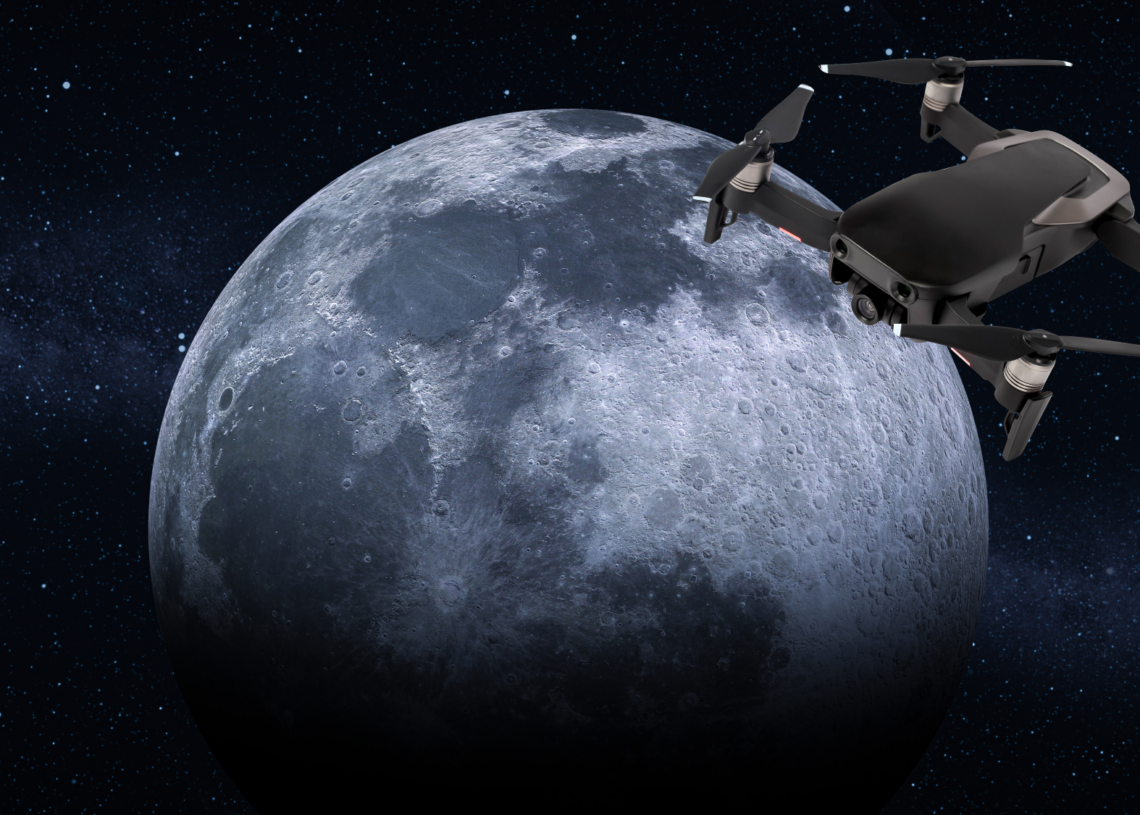
There were caves beneath the Moon’s surface. NASA wants to fly some laser drones all up in them to find out what’s going on in there, and it expressed this desire by awarding a $175,000 preliminary research grant to Austin, Texas-based Stone Aerospace Inc. According to NASA, the project could become the first mission designed to explore caves on another world.
That’s a bigger deal than it sounds because scientists think lunar lava tubes can stretch for hundreds of meters across, making some of them roughly 1,000 times larger than volcanic tunnels on Earth. They’re also naturally shielded from radiation by thick layers of rock, a fact that really stirs excitement in people who want to build settlements on the moon.
And if we truly are serious and have real aspirations about living on the moon, we should probably survey its caverns to make sure they’re safe, make sure there were no giant moon rock worms hiding in them that brave astronauts have to then fly out of like it’s The Empire Strikes Back.
Stone Aerospace’s proposed Lunar Underground eXplorer, or LUX, would descend into a massive hole in Mare Tranquillitatis, the same general area where Apollo 11 landed. The cave entrance was confirmed as part of a larger underground network after researchers analyzed radar data collected by NASA’s Lunar Reconnaissance Orbiter.
A Laser-Powered Drone Could Be the First Mission to Explore Caves on Another World
The drone itself sounds like the stuff of science fiction. It doesn’t carry a bulky battery, and instead would remain connected to a rover on the surface via a fiber-optic tether. It’s a multipurpose tether that allows the drone to transmit data, deliver laser-powered electricity, and help drive the drone’s cold-gas propulsion system, which would be necessary to avoid contaminating the cave.
It sounds like they’re just flying a drone into a cave, something that any weekend warrior dad capturing drone footage of his kids in a bounce house could do, but unsurprisingly it’s much more complicated than that, as the caves have no light at all, there will be no GPS, and there are no maps. The drones would be wandering into the complete unknown.
The grant is part of NASA’s Innovative Advanced Concepts program, which funds risky ideas that push the envelope in terms of the ways the agency can explore space.
The post Why NASA Wants to Send a Laser-Powered Drone Into Caves Beneath the Moon appeared first on VICE.