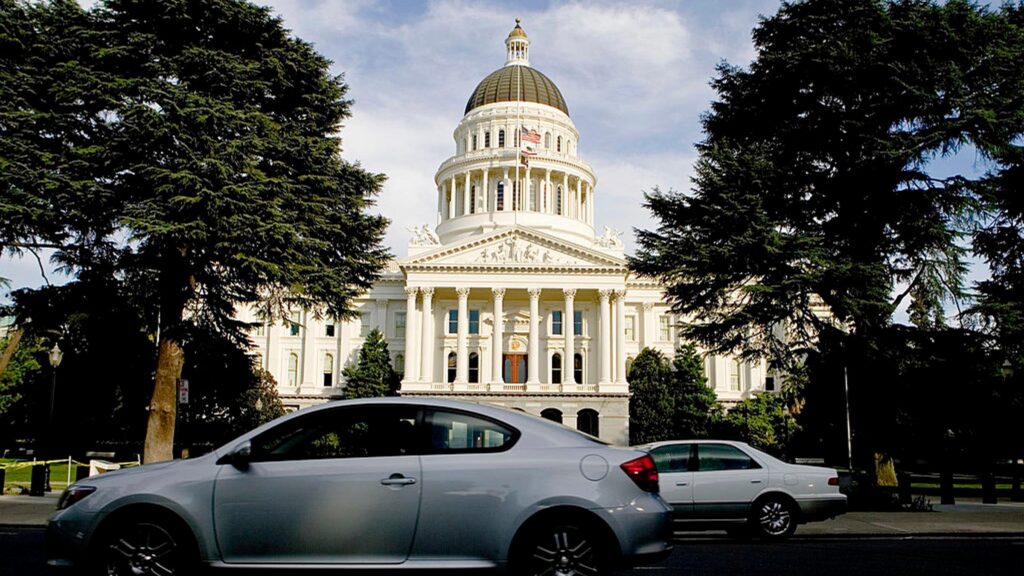
In some ways, Sacramento has Washington D.C. vibes. California’s state capital runs on government, lobbying, and the sense that politics is the local industry. My hotel room when I traveled there this week for conversations about the future of energy and climate policy was decorated with political cartoons; the elevator featured political quotes. But in 2026 perhaps nothing could be more different than how the two respective governments are approaching climate policy. Across a range of climate related issues, California has leaned in where the federal government steps back.
It goes without saying that California can’t replace the federal government. But as the largest and most economically prosperous state in the country, its position is consequential. As companies try to parse the signal from the noise and determine the future of climate policy and demand for clean technologies, the federal government is just one indicator. Leaders now need to interpret a range of signals from governments moving in different directions. And California makes the case better than any other state that climate policy will continue in the U.S.
“You have a federal government that’s really trying to send market signals away from this,” Wade Crowfoot, California Natural Resources Secretary, told me last fall. “But you also have the rest of the world moving in this direction, as well as a bunch of American states.”
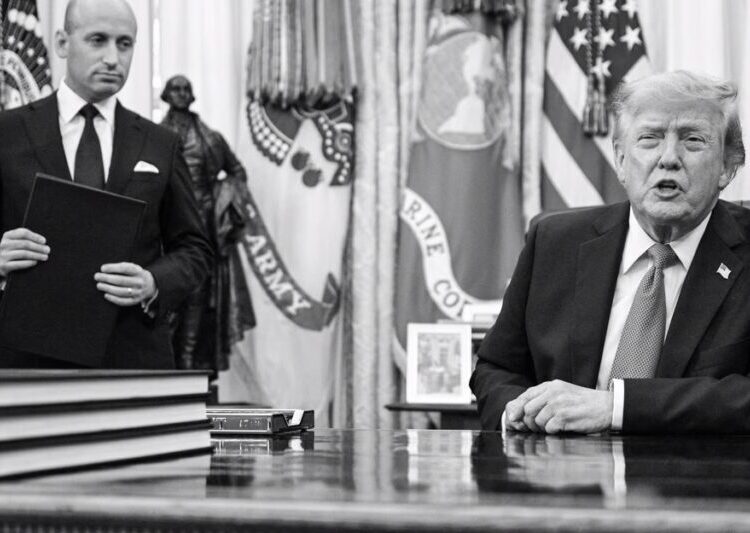
There was never any question from the outset of the second Trump Administration that it would take a hostile approach to states with aggressive climate policy. Almost immediately, the administration pulled back climate funding that had been directed to states. And it successfully pursued a reversal of the federal waivers that allowed California to enforce its own vehicle emissions standard.
The effect has also been that some blue states have chosen to slow down local efforts. In May, New York weakened its landmark climate law amid affordability concerns. And Kathy Hochul, the state’s governor, eventually approved a new natural gas pipeline in a reported exchange for the administration allowing an offshore wind project to continue. (Hochul denied a quid-pro-quo deal). And in January, Massachusetts delayed new rules designed to make heating more climate friendly.
But nowhere has the pushback been stronger than in California. Before Trump even took office, California Governor Gavin Newsom promised to offer its own policies to incentivize electric vehicle adoption if Trump nixed the tax credit passed under his predecessor—a policy that the state finalized late last month. California has also continued to push through a range of other climate related regulations. And the state says it will sue the federal government over its deals to pay energy companies for stopping their offshore wind development. (In some areas, like the state’s cap-and-trade program, California has softened its approach to account for affordability concerns while leaving the core of the policy intact).
This tug of war between states and the federal government has real consequences, not just for the companies but also for the broader U.S. economy. For an administration that likes to tout its support for American industry and beating China, there’s a certain irony to all of this: Rapidly changing and divergent regulatory regimes cost companies money.
For an executive tasked with anticipating and responding to climate policy, the regulatory patchwork within the United States has created a tiny needle to thread. Companies will continue to build products for the California market while also satisfying the current administration. But California continues to incentivize the development of new products and, perhaps, offers a better long-term signal than vacillations at the federal level.
To get this story in your inbox, sign up to TIME’s Future Proof newsletter here.
The post Why California Is Still a Climate Bellwether appeared first on TIME.