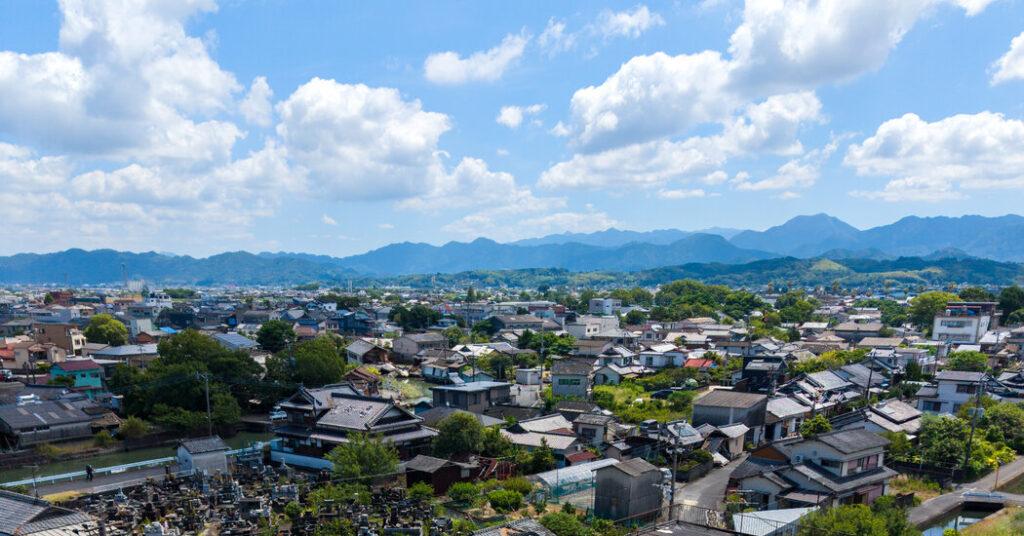
When a 6.8-magnitude earthquake jolted southwestern Japan last week, its force mirrored the kind of seismic shocks capable of flattening cities and claiming hundreds or even thousands of lives.
Yet across the island of Kyushu, the violent shaking destroyed or heavily damaged just a few hundred buildings. One week after the quake, the death toll was 38.
In Kumamoto, the prefecture near the epicenter, seismologists and local officials credit painful lessons learned a decade ago, when twin earthquakes of similar scale ravaged the region, toppling more than 8,000 buildings and ultimately causing more than 270 deaths.
Experts say the recent Kumamoto earthquake shared significant similarities — including its ground-shaking intensity, shallow depth and proximity to heavily populated areas — with the June tremors in Venezuela, which leveled coastal areas, killing more than 6,000 people.
“But we see that there are huge differences in the number of casualties,” said Katsuichiro Goda, a professor of earthquake engineering at Western University in Canada. Mr. Goda, who conducted field reconnaissance in Kumamoto after the 2016 quakes, credits much of that difference to how the prefecture has rebuilt over the past decade, including spending tens of billions of dollars on earthquake proofing.
In the days following last week’s disaster, two colleagues and I traveled throughout Kumamoto. Damage was scattered across the region: Wooden homes had collapsed, roads were warped, and a shopping center gutted by a post-quake gas explosion stood in ruins.
But from earthquake-proofed city centers, bridges and homes to communities trained in search and rescue, there were also clear signs of a region well prepared for the worst.
Vital Infrastructure
Perhaps the most striking example of this readiness was in Uto, a city of 35,000 situated near the quake’s epicenter. In 2016, the town’s five-story City Hall warped and partially collapsed, crippling local officials’ ability to coordinate disaster response during those critical first days.
Municipal leaders designed a new City Hall, which opened in 2023, specifically engineered to remain standing through severe earthquakes. Even with last week’s epicenter less than five miles away, the concrete structure and its long stretches of glass windows stood unscathed.
Beneath the building was one of the secrets to its survival: a seismic isolation structure. In a dimly lit subterranean passage between the foundation and the building above, a web of rubber and steel absorbed and dissipated seismic energy, allowing the earth to shift below while the building above remained relatively still.
Shogo Mitsui, the mayor of Uto, explained that the new complex embodied a lesson from a decade ago: Critical city infrastructure must be focused on during earthquake-proofing so that essential services never lapse during a crisis.
“We have already been damaged once,” Mr. Mitsui, clad in blue and orange emergency response coveralls, said in an interview. “Because of that, the new building was designed with great consideration.” In the aftermath of the recent quake, Uto residents “have a base to rely on,” he said. “It leads to a sense of security.”
The municipal center was buzzing with activity last Friday. With much of Uto cut off from running water, residents drew water from a well outside, while a local basketball team passed out bottled drinks to people waiting in line. Inside, displaced residents took shelter in the air-conditioned atrium.
Community Training
Across the towns and hamlets of Kumamoto, community leaders said that after the 2016 quake they had strengthened local response networks designed to act in the hours before emergency teams can arrive.
In Yatsushiro, one of the cities hit hardest by last week’s quake, two nursery school teachers overseeing an evacuation center described a well-planned disaster response. Designated emergency roles each year, they reported to a local school to launch operations even before city officials called.
“Taking into account what happened 10 years ago, these were plans we all took seriously,” said Ayumi Miyazaki, one of the teachers.
In central-eastern Kumamoto, the village of Nishihara — nestled at the end of a road winding through mountains and rice paddies — conducts rigorous biennial disaster drills for all of its residents. Locals said they grew up being told that because they lived directly on top of active fault lines, a major earthquake would inevitably come.
That reality struck in 2016, when Nishihara sat at the epicenter of the region’s largest quake. In the hamlet of Oogirihata, virtually every home collapsed, trapping nine residents. Tetsuya Sakata, a former community leader, recalled the neighborhood looking “as if bombs had dropped and flattened everything.”
Just a year before that disaster, a village drill had focused on sawing through mock rooftops to extract trapped victims. When the real earthquake struck, local residents sprinted from house to house, peeling back ceramic tiles and carving entry points for rescuers to crawl through. Every resident was pulled out alive, earning Nishihara the moniker “the miracle village.”
Earthquakes come with the risk of blocking roads and cutting off the hamlet from emergency workers in Kumamoto’s capital. In 2016 and in last week’s quake, “we had to do what we could on our own,” Mr. Sakata said. “If we hadn’t conducted those thorough drills, lives could have been lost.”
Housing Codes
Kumamoto’s resilience also owes much to the unseen engineering in its homes.
Driving for four days along the roads closest to the epicenter, the stark divide was visible: Virtually every home that collapsed appeared to be an older, traditional timber-frame house. Modern homes and recently built structures seemed almost entirely unscathed.
Nationally, Japan enforces some of the world’s most stringent seismic codes. With steel-anchored concrete foundations and heavy-duty metal connectors that lock building frames together, modern structures are engineered to withstand violent shaking.
Since the 2016 disaster, prefectural and local governments in Kumamoto have offered subsidies for retrofitting costs to help homeowners reinforce frail wooden supports, and replace heavy ceramic tiles with lighter materials.
By 2024, roughly 90 percent of buildings in Kumamoto Prefecture met official national earthquake-resistance standards. Earthquake experts said this allowed the vast majority of homes to survive the 2026 quake even in areas built on unstable soil, “the consistency of tofu,” as one worker at a temple near Nishihara described it.
“If houses were constructed well, following the code in general, they behaved well,” said Mr. Goda, the earthquake expert. The survival of so many homes after last week’s tremor demonstrates that “improvements have been made.”
Challenges Ahead
Even if the immediate destruction from the Kumamoto earthquake was lighter than feared, challenges remain.
In 2016, a substantial portion of the overall death toll came not from initial building collapses, but from secondary health complications as evacuees succumbed to severe stress and prolonged stays in cramped shelters and cars.
As in 2016, evacuation centers lack basics. These include air conditioning amid blistering heat. Many facilities were also missing bedding, leaving many to sleep on hard gymnasium floors.
At an evacuation shelter in Yatsushiro, 69-year-old Eiko Ishibashi said that only two sets of bedding were brought to a facility serving roughly 280 households. “An old couple came and slept here overnight,” she said. “When they got up in the morning, they went back home saying they couldn’t sleep on the floor.”
Yet amid the gaps, a deeply ingrained culture of mutual aid has stepped in. At the Yatsushiro shelter, middle school volunteers staffed the front tables to check in arrivals. Outside, aid groups distributed bento boxes.
In a nearby neighborhood, Masae Taniguchi, 73, was out gathering water from a store across the street from her home when an older woman in a sun hat approached, asking Ms. Taniguchi how she was faring. Learning that Ms. Taniguchi had lost access to water, the neighbor offered her access to her home’s well.
Mr. Mitsui, the mayor of Uto, said he believes a culture of helping others was common across Japan, but perhaps even more profound in communities that have experienced disasters. When the earthquake struck last week, “there was immediately a feeling of ‘Oh no, not again,’ but because we experienced this once, we also know how to support each other,” he said.
“Instead of relying on us or city hall staff, the local residents help each other out — delivering water, delivering food,” Mr. Mitsui said. “I don’t know if that directly correlates to the number of casualties, but I do think that aspect is big.”
Kiuko Notoya contributed reporting.
The post How Japan Minimized Deaths from a Major Quake appeared first on New York Times.