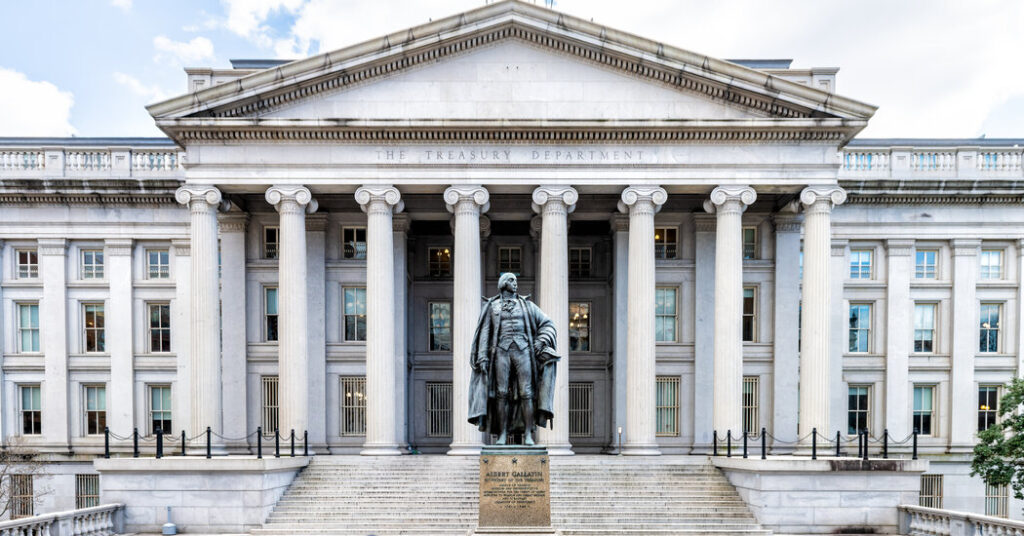
The U.S. Treasury Department’s official reason for intervening in the Japanese yen last week was to prop up a major currency that is critical to global trade and stabilize the finances of an important ally.
But the unusual move also served to calm anxious investors around the world, underscoring how myriad market risks are tightly connected. The intervention, according to analysts, was one of several forces fueling the recent rally in the S&P 500 index, which hit a fresh record on Tuesday.
“It’s one part of a big connected picture,” said Matt King, founder at Satori Insights, adding that it became necessary for the Treasury to intervene in the yen “but for weird reasons.”
“The decision and the manner of the intervention ultimately say as much about U.S. vulnerabilities as they do about Japan,” he said.
One of those vulnerabilities is related to the amount of money that is being spent by big tech companies betting on the future of artificial intelligence. These companies have pushed the stock market to repeated new highs and are now driving growth in the broader economy as well.
Over the past year, a handful of A.I. companies have issued a deluge of debt mostly in the form of bonds, as they have sought to raise money to build A.I. infrastructure. The need for hundreds of billions of dollars in financing has forced these companies to pay increasingly more in interest to bond investors, in part because a rise in the supply of bonds puts downward pressure on their prices, which move in the opposite direction to yields. Higher yields on corporate bonds raise borrowing costs for companies and have unnerved some stock investors mindful that those costs eat into future profits.
This is where the yen comes in. A recent jump in Japanese government bond yields began exerting pressure on long-dated U.S. Treasury yields, analysts said. Japan is the largest foreign holder of U.S. government debt — Japanese investors own more than $1 trillion in U.S. Treasuries — and the typical move to defend Japan’s rapidly depreciating currency would be to sell its Treasuries to support the currency, which had sank to a 40-year low. Such a wave of selling could have pushed U.S. interest rates higher, increasing corporate borrowing costs and spooking stock investors already on edge.
The yen’s decline came as investors were also jittery about statements made by Kevin Warsh, the new Federal Reserve chairman, which pushed U.S. yields higher. The 10-year Treasury yield, one of the most important interest rates in the world that underpins corporate and consumer borrowing costs, rose to its highest level of the second Trump presidency before the Treasury intervened.
“There is no question that U.S. bonds and longer Japanese debt are to some extent connected at the hip at this point,” said Ajay Rajadhyaksha, global chairman of research at Barclays.
The Treasury’s intervention in the yen helped support the debt market which also helped ease fears about the rising costs of A.I. borrowing and the potential for that fear to spill over to a nervous stock market
As word of the intervention reached the markets late last week, Treasury yields fell and stocks rallied. Strong corporate earnings from giants like Amazon and Palantir also helped
But there are risks to the stock market of such an unusual intervention and the Treasury is likely to have been mindful not to strengthen the yen too much. A much stronger yen, which would typically be accompanied by higher Japanese bond yields, could pull investors away from U.S. assets and toward Japanese ones.
“You don’t want the yen to get too strong because then you get the other side of the coin,” said George Goncalves, a macro strategist at MUFG Securities.
For decades, Japan’s economy had been anemic. More recently, some life has emerged, resurrecting growth and inflation expectations. But because growth and inflation had been so low for so many years, the country’s interest rates had remained low as well, diverging from much of the world, which raised interest rates to tackle the inflation shock that followed the pandemic.
This large difference in interest rates — today the Fed targets a range of 3.5 to 3.75 percent, while Japan’s target is set around 1 percent — means it is much cheaper for investors to borrow money in yen and invest it in other markets with higher returning assets, like the United States.
This is a simple form of what is called the yen “carry trade,” and the amount of money involved is enormous, though hard to measure precisely. The Bank of International Settlements has previously estimated it to be in a range of hundreds of billions of dollars to low trillions of dollars.
If the yen were to keep strengthening, the cost of the carry trade would increase, eventually prompting traders to unwind bets tied to financing from the yen, putting selling pressure on the U.S. stock markets. Instead, U.S. policymakers want to do “just enough” to support the yen, said Mr. Goncalves.
“If you connect all those dots, this is the quintessential global macro dilemma that we knew would happen and it’s starting to bubble up to the surface,” he said.
The post What the Stock Market’s Record Rally Has to Do With Rescuing the Yen appeared first on New York Times.