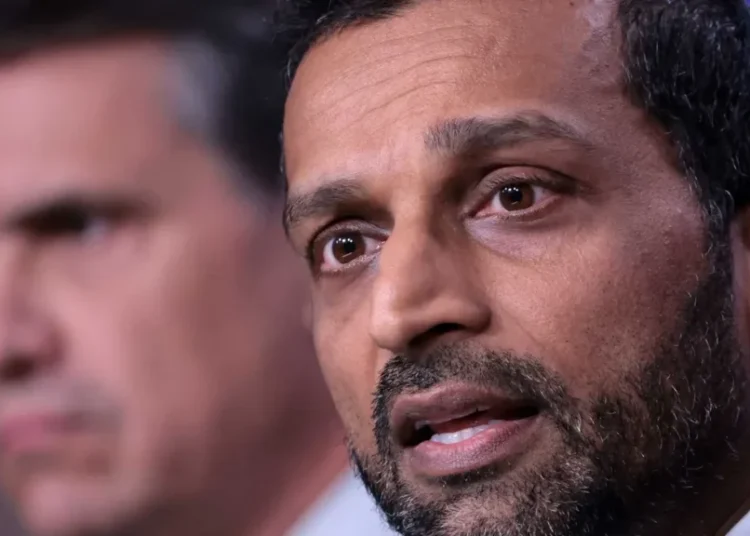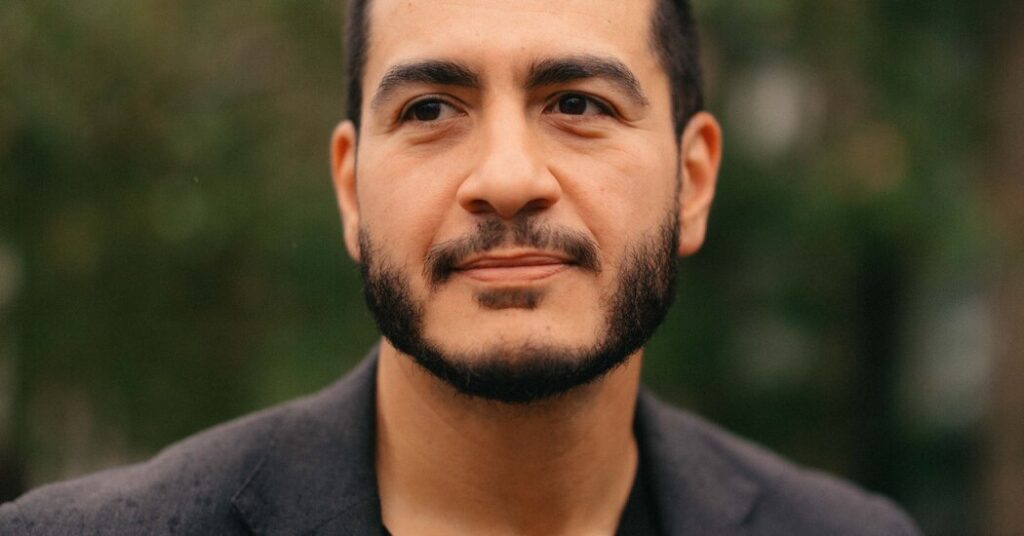
Last week, before his victory in Michigan’s extraordinarily bitter Democratic Senate primary, I asked Abdul El-Sayed how he planned to bring the party together if he won.
The campaign pit El-Sayed, a progressive public health official backed by Senator Bernie Sanders and Representative Alexandria Ocasio-Cortez, not just against Representative Haley Stevens, but also against much of the state’s Democratic establishment. The centrist Stevens was supported by Gov. Gretchen Whitmer, Senator Gary Peters and Attorney General Dana Nessel, among many others. She was also backed by tens of millions of dollars in outside spending, much of it by pro-Israel donors, in a race that was widely seen as a referendum on the Democratic Party’s direction.
With all the bad feelings the primary engendered, I figured El-Sayed would need to make some overtures ahead of November. Representative Hillary Scholten, a Democrat, had refused to commit to voting for him in part because of his decision to campaign with the leftist streamer Hasan Piker, who expresses jejune sympathies for all sorts of brutal anti-American regimes, Hamas among them. I wanted to know how he’d tried to persuade people like her.
El-Sayed didn’t accept the premise that there were many people like her. “There’s this operational sense of the party that says that elites carry constituents,” he said. “If that was true, I’d lose. It’s just not true. The only thing that has been driving any support for our opposition has been the $60 million of lies being put on TV.”
That sounded rather strong. (The only thing?) I asked, “Do you really not believe that there are people whose opposition to your ideas, or skepticism of your ideas, is sincere?”
“I think there are really quite few,” he replied.
Perhaps there are more than he thought. Given the forces arrayed against him, El-Sayed’s victory, which was called on Wednesday morning, is a remarkable accomplishment, and evidence of widespread Democratic distrust in their party leaders. But after polls predicted a double-digit blowout, it ended up being a narrow win: less than a single point, as of this writing.
These results are likely to panic Democrats who were already anxious about El-Sayed’s electability. It’s one thing to charge into a general election with an unconventional candidate who has an overwhelming voter mandate, another with one who didn’t even hit 50 percent. But they also give El-Sayed, who has never before run against a Republican, a chance to recalibrate. He has so many skills as a politician: He’s quick, magnetic, overflowing with infectious confidence. But he also has a blind spot, one endemic to his movement: an inability to grasp how and why people of good faith might see the world differently.
Like Sanders before him, El-Sayed seems to assume that there’s a hidden reservoir of voters hungry for progressive populist policies, if only they can be reached and mobilized. On Monday, he described his campaign to me as the test of this hypothesis.
As he sees it, conventional wisdom is fundamentally mistaken about how to win his state, which voted for Donald Trump in 2016 and 2024.
“We have this outdated model that everybody moves on a continuum from left to right,” El-Sayed said. Establishment Democrats assume the path to victory lies in staking out an ideological middle ground.
“I have an alternative hypothesis,” he said. “That people so hate the establishment on both sides of the aisle that they were willing to hold their nose and vote for Donald Trump twice, because if this really was a moderate state, Donald Trump is no moderate.” That would mean that the best person to take on the Republican Senate nominee, Mike Rogers — a multimillionaire former congressman known for his friendliness to Big Pharma — is a populist outsider like El-Sayed.
“People are really pissing mad, really, really pissing mad,” he said. “They don’t trust Democrats because they don’t feel like Democrats are actually going to fight for the things that Democrats say they want to fight for.”
I was skeptical of this hypothesis before Tuesday. (For one thing, polls showed that, astonishing at it may seem, voters regarded Trump as more moderate than either Hillary Clinton or Kamala Harris.) I’m more skeptical of it now. I would very much like to believe in the story El-Sayed is telling, because it would mean that progressives can win political power without making ideological sacrifices. But there isn’t much evidence of a candidate as left-wing as El-Sayed winning a purple state. And while one premise of his campaign was that he could speak to disaffected working-class voters, in the primary, he, like many progressive candidates before him, did best in more affluent and educated areas.
But as high as the stakes are in this race — it could decide control of the Senate — it may be better to test his theory now, ahead of the 2028 presidential election. Since the liberal, consensus candidate Mallory McMorrow dropped out of the Democratic Senate race in July, Michigan was bound to be a gamble either way, because the passionately pro-Israel Stevens had her own electability challenges. At least now we might resolve an argument that’s been tearing at the Democratic Party since 2016, when Sanders lost the primary to Clinton.
Ever since then, many progressives have been seething at a Democratic establishment that, as they see it, has used electability arguments as a cudgel against the left and then failed to get elected. “Bernie would have won in a landslide,” said Shawn Fain, head of the United Automobile Workers union and a vocal El-Sayed backer. “Unfortunately, the establishment couldn’t get out of the damn way in ’16, and we ended up where we ended up.”
On Tuesday, left-wing populists won the chance to see if their electoral theory holds. Either El-Sayed wins and shows anxious liberals like me new horizons of political possibility, or he loses in a year when Democrats are expected to dominate and offers a hard lesson on the necessity of pragmatism.
When you watch El-Sayed campaign, it’s easy to see why he inspires so much excitement. The clips of him that go viral sometimes show him being arrogant or insulting, and there’s clearly a belligerent side to his personality. But he’s also charming, wonky and skilled at uplift. In 2007, when he was valedictorian of his class at the University of Michigan, he shared a stage with Bill Clinton. His speech was so good that even though he was headed to medical school, Clinton urged him to consider a career in public service.
On Monday evening in Detroit, El-Sayed gave the final speech of his primary campaign, addressing volunteers at the Congregation, a former church that’s been turned into a coffee shop and event space. He emphasized what America had given him as the son of Egyptian immigrants. “I love America because I know exactly what my life should have been but for the accident of history that allowed me to be born in America,” he said. He held out his campaign as proof that in American democracy, energetic idealism could triumph over oceans of dark money.
“We’re willing to do that thing that democracy is built on, which is having the conversations eye to eye with your neighbor about who we are and who we want to be, what we want for our America,” he said. “You can’t buy that. You can’t buy inspiration. You can’t buy people deciding to be a part of something. You can’t buy hope.”
You also can’t buy the ability to entrance a crowd. “The thing about Abdul — beyond his charisma, which everyone knows about — is that he is so whip smart,” said Jordan Acker, a lawyer deeply involved in Michigan Democratic politics. With many politicians, he said, there’s a gap between their public and private selves, but El-Sayed is different. “What you see in private is who he is in public, and his ability to think on his feet is unlike any person I think I’ve ever met.”
Acker’s praise is striking because he voted for Stevens in the primary and isn’t sure he’s going to support El-Sayed in November, owing to their differences on Israel. The two men have known each other since 2004, and they have regularly discussed the Middle East over lunch. Acker doesn’t think El-Sayed is an antisemite, nor does he think that his position on Israel is entirely unreasonable. El-Sayed says that he’s fine with any sort of settlement, one state or two, that offers peace and self-determination to both Jews and Palestinians in the region. That’s not far from where Acker himself stands.
What troubles Acker is a certain recklessness in El-Sayed’s language: “His rhetoric, in my view, is more extreme than the candidate and the person underneath,” he said. It’s understandable that El-Sayed would rail against AIPAC, which has, after all, already spent tens of millions of dollars to defeat him. But Acker is disturbed by the way that El-Sayed presents AIPAC as a symbol of everything wrong with American politics, and he thinks El-Sayed has helped bring some toxic figures into the Democratic mainstream, notably Piker.
El-Sayed’s embrace of Piker, who was with him again on Monday, demonstrates how the candidate’s mental model of the electorate differs from that of older political hands. For most political professionals, there’s nothing to be gained from allying with someone so alienating to moderates. But if you believe on some level that most voters would see the wisdom of your message if only you could reach them, then collaborating with a figure like Piker to capture voters’ attention makes sense.
The surprisingly strong showing of Stevens — who made Piker a central part of her campaign — should lead El-Sayed to reconsider.
El-Sayed’s basic political assumptions about the electorate are often shared by populists of both the right and the left. Both camps tend to assume that they represent “the people,” and that if our politics don’t reflect their views, it’s because they’re distorted by elites who use their influence to deny voters a clear choice. Often, they’re wrong.
Consider the case that Phyllis Schlafly made for Barry Goldwater in her 1964 book, “A Choice Not an Echo.” Cheering his ability to get things done without the help of Republican “kingmakers,” she wrote, “Senator Goldwater gave us dramatic proof that conservatism is popular.”
Goldwater’s campaign helped incubate the right-wing movement that now dominates our country, so in the long term, you might consider it a success. But in 1964 he lost 44 states to Lyndon Johnson.
The Michigan Senate race, of course, isn’t the only place where the populist left is trying to show it can win outside of Democratic strongholds. In the Lansing-area swing congressional district once held by Elissa Slotkin, who is now a centrist Democratic senator, the party chose the activist William Lawrence, a founder of the environmentalist Sunrise Movement, as its standard bearer. He ran a campaign based largely on opposition to data centers, aid to Israel and the war with Iran and will now take on Tom Barrett, the Republican incumbent in his first term.
And next week in Wisconsin, polls show the democratic socialist Francesca Hong running away with the nomination for governor. Hong is a particularly stark example of the left-wing populist tendency to overestimate the popularity of its own positions. When I interviewed her earlier this year, I was unnerved by the way she either didn’t see or wouldn’t acknowledge that many of her views, regardless of their validity, are fairly marginal.
She didn’t think that calls she once made to defund the police, which she doesn’t disavow, would hurt her, because, she said, “a lot of people are losing trust in law enforcement, especially in the time of ICE.” She thought that people in small towns and rural areas have a natural affinity for socialism because of the way neighbors took care of one another. “There is this element of mutual aid and community care that is a big part of democratic socialism, that we aren’t always making that connection,” she said.
This conversation has nagged at me because it suggested a refusal or inability to understand where people with competing perspectives are coming from. Neighborliness can coexist with lots of different political philosophies; conservatives abhor socialism precisely because they fear replacing community relationships with the state. Democratic socialists are certainly wise to try to make inroads in new places by emphasizing common values. The mistake, I think, is assuming that people with good values will inevitably end up where you are if only they’re shown the way.
This is not a trap that El-Sayed needs to fall into. He is extremely talented; Acker, despite his hesitations, thinks El-Sayed’s dogged intelligence would probably make him a good senator. His cockiness has carried him far. Without it, he might never have been able to prevail over both Michigan’s Democratic power structure and the tsunami of dark money spent to turn the state against him. But as he meets Michigan voters who aren’t sold on the left, perhaps he could do with the smallest bit of doubt.
The Times is committed to publishing a diversity of letters to the editor. We’d like to hear what you think about this or any of our articles. Here are some tips. And here’s our email: [email protected].
Follow the New York Times Opinion section on Facebook, Instagram, TikTok, Bluesky, WhatsApp and Threads.
The post The Populist Left Has a Theory. We’re All About to Test It. appeared first on New York Times.