Maryland Democrats just placed a constitutional amendment on the November ballot that will let their party redistrict the state’s only Republican-held congressional district out of existence.
This kicks off another gerrymandering doom cycle for 2028, which will leave the House less representative of the people and politicians less responsive to independent-minded voters.
This is the lamentable — and entirely predictable — consequence of the Texas GOP’s brazen foray into partisan maximalism in 2025. Egged on by President Donald Trump, Republicans in the Lone Star State reworked their maps to give them an edge in five Democratic-controlled congressional districts. It was an outrageous power grab designed to protect their narrow House majority.
That kicked off a race to the bottom, as multiple states sought to nab as many seats as possible through nakedly partisan gerrymandering. California passed a referendum to allow its legislature to counteract the new Texas map, while Republicans in Missouri, Ohio and North Carolina redistricted to gain a few more seats.
Virginia passed its own referendum in April, allowing Democrats to gain an advantage in four red districts, prompting Florida Republicans to do the same in four blue districts.
For a moment, it seemed neither party would end up with major gains — or that the GOP might even regret starting the fight, since a Democratic wave could make the redrawn boundaries look like dummymanders.
But then Virginia’s Supreme Court threw out its state’s new map over procedural issues, and the U.S. Supreme Court opened a new front by weakening the Voting Rights Act mandate for states to maintain minority-majority districts. That allowed Alabama, Louisiana and Tennessee to redistrict in favor of Republicans.
This gave the GOP a significant boost in the fight for the House this fall and led Maryland Senate President Bill Ferguson (D-Baltimore) to reconsider his opposition, which blocked a redraw during the legislative session this spring. Democrats in New York are prepping a similar referendum for their state next year.
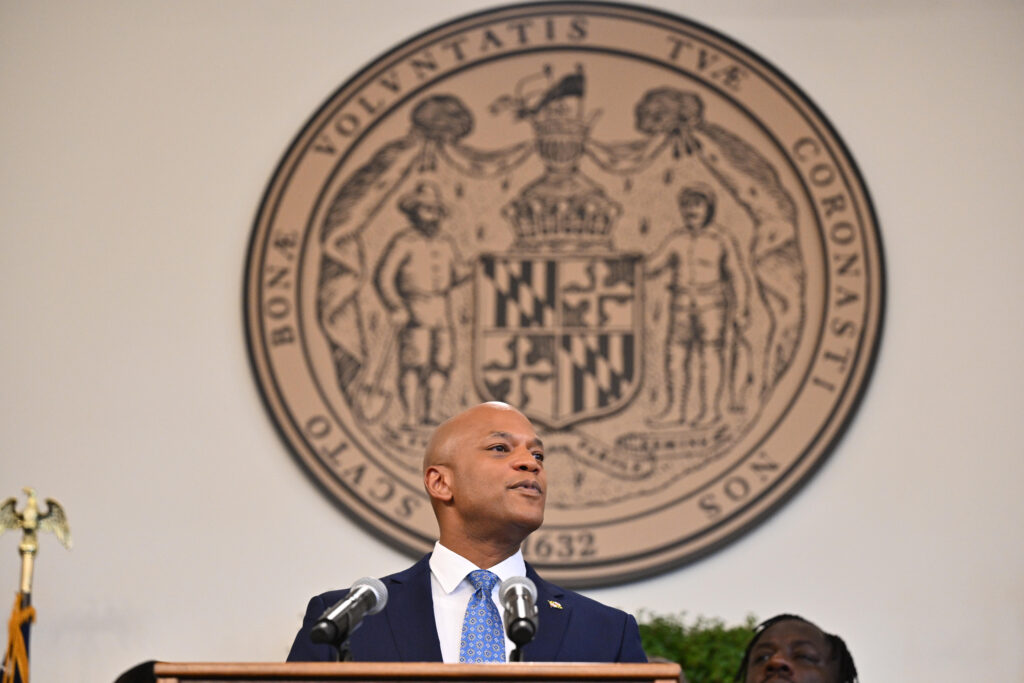
On Wednesday, as Maryland Gov. Wes Moore (D) signed the bill to put the measure on November’s ballot, he said: “I continue to believe that our country needs national redistricting reform. But until that happens, inaction is not an option.”
Alas, every time a state party messes with boundaries for its political gain, it does so at the expense of voters. Assuming Maryland’s redistricting referendum passes, Democrats would win 100 percent of its congressional seats, even though more than a third of the state’s voters cast ballots for Republicans in 2024.
We have been consistent throughout this saga, criticizing both parties whenever they sought to gerrymander. We have also praised the few holdouts in both parties on the principle that voters should choose their elected officials, not the other way around.
Unfortunately, too many partisans disagree. The result is that polarization will continue to worsen, and more House elections will be decided in the primary than the general. The proliferation of mid-decade redistricting will mean that maps change from election to election, leaving politicians less connected to their constituents.
The post Maryland Democrats kick off the 2028 gerrymandering doom cycle appeared first on Washington Post.