The C.I.A. has secretly established a Cuba task force, setting in motion plans for a more concerted campaign to pressure the Cuban government to make the economic, political and leadership changes demanded by President Trump, according to people briefed on the action.
The creation of the task force will allow the agency to quickly direct more financial, human and technical resources at Cuba, they said.
The task force has begun adding case officers who recruit and manage spies, intelligence analysts, officers who conduct cyberoperations and officers who specialize in covert influence operations, the people said.
In 1960, the C.I.A. established an earlier Cuba task force, whose members oversaw the failed, agency-backed invasion of Cuba the next year known as the Bay of Pigs.
The people briefed on the new task force said its mandate is more limited: to create fissures among the Cuban political elite, in hope of pressuring the Cubans to replace perceived anti-American hard-liners with more practical leaders more amenable to Mr. Trump’s demands.
The C.I.A. declined to comment.
Unlike in the 1960s, when the earlier task force oversaw the training and equipping of a partner force of Cubans that launched the Bay of Pigs invasion, the current task force has no organized Cuban partners. Nor is it allowed to enable lethal operations, though a task force at the C.I.A., by nature, is flexible and the authorities under which it operates can be changed at any time by the president.
The creation of the task force shows the extent to which the agency is preparing for what may be a protracted covert campaign against what has long been one of its hardest targets.
The C.I.A.’s action coincides with stepped-up efforts by U.S. intelligence agencies to get a better understanding of the situation on the ground inside Cuba.
Every administration sets out its intelligence-collection priorities in a document known as the National Intelligence Priorities Framework, or NIPF.
The Trump administration recently revised its version of the document to designate Cuba a NIPF “Priority 1.” (Among the other Priority 1 countries are China, Iran and Russia.)
In response, U.S. intelligence agencies, including the National Security Agency and the National Geospatial-Intelligence Agency, among others, have started turning more intelligence-collection assets, including satellites, toward Cuba, people briefed on those activities said.
The intelligence will help the U.S. military update its options for potential military action against Cuba, if Mr. Trump opts to go that route. Before the intelligence surge, U.S. military and intelligence officers complained of having outdated information; the new intelligence will give them a better sense of Cuban intentions, military capabilities and defenses.
Officers with the Cuba task force at the C.I.A. will, in turn, scour through the newly available intelligence for inside information about the activities of Cuba’s leaders and other members of the political elite, in particular tracking shadowy money flows and business dealings on and off the island. The agency could eventually release that information publicly to try to influence the Cuban leadership and public opinion, reprising a playbook that the C.I.A. has used against other adversaries, including Russia.
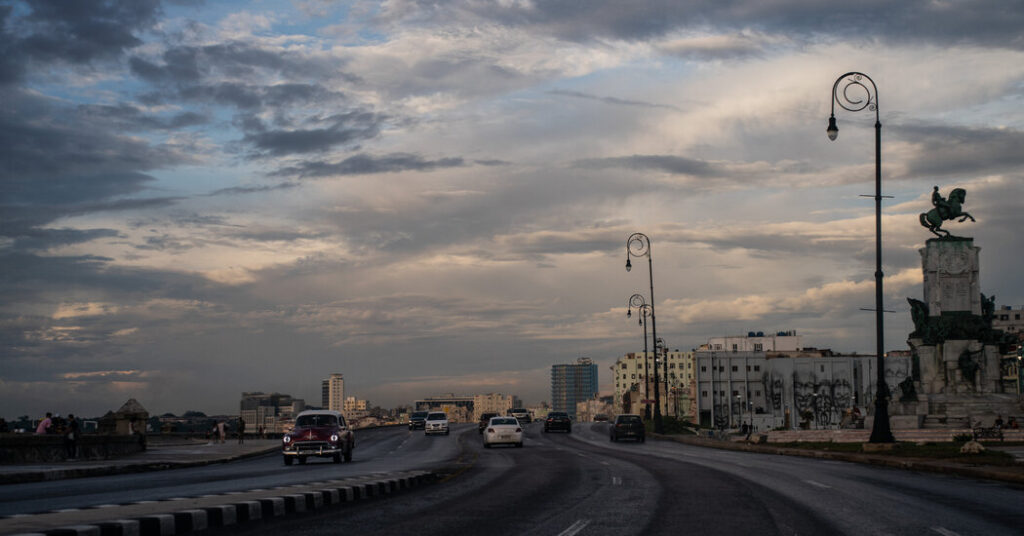
Over the years, the C.I.A. has played a multifaceted role in Cuba, as a spy service that covertly operates against the Cuban government, and as an occasional intermediary between Washington and Havana.
In 2015, toward the end of President Barack Obama’s second term, the United States and Cuba formally re-established diplomatic relations. The C.I.A. director at the time, John O. Brennan, flew to Havana to meet with Alejandro Castro, the son of President Raúl Castro, and other Cuban officials to discuss increasing intelligence cooperation between the two countries.
Mr. Brennan considered Cuba’s spy agencies the most capable in Latin America, and hoped to work with them against drug cartels and terrorist networks. But those discussions soon bogged down, with the sides blaming each other for failing to follow through on proposed confidence-building commitments.
This May, with tensions boiling, Mr. Trump sent his C.I.A. director, John Ratcliffe, to Havana to meet with Raúl G. Rodríguez Castro, known as “Raulito” or “El Cangrejo” (the Crab), Raúl Castro’s grandson.
Mr. Ratcliffe’s message to the Cubans was that the C.I.A. saw them as worthy adversaries and potential future partners. But he also told the Cubans that they were running out of time to make fundamental changes sought by Mr. Trump, implying that if Cuba failed to seize the moment, it could be the next Venezuela.
The speed with which Mr. Trump successfully toppled one of Cuba’s closest allies — Nicolás Maduro, Venezuela’s leader — and seized control of Venezuela’s oil resources had led some of Mr. Trump’s hawkish advisers to believe that the current Cuban government could be gone by the time of the midterm election in the United States in November, people familiar with the debate inside the administration said.
But despite a crippling oil embargo imposed by the United States, the Cubans have proved themselves to be resilient, and Mr. Trump’s drawn-out war with Iran soaked up the administration’s limited resources and attention. While the Cuba hawks advising Mr. Trump still think the administration will eventually devote the resources and attention necessary to bring down the Cuban government, they now acknowledge in private that this is likely to happen only once the war in Iran has finally concluded.
During much of the Cold War, the C.I.A. maintained a relatively small station at the U.S. Embassy in Havana, in part because the agency knew that the Cubans were incredibly effective at surveilling the American officers there. That made it extremely difficult, if not impossible, for them to recruit and meet with assets on the island.
The U.S. government’s level of interest in Cuba diminished in the 2000s as the C.I.A. was directed to focus its financial, human and technical resources on the wars in Iraq and Afghanistan and other suspected terrorism havens.
Then, during Mr. Trump’s first term, after a number of C.I.A. officers in Havana reported being afflicted by a mystery illness, which later became known as Havana syndrome, the agency completely shuttered its station on the island.
The C.I.A. station in Havana was re-established in 2024, toward the end of the Biden administration, but the officers there still had a difficult time operating because they were under near-constant surveillance and their movements were restricted.
The post C.I.A. Sets Up Secret Cuba Task Force as Trump Pressures Havana appeared first on New York Times.