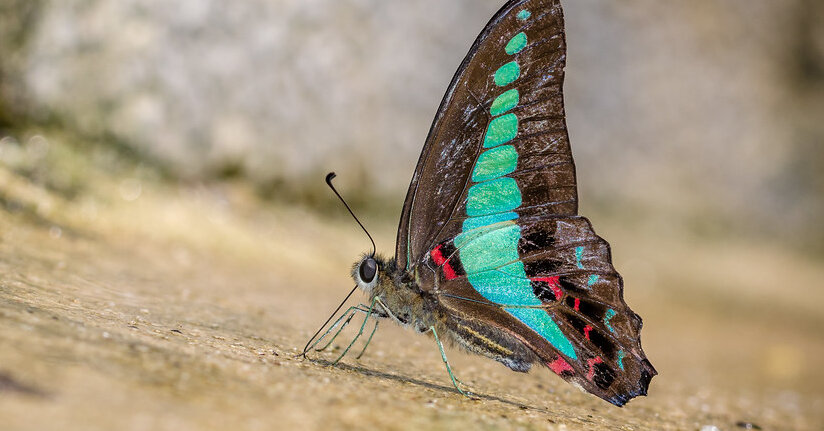
More than 1,700 butterfly species across 105 countries are not living where they once did, according to a study published Wednesday in the journal Nature Ecology & Evolution. That translates to nearly one in 10 butterfly species with a new range.
These sensitive sentinels have little tolerance for changes to their environment, so when temperatures rise or meadows are mowed to make way for construction, butterflies must take flight in search of more hospitable habitats.
“Butterfly species are shifting their ranges on every continent where they occur,” said Shawan Chowdhury, head of the Global Change Ecology Lab at Monash University in Melbourne, Australia, and lead author of the study. This trend, Dr. Chowdhury and his colleagues say, can be attributed to a combination of factors, but in most cases to climate change, extreme weather and industrial agriculture.
Although the study covered only around 10 percent of known butterfly species, the authors say it’s the largest such study ever conducted.
When Dr. Chowdhury first began studying butterflies near his childhood home in Bangladesh, it didn’t take long for him to notice that they were leaving the area. “When I started doing fieldwork, it was quite easy to find 60 to 70 species of butterflies in a small urban green space,” he said. A few years later, however, “it became very difficult to find just 15 species.”
After earning his Ph.D. and moving to Monash University, Dr. Chowdhury decided to see if what he had witnessed in Bangladesh was happening elsewhere. He compiled research and noticed something perturbing: Previous studies on the shifting ranges of butterflies worldwide were focused largely on Europe, which is home to less than 3 percent of the world’s butterfly species. Roughly 90 percent of butterfly species live in the tropics, yet few studies had included data from this region.
Hoping to get a better sense of global butterfly movements, Dr. Chowdhury began collecting non‑English language studies and data from dozens of researchers based in the tropics. This “changed everything,” he said.
With this approach, Dr. Chowdhury and his colleagues found that in 32 of the countries included, at least a quarter of the native butterfly species weren’t living where they once did. In 10 of those countries, the proportion jumped to more than half.
While all the butterfly species examined had undergone some degree of range expansion or shrinkage, many species experienced both. Eighty percent of the butterfly species the researchers studied expanded their ranges, establishing themselves in areas that had previously been unsuitable for them to inhabit.
For example, an orange butterfly with black spots known as the tawny coaster was once found only in India, Bangladesh and Sri Lanka, but over the past few decades it has expanded its range all the way to Australia.
The ranges of 27 percent of the species the scientists looked at had shrunk, including the small blue butterfly in Britain, whose range has decreased by over 40 percent since 1983.
Whether a butterfly species was gaining ground, losing it or both, the researchers found that in 79 percent of cases, climate change and extreme weather were the main drivers. Habitat loss, industrial agriculture and other factors also played a role.
“We’ve known that butterflies are shifting their ranges in response to climate change, but this is the first study to present evidence across such a large geographic and taxonomic scale,” said Candace Fallon, a conservation biologist at the Xerces Society for Invertebrate Conservation who was not involved with the study.
While range shifts are natural and essential for the survival of sensitive species like butterflies, scientists are concerned about what’s driving these shifts. In the United States, for instance, total butterfly abundance dropped by 22 percent between 2000 and 2020.
Chris Grinter, who is the senior collection manager of entomology at the California Academy of Science and also was not involved with the study, argues that butterflies act as canaries in the coal mine that is our planet and that their movements often signal profound ecological changes.
Mr. Grinter said that the findings of this new study highlighted the need for more global monitoring of butterfly populations and increased conservation efforts for butterflies, both in places where they live and places they may be forced to flee in the future. For those who want to help, he recommends planting native plants, leaving lawns unmown and reporting butterfly sightings on platforms like iNaturalist.
“A lot of impact can be made in your backyard,” he said.
The post Butterflies Take Flight in Face of Climate Change and Extreme Weather appeared first on New York Times.