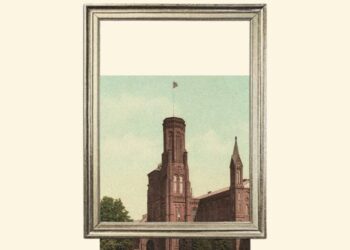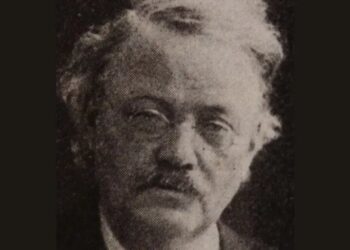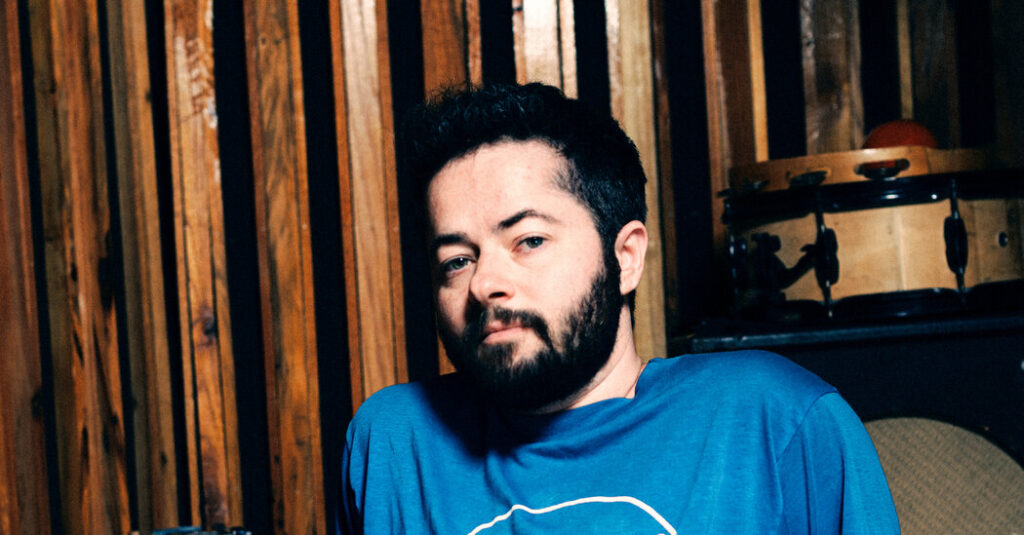
In June, Alex Da Ponte drove to Sunbury, Pa., to visit the town where one of his ancestors had run a grocery store. That grocer, Lorenzo Da Ponte, also happened to be Mozart’s most important librettist, a protégé of the Austrian emperor and companion of Casanova, a priest, seducer and gambler — and the man who did the most to introduce Italian opera to the United States.
Alex stopped in front of Lorenzo’s house — today a Honduran market — and posted a long tribute on Facebook to his forefather, who had moved from Vienna to the middle of Pennsylvania more than 200 years ago. “His life was chaotic,” Alex wrote. “He had big ideas and was always shooting his shot. Obviously that’s genetic.”
A singer and songwriter, Alex, 38, has been releasing music for the last 14 years, making a name for himself in the Memphis indie pop and alternative rock scene.
His life shows how, for eight generations, a family has held on to the memory of one of the most fascinating characters in the history of opera: a survivor who bridged two continents and still has the power to shape his descendants’ identity.
As a child, Alex didn’t pay much attention when his relatives discussed Lorenzo, but now he is the proudest inheritor of the Da Ponte legacy. “At the time I didn’t really know that I had Italian roots,” he said in an interview in Memphis. “And then when I looked into it, I was like, ‘Oh my God.’”
He started digging into his family’s past, gathering heirlooms and reconstructing the family tree. His son, born in 2017, is called Oz Lorenzo.
A few hundred miles from Alex, in Nashville, another Da Ponte is in a trade even closer to Lorenzo’s. Olivia Da Ponte, 27, Alex’s second cousin, is a songwriter for Warner Chappell Music. She writes about 200 songs a year: Warner pitches some to labels and artists; sometimes musicians come to her with ideas that she tries to put on paper. “I’m kind of a facilitator, help them say what they want to say,” she said.
Olivia has a general idea of her ancestor’s life, but she doesn’t come close to her cousin’s obsession.
Alex has a tattoo on his right arm reading “Conegliano,” Lorenzo’s original surname. “That’s so much cooler than even ‘Da Ponte,’” he said.
EMANUEL CONEGLIANO was born in 1749 in the Jewish ghetto of a small town in the Republic of Venice. When he was 14, his family converted to Catholicism and he took the full name of the local bishop, Lorenzo Da Ponte. After taking holy orders, he moved to Venice, then in full decadent bloom, where he became a gambler and a seducer, befriending the king of womanizers, Giacomo Casanova. In 1779, he was banished because of his scandalous lifestyle and the publication of seditious verses.
Da Ponte wound up in Vienna, where he got in the good graces of Emperor Joseph II and became a popular librettist. He worked with Salieri, Martín y Soler and, most importantly, Mozart, for whom he wrote “The Marriage of Figaro,” “Don Giovanni” and “Così Fan Tutte.”
In the second volume of “Lorenzo Da Ponte e il suo tempo,” a biography in progress that will probably reach 3,000 pages, Lorenzo Della Chà wrote, “Mozart’s reputation as an opera composer was modest, Da Ponte’s distrust of him considerable, their contacts rare, their friendship virtually nonexistent, and the esteem almost nil.”
And yet, their collaboration changed opera for good, introducing three-dimensional characters, sophisticated plots and ambiguities that broke with a tradition of good versus evil.
His Austrian idyll didn’t last long. After Joseph II died, in 1790, Da Ponte lost favor with his successor and was expelled from Vienna. He moved to London, where he became the poet of the King’s Theater while setting up a series of enterprises that failed one after another.
Burdened with debt, Da Ponte fled to the United States, stopping first in Philadelphia and then in New York. “In 1805, there were very few Italians,” Della Chà said in a phone interview from Milan. “When he arrived, he set himself up as a grocer.”
Life in New York (a town of 60,000 in 1800) proved unsustainable, so Da Ponte moved to New Jersey and then to Sunbury, where he laughed at himself “every time my poet’s hand was called upon to weigh out two ounces of tea, or measure half a yard of ‘pigtail,’” he wrote in his memoirs. (A pigtail was a twist of tobacco.)
Things changed when he returned to New York and, at a Broadway bookstore, met Clement Moore, author of “The Night Before Christmas” and son of Columbia College’s president. Moore introduced Da Ponte to Manhattan’s high society, and in 1825 Da Ponte became the first professor of Italian at Columbia.
Da Ponte made it his mission to introduce Italian culture to the United States. How it was possible, he wondered in his memoirs, that there was no Italian bookstore in America, while “in almost every city one finds the wines and the grapes of Sicily, the oil, the olives, and the silks of Florence,” “the sausages of Bologna, and even the maccheroni of Naples.”
Da Ponte’s last endeavor was to bring Italian opera to New York. In 1826, he persuaded a Spanish troupe to perform “Don Giovanni” and received a standing ovation at the premiere. He was 77, and after surviving defeat after defeat on two sides of the Atlantic in two centuries, that must have felt good.
He spent the next years trying to persuade the tenor Giacomo Montresor to bring his company to New York, but when he finally did, Da Ponte was cut out. Still, in 1833, thanks to Da Ponte’s efforts, the Italian Opera House opened at the corner of Church and Leonard Streets. In its place today stands the sculptor Anish Kapoor’s “mini-Bean,” but an observant passer-by might notice a sign at the intersection reading “Lorenzo Da Ponte Way.” (A copy now resides in Alex’s living room.)
In 1924, The New York Times wrote that when Da Ponte died in 1838, at 89, “a long train of mourners followed the body from the Cathedral to the Roman Catholic Cemetery.” Most biographies end there, noting that Da Ponte’s remains — like those of Mozart — were later lost forever.
The story of his American family, however, had just begun.
ONE OF HIS SONS, Lorenzo Luigi (around 1804-1840) became a professor of Italian and replenished the family coffers by marrying the sister of a wealthy New Orleans jurist. He died only two years after his father. After that, it seems, his wife bid farewell to New York, starting the Da Pontes’ southern branch, which survives today in New Orleans, Memphis, Knoxville and Nashville.
Lorenzo Luigi’s son Durant (around 1829-1894) built a career in the upper echelons of New Orleans journalism, was wounded while fighting for the Confederate army, and got rich trading on the stock exchange. Socially influential, Durant married “the most beautiful woman in the world” (as she was anointed in the press), and the couple became famous for the plays organized at their 350-seat home theater, a divertissement Durant had likely learned as a child at Lorenzo’s home. By then, Lorenzo’s fame had already begun to fade: a 1906 biographical dictionary dedicated more space to Durant’s entry than his grandfather’s.
We find one of Durant’s sons, Harry, in the late 19th century on a riverboat smuggling weapons to the revolutionary forces of Porfirio Díaz in Mexico, while his son, Harry II (1885-1967) had an ordinary career in insurance. At this point, Durant’s fortune had already been squandered.
As Lorenzo’s descendants multiplied and scattered, at least one branch never forgot him. David Da Ponte-Cooper, the first Da Ponte I reached out to when researching the family, replied to my email within 10 minutes, rattling off his forefathers back to the librettist.
When David was born, the New Orleans mansion where his great-great-grandfather Durant used to stage plays was still standing. When his nephew Alex visited a few years ago, he found a bank there.
Above Alex’s fireplace, there’s a framed shawl from Durant’s wedding. “We got bits and pieces like that from family heirlooms that survived the gambling,” he said, referring to a passion that Lorenzo apparently passed on to some descendants. Two others, music and literature, have also made their way to the present day.
“Everyone in my family is musical,” Alex said, pointing to a framed family tree that another Da Ponte had compiled before him. “And it all comes from that huge spread of the tree.”
Alex’s songwriter cousin Olivia in Nashville wasn’t conscious of how similar her profession was to Lorenzo’s. “Maybe there’s some part of my desire and fascination with writing that traces back to him,” she said.
Laura King, a professor of collaborative history at the University of Leeds, in England, said in a phone interview that one’s connection to family history is often a “two-way street.” “How much that family history influences you?” King said. “Or is it the other way around: ‘I will choose the bits of my family that make sense to me or my history that make sense to me. I’ll seize on that bit of musicality in my family, and that tells me a story. I’ll use that, or I’ll have a tattoo because it inspires me.’”
Either way, Lorenzo would probably be pleasantly surprised to see the tattoo on Alex’s arm.
At the end of Da Ponte’s life, a main concern was how much of Italy he had been able to import to America. In 1924, The Times noted that “the name of Da Ponte may be unknown to the public,” and today that is probably true again.
“Most people don’t know who he is,” Alex said. “Whenever anybody interviews me for music stuff, they always end up asking ‘is there anybody else in music in your family?’ and I’m like, ‘well…’”
Alex’s son, Oz Lorenzo, 9, recently had a class project about family history. “I was like, ‘Yes, this is our chance to shine,’” Alex told him.
“He doesn’t care. I hope he will one day.”
The post Their Forefather Was a Grocer. And Mozart’s Librettist. appeared first on New York Times.