Oil prices fell below $80 a barrel and U.S. stock markets traded at record highs on Tuesday as investors were hopeful that a lull in fighting in the Middle East would hold and that corporate earnings would remain robust.
Secretary of State Marco Rubio expressed optimism on Tuesday in negotiations to reopen the Strait of Hormuz, a crucial passageway through which a fifth of the world’s crude oil is normally shipped. There had been “progress in talks,” he said, “but not finality yet.”
The foreign ministry spokesman for Qatar, which has mediated discussions between Iran and the United States in the past, said the talks were in “very progressive stages.”
The comments buoyed Wall Street sentiment, which was bolstered further by strong earnings from large tech companies with a heavy involvement in artificial intelligence, including Amazon, Microsoft and Palantir.
Oil prices fall.
-
The price of Brent crude, the global benchmark for oil, fell more than 5 percent to around $79 a barrel, the lowest price in three weeks.
-
West Texas Intermediate crude, the U.S. benchmark, fell to around $76 a barrel.
-
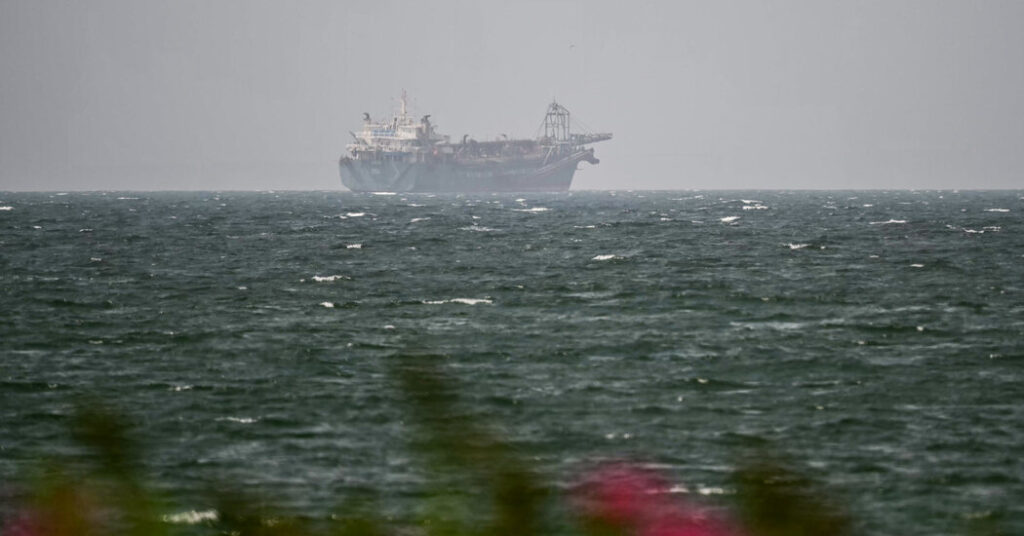
Investors and analysts are focused on the continued disruption to shipping in the Strait of Hormuz, the narrow waterway between Iran and Oman that is a vital trading route for oil and natural gas that normally carries as much as one-fifth of the world’s oil supply.
-
The market is also closely watching efforts by the Iranian-backed Houthi militia in Yemen to restrict traffic in the Bab al-Mandab Strait at the southern end of the Red Sea, which Saudi Arabia has used as an alternative to the Strait of Hormuz.
Global stocks mostly gain.
-
The S&P 500 climbed nearly 2 percent by midday on Tuesday, surpassing the record high it set in early June.
-
The Dow Jones industrial average, which tracks the most well-known public companies, also had a banner day, topping a high set in July.
-
In Europe, the Stoxx 600, a broad index that tracks the region’s largest companies, rose 0.7 percent.
-
Stocks in Asia were mostly higher, with the Nikkei 225 in Japan adding 0.3 percent and KOSPI in South Korea jumping 1.6 percent. Indexes in Hong Kong and Taiwan closed lower.
Gasoline prices tick lower.
-
Gas prices fell 1 cent on Tuesday to a national average of $4.09 a gallon, according to the AAA motor club. The cost for drivers has gone up about 37 percent since the war began.
-
Gas prices don’t move in lock step with crude, usually trailing increases or drops by a few days.
-
The national average price of diesel rose 1 cent to $5.37 a gallon on Tuesday, up 43 percent since the start of the war.
What they are saying: ‘Still considerable uncertainty.’
-
The oil market has welcomed signals that a potential agreement to revive talks between the United States and Iran is near, but traders may be getting ahead of themselves, analysts at ING wrote in a research note.
-
“The scale of the sell-off seems fairly overdone, given that there’s still considerable uncertainty,” they wrote, adding that the market has been optimistic before, “only to see things unravel.”
The post Oil Prices Tumble as Investors Grow Hopeful About a Hormuz Deal appeared first on New York Times.