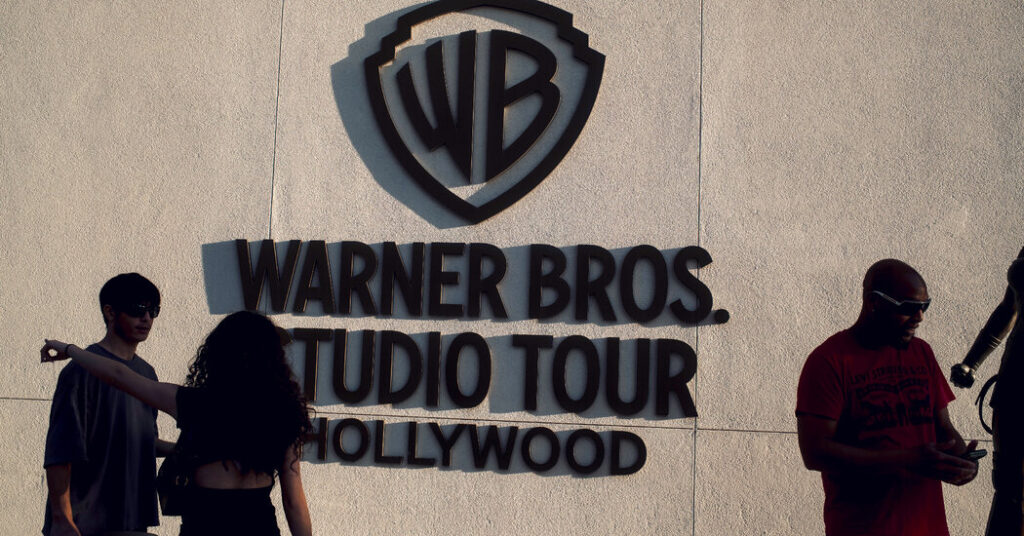
A federal judge on Tuesday scheduled a trial to determine whether Paramount’s $111 billion purchase of Warner Bros. Discovery violates antitrust law for March, a timeline that could further delay one of the biggest media deals in history.
Judge Araceli Martínez-Olguín of the U.S. District Court for the Northern District of California ruled that the trial would begin on March 2 and run for 12 days, with two breaks in early and mid-March.
The timeline is a win for a coalition of 12 states that sued to block Paramount’s acquisition and last week had asked Judge Martínez-Olguín for an April start date. Paramount asked that the trial begin in November and called the states’ request a “stonewalling tactic.”
The delay could be very costly for Paramount. The company has agreed to pay Warner Bros. Discovery shareholders $650 million for every quarter that the deal doesn’t close beginning in October. Paramount has agreed not to close its merger with Warner Bros. until June 2027 at the latest while the lawsuit works its way through the court.
“We respect the court’s decision,” a spokeswoman for Paramount said in a statement. A spokeswoman for Rob Bonta, California’s attorney general, said that his office appreciated “the court’s attention to the case.”
In a letter to investors on Tuesday, David Ellison, the Paramount owner, said the company was making strides to improve its business while it prepared to close the deal. The company said it would generate $3.9 billion in adjusted profit this year as it cuts billions in costs.
The lawsuit is one of the final hurdles in Paramount’s monthslong campaign to buy Warner Bros. Discovery, a merger that would unite under one roof two major movie studios, the streaming services HBO Max and Paramount+, and networks including CBS and CNN.
Paramount has argued that the deal will help the company compete with streaming services like Netflix and Amazon. Mr. Ellison argued in an opinion essay in The New York Times on Tuesday that the lawsuits trying to block the deal “imagine a Hollywood that no longer exists.”
But attorneys general in several states, led by Mr. Bonta, have argued that the deal would give Paramount outsize dominance in several areas, including the production of films in wide release; tentpole movies, which are the costly would-be blockbusters that sustain studio revenue; and basic cable channels. The Writers Guild of America has also sued, arguing the deal would harm writers.
The post Judge Sets Paramount-Warner Bros. Merger Trial for March appeared first on New York Times.