Not too long ago, we learned that Hobbit-like humans may have occasionally dined on the leftovers of Komodo dragons. According to a new study published in Proceedings of the Royal Society B, that knife cut both ways. Komodo dragons also dined on the leftovers of Hobbit -like humans, assuming you define “leftovers” as “babies.”
As detailed by IFLScience, the babies of Homo floresiensis (the ancient human ancestor we colloquially referred to as “Hobbits”) and probably Homo erectus spent their earliest days as living snacks in landscapes patrolled by Komodo dragons, giant carrion birds, leopards and tigers, a lot like how coyotes or hawks can snatch up a Chihuahua or a teacup yorkie nowadays.
Ancient Human Infants May Have Needed Protection From Komodo Dragons and Giant Birds
The prehistoric world was, generally speaking, an absolutely terrible place to exist, if only because modern parents rarely have to pry their children from the bacterial-laden maw of a giant lizard. All you got to do is baby-proof a few power outlets. Easy peasy.
And, unlike newborn chimps or gorillas, human babies are pathetically helpless. They can’t even hold up their heads. They can’t walk or do much else other than cry. They’re just begging to be devoured by some large prehistoric beast. But scientists believe that the price humans pay for walking upright will also involve oversized brains, which forces babies to be born before they’re developed.
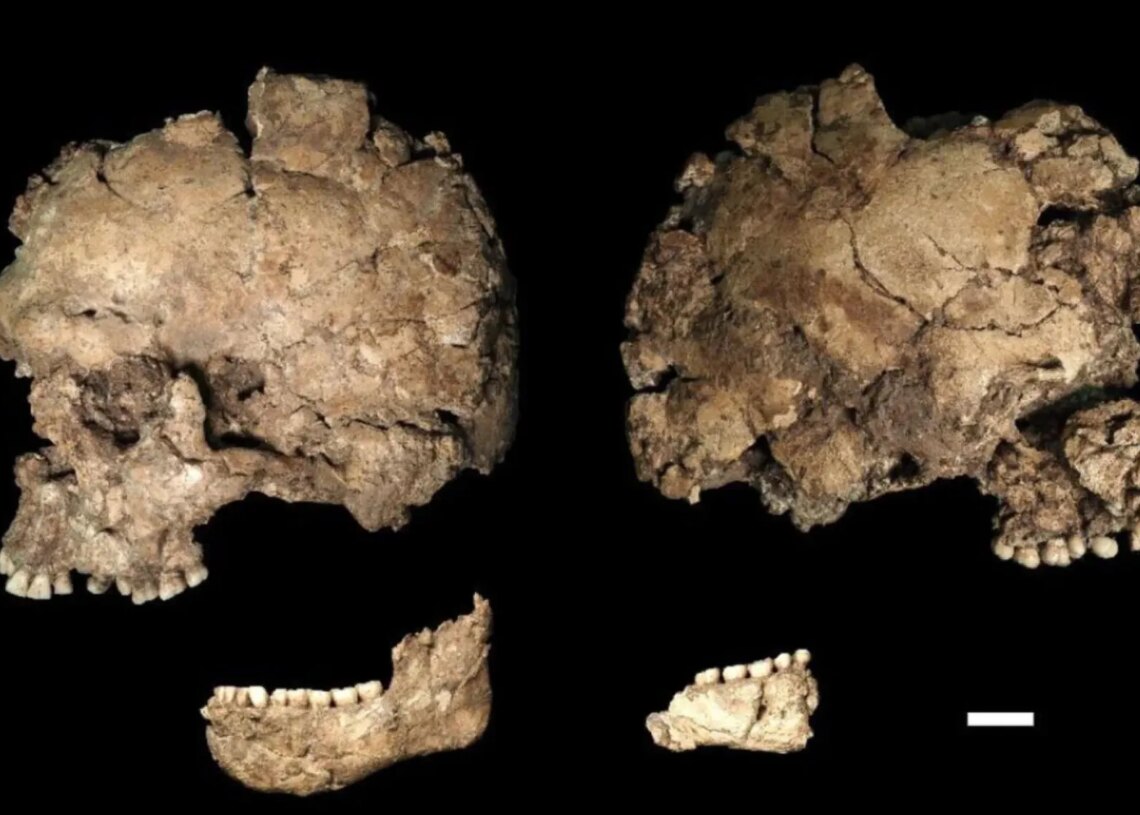
To find out whether our extinct relatives had the same problem, researchers examined the skulls of modern infants, historical humans, nearly 1,000 living great apes, six Homo erectus fossils and one Homo floresiensis skull. Two of the Homo erectus skulls and the Hobbit specimen showed signs of deformational plagiocephaly, or flat head syndrome, which modern parents are familiar with, as it causes the child to literally have a flat back of their head because they spent too long lying on their backs.
This develops when babies spend long periods lying on their backs because they’re too weak to move around much. The presence of flat head syndrome suggests that these early humans gave birth to physically helpless infants who required a lot of care and protection, especially considering that the things they had to protect their babies from were apex carnivores capable of eating the babies and the parents without exerting a ton of effort.
A lot more evidence needs to be uncovered before we can officially declare that the innocent, defenseless babies of our injured ancestors were the prehistoric predator’s perfect dine and dash snack, but so far the findings do strongly suggest that if you’re a parent struggling today in the year 2026, take one small moment to at least appreciate the fact that you’re not currently trying to stab a tiger with a pointy stick so it doesn’t eat your baby.
The post Flat-Headed Fossils Suggest Ancient Human Babies Were as Helpless as Ours appeared first on VICE.