The United States is under biological attack from a genetically modified plague. There is chaos in the streets, bloody corpses strewn on sidewalks, people killing neighbors they believe have the contagious bug for fear of it spreading.
In the White House, the country’s Secretary of Defense is informing the president of the nature of the plague when the Secret Service bursts into the room and grabs the president, preparing to move him to an undisclosed location alone, far from all humanity.
The National Security Advisor appears at the doorway suddenly and tells the president that he needs to “move us to Devolution.”
The president complies. And with that, the United States of America, as we know it, is done.
The scenario here is fictional, but the horrors are not only possible but based on real actions, plans, and fears collected by veteran author Annie Jacobsen in her new book, “Biological War: A Scenario” (Dutton).
The book lays out real worst case scenario possibilities in the event of a biological attack of genetically modified plague.
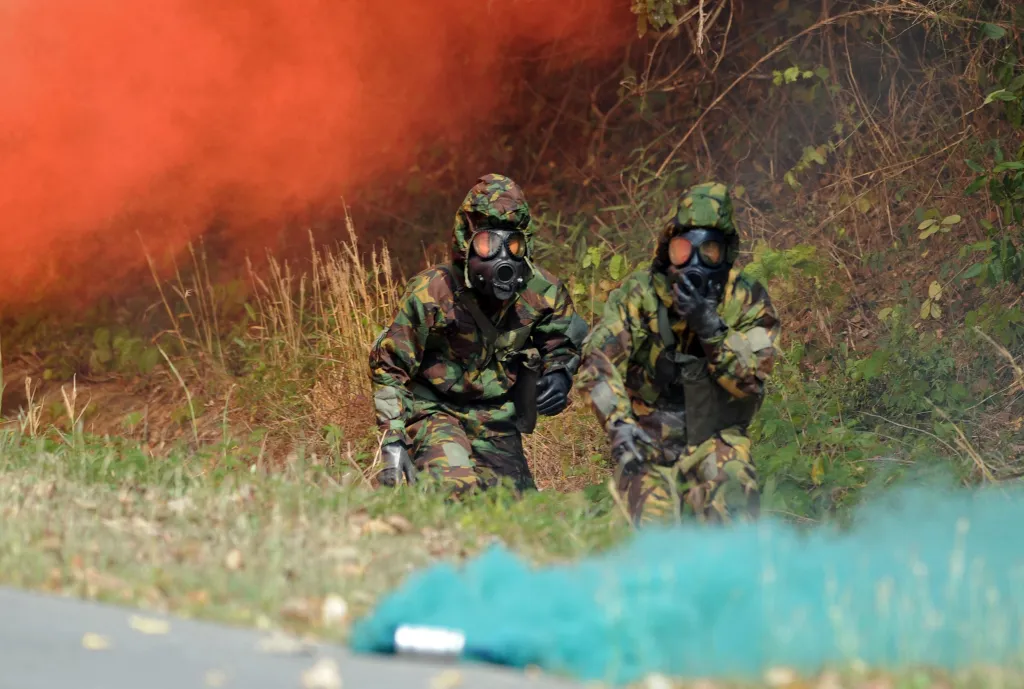
Jacobsen interviewed over 50 experts and mostly former government officials including a senator, a FEMA administrator, and high-level officials from the State Department and the National Security Council.
Then, she created a fictional scenario based on real possibilities, ignited by the spread of a biologically engineered plague and ending with the world suffering through a barely functional “biological twilight.”
There is no happy ending.
“Very much like nuclear war, there is no real homeland defense against a large-scale biological attack, only things you can do to mitigate extermination,” retired Air Force colonel Dr. Thomas Ehrhard says in the book.
Not only is there no defense, but Jacobsen makes it clear that there would be no recovery.
“You do not choose plague as a battlefield weapon,” says British former intelligence officer Dr. Christopher Davis in the book. “You choose plague because you’re going to take out the other person’s country.”
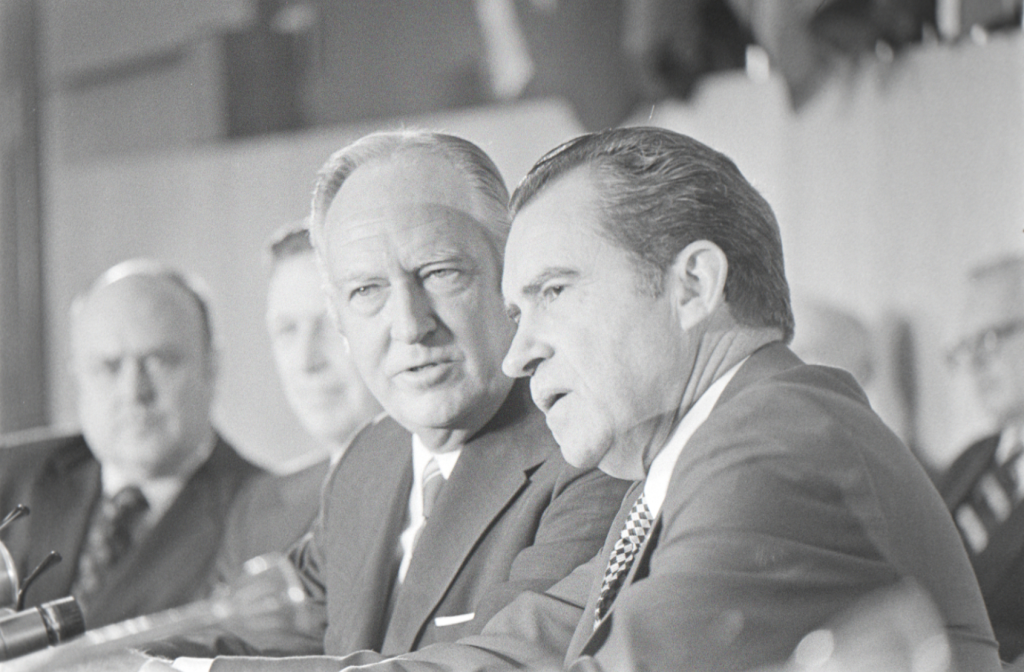
A global 1972 treaty spearheaded by President Richard Nixon called the Biological Weapons Convention prohibits developing and stockpiling biological and toxin weapons. But the treaty has no enforcement mechanism and allows for “defensive” biological weapons research, loopholes that have led to stockpiles of such weapons being developed and held by countries around the world.
Today, Jacobsen writes, we exist in a “vast new biotechnical arms race” that was spearheaded by the US in the wake of 9/11 in what she calls “a buildup fueled by fear, terrorism, paranoia and greed,” as well as “a cash cow for a new generation of defense contractors and biotechnologists, with everyone wanting a piece of the pie.”
Jacobsen also reveals the horrifying fact that “for reasons that are complicated,” Russia has a vaccine against plague, but the US does not.
The biological agent in Jacobsen’s scenario finds the plague mixed with euphoria-inducing endorphins designed to deliver a “neurochemical high” that sends the infected happily out in the world to spread the infection before they realize they’re sick.

This, writes Jacobsen, is based on actual experiments conducted by the old Soviet Union.
“When we first heard Soviet scientists were inserting the endorphin gene [for euphoria] into plague, we were appalled,” Dr. Henry Heine, a former US Army bacteriologist, says in the book. “That they would purposefully engineer the [bacterium that causes plague] to behave this way…to make you want to go out and socialize…this was horrifying stuff.”
In Jacobsen’s scenario, as the plague spreads, the president, on recommendation of the Chairman of the Joint Chiefs of Staff, issues what is called a WARNORD, a Warning Order that signals the US military to prepare for domestic operations, which Jacobsen calls “one step away from martial law.”
Shockingly, Jacobsen writes that this is based on a real, and very recent, order.
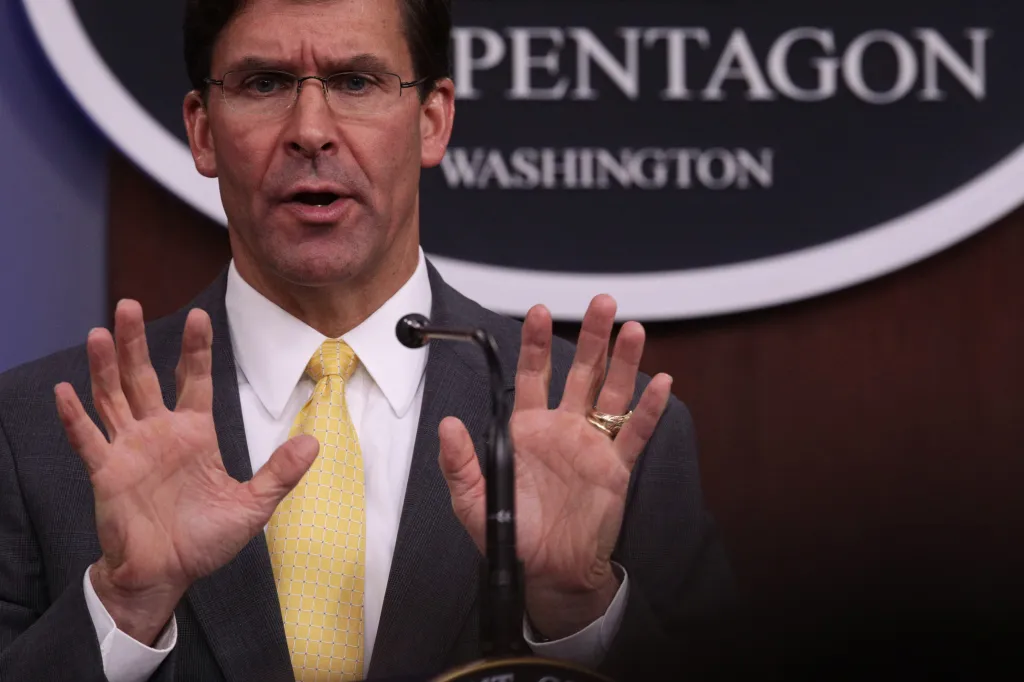
“In the initial weeks of the Covid crisis, Secretary of Defense Mark Esper signed a WARNORD, alerting [U.S. Northern Command, which is responsible for defense of the homeland] to ‘prepare to deploy’ in support of potential extraordinary missions. (Newsweek reporter William Arkin broke the story, which no one else had picked up on),” writes Jacobsen.
Jacobsen also presents a recent real-life example of a government simulation of a catastrophe similar to the one throughout this book, one that, as in the book, did not end well.
In May 2000, Jacobsen writes, the federal government conducted a live-action simulation exercise involving thousands of participants, showing what might happen if terrorists released pneumonic plague inside the Denver Center for the Performing Arts.
Allowing for a real-life transmission rate of 2.4 — meaning that every infected person would spread to infection to 2.4 other people — the ordeal quickly overwhelmed the participants.
The exercise ended after four generations of infections because by then, Jacobsen writes, “the Denver healthcare system essentially collapses.”
The simulation’s after-action summary noted that “health department officials became exhausted and a feeling of hopelessness quickly overwhelmed a number of those participating,” with supplies and medications running out and first responders unable to triage victims fast enough.
Jacobsen’s scenario concludes with the implementation of “Devolution,” a real-life plan to keep the government functioning in the event of a national catastrophe of near-extinction proportions.

“Devolution is the secret transfer of power to backup leaders and hidden command centers,” writes Jacobsen. “Devolution ensures the government keeps running even as the nation’s infrastructure collapses and hundreds of millions of American citizens die.”
Jacobsen writes that the Devolution Plan would be activated “when officials fear what is happening could result in America’s downfall.”
“The mysterious and intentionally opaque government program known as the Devolution Plan has been covertly rehearsed countless times over eight decades, in every administration since the invention of the atomic bomb,” writes Jacobsen. “Devolution is the final federal government effort to maintain a last tenuous thread of control.”
In her scenario, the president invokes the Insurrection Act, plunging the nation into martial law, and shuts down the internet to prevent the spread of conspiracies and viral videos that are fueling riots and chaos, an action that is within the president’s actual legal powers, Jacobsen writes, under 47 US Code 606, the War Powers of President.
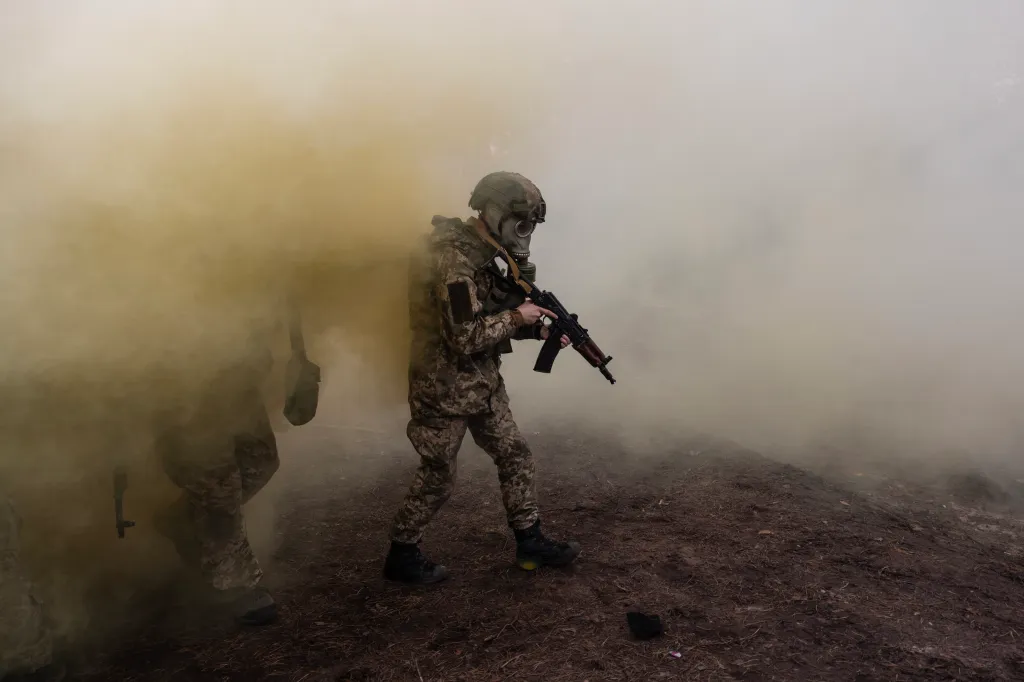
The military shifts its focus to protecting our 54 nuclear power plants, abandoning any pretense of protecting the citizenry. The president is taken to a hidden secure facility alone without family, friends, or advisors, a “high value prisoner” protected to lead what’s left of the country from afar.
“He will remain here like this until the plague runs its course,” Jacobsen writes. “Until it burns through all the people and disappears, like it did at the end of the Black Death.”
Once a biological weapon spreads, everything in Jacobsen’s scenario and the thoughts of the experts she spoke with makes it seem like an inevitable, unstoppable disaster.
But Jacobsen also makes clear that if this scenario should ever take place in real life, the fault will be fully our own.
“If a biological war scenario like this one comes true,” writes Jacobsen, “it will mean that the same mind that mapped the cosmos, that landed machines on planets hundreds of millions of miles away and charted galaxies billions of light-years away, could not safeguard its own biosphere.”
Larry Getlen is a contributing writer at the New York Post.
The post America’s terrifying, secret plan to deal with biological-weapon attacks appeared first on New York Post.