When Fran Carlos Galicia-Sanchez left the Bronx for his first sleepaway camp, he hopped on the bus with a bacon, egg and cheese sandwich in hand. Fran Carlos, who was 11 at the time, ate only half of the sandwich before he was struck with an alarming thought: “What if they don’t feed us?” Worried that campers might be left to forage for their own food, he tucked the other half into his backpack.
The camp did provide food, and much more. Fran Carlos was placed in a camp village with dedicated counselors and cabin mates. He made friends, with whom he played football and watered plants in the garden. He chanted cabin songs and competed in a campwide game in which campers sneaked into rival cabins to steal water balloons.
Fran Carlos had always liked going to his local public pool, but when he took a swim test at camp, he was given a red wristband, signifying the lowest level of skill. Swimming struggles are common among campers. A significant number of New York City youth cannot swim, and the share is even higher among children from the Bronx.
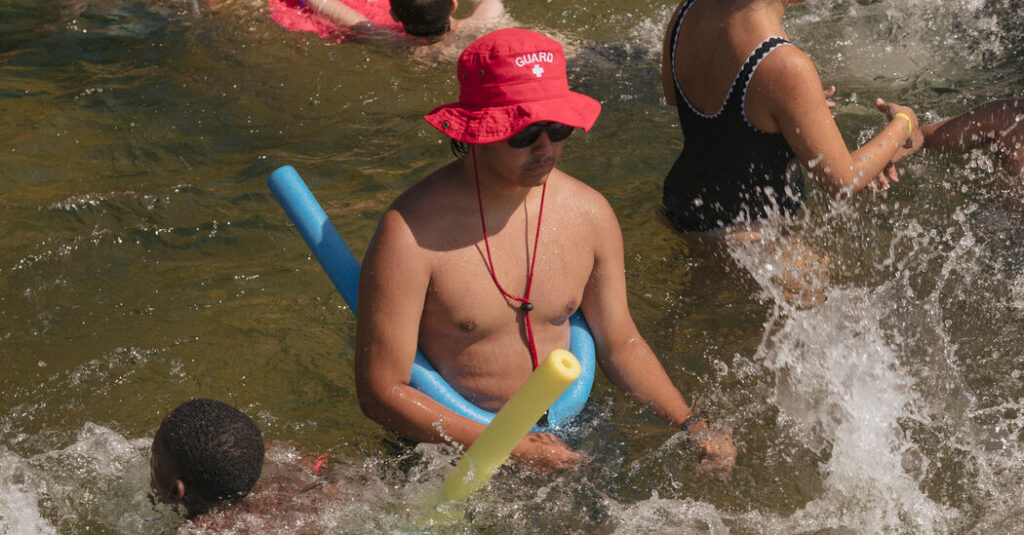
Fran Carlos took his first swim lessons at the camp, which is run by the Fresh Air Fund, a nonprofit organization that serves children and teenagers from New York City. When he was back home in the city, he practiced his skills at public pools and joined a recreation center swim team. Several years later, he returned to the Fresh Air Fund as a counselor and lifeguard at another camp, Camp Junior. This summer, Fran Carlos, now 20, is the camp’s waterfront director and oversees all lifeguards while continuing to teach swim lessons. He dreams of becoming the director of Camp Junior someday.
Camp Junior is a Fresh Air Fund camp created in honor of a 15-year-old from the Bronx who was killed in a gang attack after being mistaken for someone else. The camp was designed to give Bronx youth a place where they can be kids, away from the challenges of the city. All six of the Fresh Air Fund’s camps are free — a remarkable opportunity at a time when many New York summer camps cost thousands of dollars and fill up months in advance.
No cellphones are allowed at Camp Junior, even for calls home. Instead, parents send letters and packages. Fran Carlos sees the campers thrive in a screen-free environment, where they can focus on an art project, learn to play guitar or climb the high ropes with a friend. The counselors benefit, too: Fran Carlos says that his screen time has dropped from 16 hours per day to three hours per day.
Fran Carlos’s supervisors have noted his ability to make camp routines and lessons into something fun. With his first paycheck, he bought a speaker so that he could play the campers’ favorite songs while they brushed their teeth. At the lake, he created games like “Starfish Jellyfish Mermaid Aquaman,” which helps campers get comfortable in the water by acting like different sea creatures. As they advance from one swim skill level to the next — first red, then blue, then yellow — they are often as excited as he was years ago. “They’re always flabbergasted with themselves,” he says. “It’s all they really talk about.” They thank Fran Carlos for teaching them, and Fran Carlos responds: “That was all you. You did it.”
It costs $3,895 to send a child to a Fresh Air Fund camp for the two-week session. Any donation, regardless of size, will help more children experience the joy and discovery of summer camp. The Fund hopes to raise $12 million this year.
You can learn more about the Fresh Air Fund and make a tax-deductible donation at freshair.org. Donations can also be sent to the Fresh Air Fund, 633 Third Avenue, 14th Floor, New York, N.Y. 10017. Families who would like to sign up their children for camp can visit freshair.org or call the Fresh Air Fund toll-free at 800-367-0003.
The Times is committed to publishing a diversity of letters to the editor. We’d like to hear what you think about this or any of our articles. Here are some tips. And here’s our email: [email protected].
Follow the New York Times Opinion section on Facebook, Instagram, TikTok, Bluesky, WhatsApp and Threads.
The post Summer Camp Has Become a Luxury. This Nonprofit Sends Kids for Free. appeared first on New York Times.