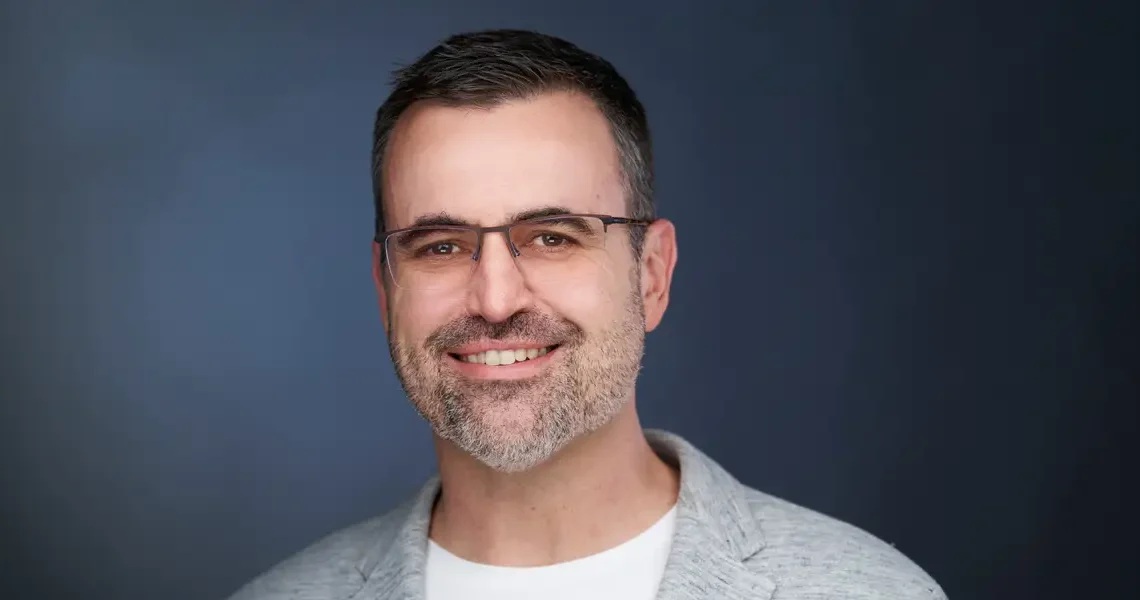

This as-told-to essay is based on a conversation with Rob Collie, a former Microsoft engineering leader. Collie’s book about organizational AI strategy, “Fair Game,” will be published on August 11. This interview has been edited for length and clarity.
I spent 13 years at Microsoft and was one of the founding engineers behind Power BI, a platform that helps clients visualize data and infuse insights into other Microsoft apps, before founding my own data and AI consulting firm.
Like a lot of business leaders, I spent the past couple of years trying to figure out what AI actually means for companies.
I came away with one big conclusion: Most companies are approaching AI the wrong way. The future isn’t simply buying more AI-powered software or rushing to build your own large language model.
The real opportunity is teaching today’s AI models how your business actually works — and empowering the right people inside your company to do it.
Off-the-shelf AI isn’t enough
When I started figuring out our own AI strategy, I kept running into a disconnect. Everyone says AI will change everything, but when business leaders try to use it, they often struggle to make it useful.
The first wave of enterprise AI adoption assumed companies could simply buy AI-powered software and call it transformation. We’re already seeing that it isn’t delivering on the promise.
Businesses have to customize AI to fit the way they actually operate.
I think Satya Nadella is absolutely right when he talks about every company eventually building its own AI. He’s talking about what I call the deep end of the pool: training or modifying your own large language models.
We’ll probably get there eventually. But that’s not where most organizations should begin.
The shallow end is far more practical. Today’s LLMs are already incredibly capable if you treat them like a new employee instead of expecting them to automatically know your business. It’s almost like they have PhDs in every possible human subject, but they would still be a new hire at your company.
They don’t know your internal processes, your strategy, or your institutional knowledge.
Instead of building a new model, companies should build systems around existing models that feed them the right context at the right time. Think of commercial LLMs as Lego bricks. If you connect them to your company’s data, workflows, and software, you can generate enormous returns without training your own model.
Master customization first. Then worry about building your own models.
The people I’d bet on are “crafters”
The biggest AI opportunity isn’t necessarily hiring more AI researchers. It’s finding the people already solving problems inside your business.
Software developers and data professionals will be incredibly valuable because connecting LLMs to business systems is fundamentally a software and data challenge. But there’s another group I think leaders overlook.
In my upcoming book, I call them “crafters.”
They’re the people who build the spreadsheet everyone relies on. They automate tedious work. They create dashboards. They write scripts. They’re embedded inside the business, solving problems that IT never had time to tackle.
My own research suggests that about 1 in 16 people fit this crafter profile. There are actually more crafters than professional software developers.
For years, they were limited by their technical skills. AI changes that. The crafters of the world can now write real software with the help of AI. That’s why I think the combination of vibe coding and these business insiders is a secret weapon.
When I look for AI leaders, I wouldn’t start by asking who knows the most about AI. I’d ask, “Who’s the Excel guru? Who’s the person everyone goes to when something breaks? Who keeps inventing clever solutions that make the business run?”
Those are the people already thinking like builders.
You can also find them by looking for the artifacts they’ve created — the spreadsheets, dashboards, automations, and tools that quietly keep critical business functions running.
I also don’t think companies should wait for a top-down AI strategy before getting started.
Organizations run on thousands of individual workflows. No CEO can redesign all of them from headquarters.
The companies that succeed will start with small customization wins close to the business, learn from those successes, and expand from there.
Read the original article on Business Insider
The post I’m a founder and decadelong Microsoft engineer. Here’s who I’d hire to lead the next stage of AI. appeared first on Business Insider.