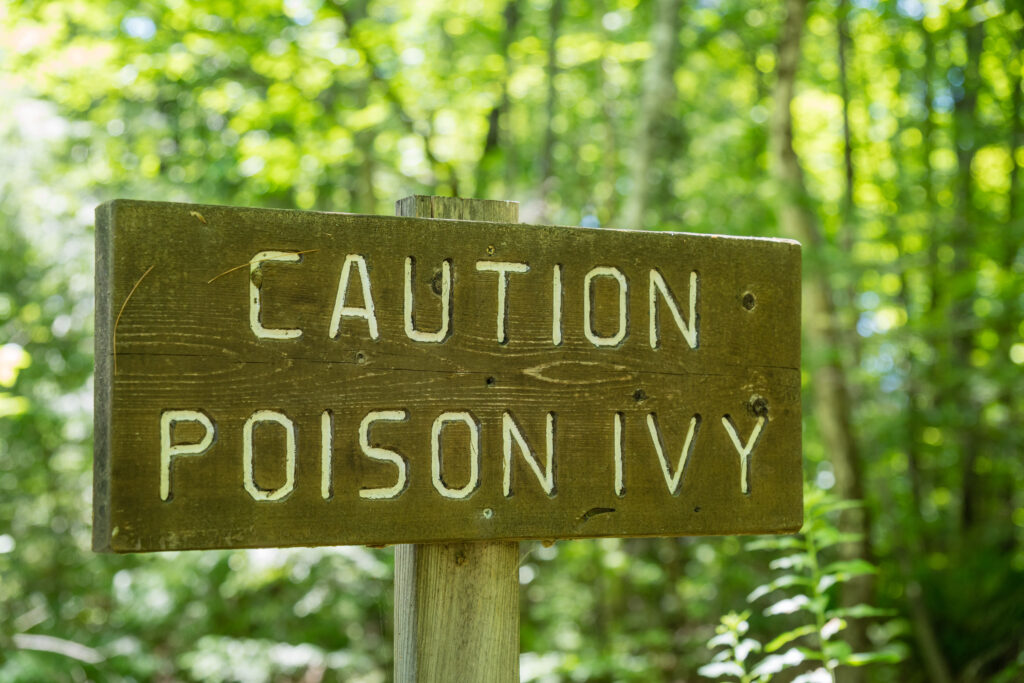
Whether you’re out hiking, cleaning up your yard or petting your cat that’s been roaming around outside, there’s a common risk that comes along with summer: encountering poison ivy. When that happens, whether you touch the plant yourself or pick up its oil from the fur of your pet, you can end up with an itchy and uncomfortable rash called allergic contact dermatitis.
Despite the plant’s signature look with leaves growing in a cluster of three — “leaves of three, let it be” — poison ivy is easy to overlook and accidentally touch. The plant can grow as a climbing vine, shrub or ground cover, and may climb along plants, trees or poles. The leaves often look different throughout the seasons — glossy and reddish in the spring, green in the summer, and orange, red or yellow in the fall. It can also appear as a thick, hairy-looking vine around the trunk of a tree without any leaves attached.
If you think you’ve touched poison ivy, what you do next can make a big difference in the way your body reacts. Here’s what dermatologists recommend, plus other important facts about poison ivy you should know.
If you think you touched poison ivy, wash your skin and clothes ASAP
After coming into contact with the plant, the best thing you can do immediately afterward is wash your skin.
“The rash from poison ivy is caused by an oily resin called urushiol, and the goal is to get that oil off your skin before it fully absorbs,” said Aderonke Obayomi, a board certified dermatologist at Mount Sinai Health System.
Aim to wash the parts of your skin that touched the plant with lukewarm water and soap within 10 to 30 minutes of contact. Rubbing alcohol also works if you’re in a pinch and that’s what’s available.
The sooner you scrub up, the better: Washing within the first hour or two can also reduce the severity of the skin reaction, Obayomi said, even if it doesn’t prevent the rash entirely. It also makes it less likely you’ll accidentally transfer the oil to other parts of your body.
A degreasing soap, such as dish soap, is typically more effective at cutting through the urushiol, said Obayomi. But regular hand soap is better than nothing and can still be effective.
“Lather, rinse and repeat a few times, and get under your fingernails with a nail brush since the oil hides there and gets transferred everywhere you touch,” Obayomi said.
Don’t forget anything else that may have touched the plant, too
You’ll also want to wash everything that came into contact with poison ivy, such as your clothing, shoes, gardening gloves, gardening tools or even your pet’s fur. Toss your clothing in the washing machine, and wash with hot water and regular laundry detergent. Garden tools and other objects should be cleaned with alcohol or soap and water. Clean your furry friends with pet shampoo and water.
While bathing your pet, removing clothing, washing tools or handling anything that may have touched poison ivy, be sure to wear disposable gloves to protect yourself from touching the oil and transferring it.
Just because it doesn’t show up right away doesn’t mean you’re in the clear
If you’ve never had a poison ivy rash, it can take days or even up to two or three weeks for one to appear. If you’ve previously had poison ivy, the rash appears quicker, often within hours. That’s because poison ivy causes a delayed hypersensitivity reaction, where it takes time for the immune system to develop a response to the allergen after the first exposure, said Emily Lebowitz Luks, a clinical assistant professor of dermatology at Weill Cornell Medicine.
When it does appear, it’ll be tough to ignore. “The rash from poison ivy most commonly looks like itchy red streaks or blisters,” said Tanya Nino, a board certified dermatologist at Providence St. Joseph Hospital. “The itching can be quite intense.” On darker skin tones, the rash may appear purple, gray or dark brown.
A linear formation of blisters is a classic sign of poison ivy, Luks added. It often shows up that way because of the nature of contracting it: Chances are, the leaf brushed your skin in a linear fashion as you were walking by it.
The rash itself won’t spread — but the oil that causes it can
A poison ivy rash isn’t contagious. So scratching the rash or brushing it against another area of your skin or someone else’s skin won’t cause it to spread. But the urushiol — the oily resin on the plant that causes the rash — can spread to other areas of skin if you touch it and then touch elsewhere on your body.
“What can genuinely cause new rash is leftover oil on unwashed hands, under fingernails, on clothing, or on a pet,” Obayomi said. So if you feel like the rash is spreading, you’ll want to think about where that oil might be lingering.
This is particularly likely if you’re not aware you were exposed to the plant and then you scratch other areas, Luks said. “This is why we commonly see poison ivy dermatitis involving the face, neck and genitalia.”
The rash may also appear to be spreading because different areas of skin absorb the oil at different rates, and new patches may continue to appear over several days, Obayomi explained.
You can usually treat poison ivy at home
A poison ivy rash usually resolves within a few weeks. While there’s nothing you can do to clear it up quicker, you can try a few things to ease the itch while you wait.
“For mild cases of poison ivy, over the counter 1 percent hydrocortisone cream, oral antihistamines such as loratadine, cetirizine and fexofenadine, colloidal oatmeal baths, and anti-itch lotions with ingredients such as pramoxine can be helpful,” Luks said. Wet compresses or soaking your skin in cool water can also ease the itch to some extent
If these don’t work or you have a severe or widespread rash, or the itchiness is keeping you up at night, it’s a good idea to see a dermatologist. They may prescribe a stronger topical steroid or a course of oral steroids to help manage your body’s inflammatory response.
You should also see a doctor if you can’t seem to stop scratching and notice the skin is breaking, as this can lead to infection and prolong the healing process.
“See your dermatologist if there are already signs of infection such as pus, pain or expanding redness,” Luks said. “Fever, swelling of the face or eyes, and trouble breathing or swallowing are all signs of a severe allergic reaction and require urgent medical evaluation.”
If you happen to brush up against poison ivy this summer, taking quick action to wash your skin, clothing and gear can potentially help you avoid weeks of itchy discomfort. Make sure you know how to identify the plant and wear long sleeves, long pants and gloves if you think you might be anywhere near it.
“Prevention is key,” Luks said.
The post How to spot poison ivy and what to do if you accidentally touch it appeared first on Washington Post.