I just finished teaching a course on political journalism for a fantastic group of high schoolers. One thing we discussed: how journalists can help readers feel prepared for — rather than stunned by — just about any electoral outcome.
In that spirit, today I want to talk about what could go wrong for Democrats in this fall’s midterm elections.
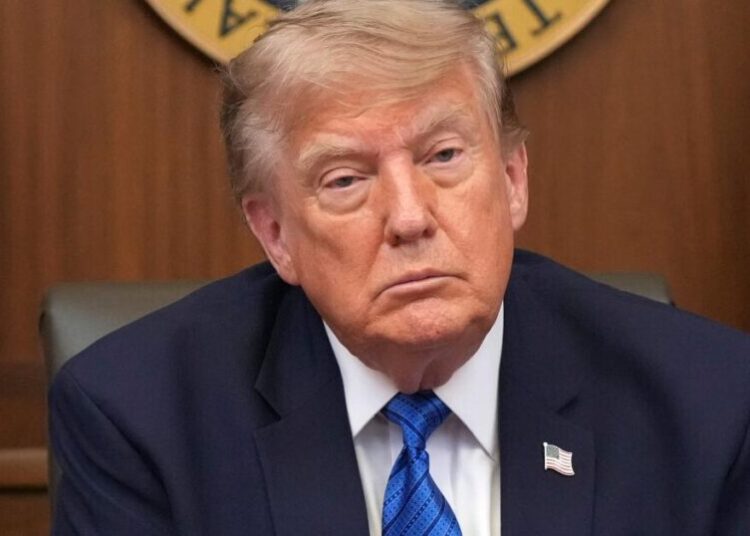
First, to be clear, a lot is working in their favor. A Quinnipiac University poll out this week found President Trump’s approval rating at an all-time low. Democratic energy is off the charts. Gas prices remain high — a result of the unpopular war between the United States and Iran.
None of that is good news for the party that controls Washington.
But a lot of smart Democrats I know, including those who generally feel optimistic about their party’s chances, also admit — privately or hair-on-fire loudly — to some anxieties heading into November. Here’s a snapshot of what’s keeping them up at night.
The money
Democratic candidates in crucial Senate races are raising far more than their Republican opponents. But Republicans have an enormous advantage over Democrats in funding from super PACs and party groups.
Elon Musk, the world’s richest person, has authorized his super PAC to spend as much as $120 million on a new program to help elect Republicans, my colleague Teddy Schleifer reported Thursday. And as my colleagues Shane Goldmacher and Reid Epstein wrote in a memorable piece about the Democratic National Committee’s challenges, “dysfunction and debt inside one of the party’s key institutions — which is getting crushed in fund-raising by its Republican counterpart — are creating rising anxiety for top Democrats.”
The (primary season) mayhem
It’s getting ugly out there.
As the Senate and House primary contests in Michigan barrel to a close on Tuesday, the recriminations and sharply personal attacks are in overdrive. Will Democrats in Michigan — or Maine, or Texas, or other places that have had contentious primaries — unite and turn out in full force in the fall, or is there a risk, even on the margins, that some stay home?
The efforts to paint Democrats as radicals
Democrats are fiercely debating whether candidates who have taken left-wing positions, now or in the past — like calling to abolish Immigration and Customs Enforcement or to defund or abolish the police — can survive tough general elections in places like Michigan or Wisconsin.
What happens, some worry, when Republicans spend millions amplifying such statements to cast Democrats — individual candidates and the party writ large — as socialists and extremists?
“The main lesson of 2024 is that somehow, unbelievably enough, voters concluded that we were the radicals,” said Matt Bennett, a co-founder of Third Way, a centrist Democratic think tank, referring to Democratic defeat in the last presidential election. “There is a real danger,” he added, that that lesson is “being forgotten by some.”
But Usamah Andrabi, a spokesman for Justice Democrats, which focuses on electing left-leaning candidates, suggested that Democratic leaders who dismiss the younger, boldly progressive and anti-establishment candidates who have won recent primaries do so at their own risk.
Those races, he said, offered “extremely telling results for where the Democratic base is at.”
“It’s up to the establishment and the party’s leadership to either move in the direction its base is moving,” he said, “or to let its base move underneath it once again and lose.”
Clay Middleton, a member of the Democratic National Committee who is running for the statehouse in South Carolina, warned candidates against getting caught up in national debates over the party’s direction.
“There’s again the news cycle of democratic socialists and what that means,” Middleton said. “Great. Fine. But if I’m running for the Senate in Michigan, or the governor of Nevada, or governor of Georgia, or the senator from North Carolina, does any of that — does the other stuff — have bearing on your race? If the answer is no, then why give it oxygen?”
Redistricting
No matter how bad the midterm environment gets for Republicans, there are limits to the size of a potential Democratic political wave in the House.
That’s due to the redistricting wars, which have helped the Republicans make a more favorable map.
The Trump factor
As my colleague Nick Corasaniti noted in a helpful video this month, the Constitution is clear: The executive branch has no explicit authority over elections.
But that has not stopped Trump from trying to use federal agencies to influence the electoral process and shape how Americans view elections. Democrats, other public officials and election experts across the country are alarmed by his efforts to intrude so far, and some officials are making contingency plans.
The party’s brand
Voters don’t like Trump. They also really dislike the Democrats.
In that Quinnipiac poll this week, Trump’s approval rating was at a devastating 32 percent. But the approval rating for congressional Democrats was even worse, at just 23 percent.
Some of that may be driven by Democrats who intend to support their party this fall but want to see congressional leadership battle harder against Trump. Still, Democrats shouldn’t assume Trump’s unpopularity automatically translates into votes for them.
Democratic candidates must work on “building up that trust in voters who are still skeptical of Democrats,” said Lis Smith, a veteran Democratic strategist involved in many races this year.
Bennett added that the worsening political environment for Republicans “has helped, but it hasn’t pushed us up. It’s just brought them down. And that’s a real problem.”
Campaign Finance Watch
Bloomberg’s Caribbean spending spree
Mike Bloomberg is a longtime Democratic donor who knows a thing or two about national and New York politics. But these days, the politics on his mind are in the Caribbean.
Bloomberg may be spending some time this weekend monitoring the results of the Democratic primary for governor of the U.S. Virgin Islands after quietly starting a super PAC last month to boost his longtime ally, Stacey Plaskett.
The $150,000 donation, according to disclosures, is one of the former New York City mayor’s biggest donations of the cycle and a big gift by island standards.
Bloomberg is the sole donor behind Virgin Islanders for Progress, a super PAC that has sent direct mail and run ads on her behalf.
“Here, beauty is often easier to see than progress,” goes one ad, praising Plaskett, the territory’s longtime nonvoting delegate to the U.S. Congress.
Bloomberg is known to be a picky political giver, often reluctant to contribute until the very end of campaigns. That he decided to back Plaskett speaks to his loyalty — she endorsed his 2020 presidential campaign — and the connection between his philanthropy and the island after it was battered by hurricanes in recent years. He declined to comment.
— Theodore Schleifer
In One Graphic
Once united in support of Trump, right-wing influencers are now embroiled in feuds and losing viewers.
The shifts in viewership my colleague Stuart Thompson depicts above add to a growing body of evidence that suggests the audience for pro-Trump content has fallen from its heights. For Republican candidates, who have for years relied on content creators to rile up voters and push them to the polls, the shifts are a challenge.
ONE LAST THING
A new culture war front: a candidate’s accent
Maligned, celebrated and dissected by linguists, Representative Haley Stevens’s accent has become an unexpected flashpoint in the Michigan Senate race, my colleague Matt Flegenheimer writes, and a part of the endless debate over what authenticity means and who gets to define it.
Read the story and hear it for yourself.
Taylor Robinson and Steven Moity contributed reporting.
The post What Worries Democrats as the Midterms Heat Up appeared first on New York Times.