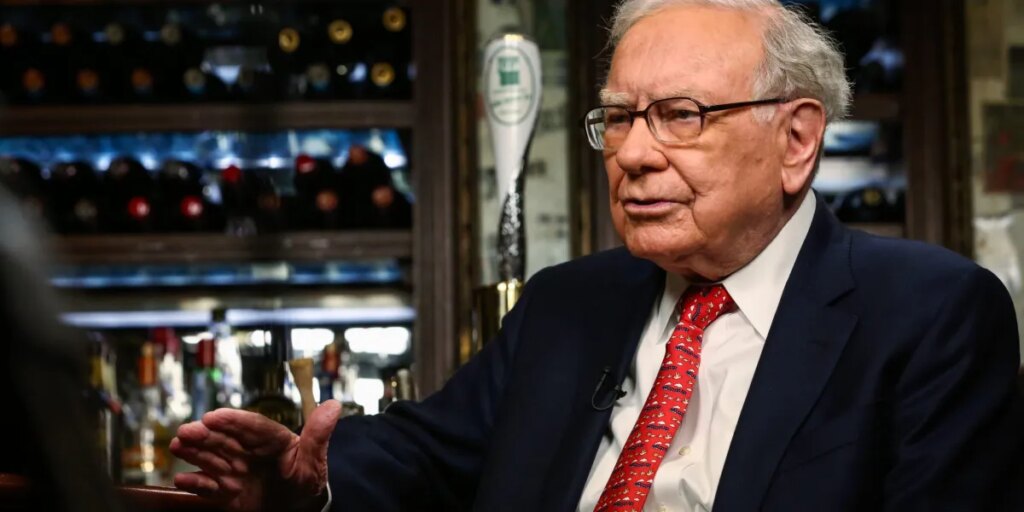
After some drama surrounding Warren Buffett’s relationship with the Gates Foundation, the Oracle of Omaha decided to forgo his annual donation to the Microsoft founder’s philanthropy and direct funds to his own children’s charitable organizations instead.
But that move, consequently, sparked a debate about why Buffett was moving the $140 billion so quickly. Some readers told CNBC they assumed he was doing it to avoid taxes, and some wondered whether this move would just ultimately slow distributions to actual nonprofit organizations and people in need.
But experts who advise major donors, study tax law, and sit on foundation boards told Fortune the question isn’t really about whether Buffett avoids taxes by making this move. Nearly every billionaire does that. The bigger thing to watch, they say, is how he’s giving it away. This move also reveals more about billionaire philanthropy than only fixating on the tax issue.
The tax savings are real, but they’re mostly beside the point in Buffett’s case
When a billionaire gives appreciated stock to a foundation instead of selling it, several tax consequences disappear at once, Allison Tait, a law professor at the University of Richmond who studies wealth transfer, told Fortune. The stock leaves the donor’s taxable estate, lowering any estate-tax bill at death. And because the shares are given away rather than sold, the donor never triggers the capital gains tax a sale would incur.
“Passing massive wealth directly to heirs or letting it sit in a personal estate at death triggers severe exposure to the estate tax,” she said. “Moving the shares into a foundation completely removes them from the calculation.”
The capital gains break would be the bigger win. Sell the stock, and a billionaire in the top bracket owes 20% in long-term capital gains tax, plus a 3.8% net investment income tax on top. That’s 23.8% on everything the stock gained. For founders like Buffett, who bought their shares decades ago for next to nothing, almost the entire value counts as profit the IRS could tax. But if they give the stock away instead, none of that would happen. Tait puts the total tax bill Buffett sidesteps by moving his fortune into family foundations at $33 billion to $56 billion, depending on how the shares are eventually sold.
But there’s tension in that because Buffett has long been a vocal advocate of a strong estate tax—although he’s personally avoided it. Testifying before the Senate Finance Committee in 2007, Buffett warned that “dynastic wealth, the enemy of a meritocracy, is on the rise,” adding “equality of opportunity has been on the decline.”
Tait said Buffett would likely argue, though, he’s using the tools available to him all while calling for the loopholes to be closed. Still, she said, choosing to avoid taxation on this scale undercuts the reform he says he wants.
To be sure, charitable bequests are also fully deductible against the estate tax, which means the destination (charity) is what erases Buffett’s tax liability. A charity pays no capital gains tax because it’s tax-exempt, and charitable transfers have passed free of estate and gift tax since the Revenue Act of 1918, Jane Ditelberg, chief tax strategist at Northern Trust Wealth Management, told Fortune.
“Appreciated securities often make efficient charitable gifts,” Ditelberg added. “The charity can receive more value than it would if the donor sold the stock first and donated the after-tax proceeds.”
So all of that essentially debunks the idea Buffett is trying to rush to beat a tax change. Plus, the One Big Beautiful Bill Act, signed in July 2025, made the estate tax exemption permanent at $15 million per person. If anything, said Janetta Cravens, founder of CoSpire Consulting and a longtime foundation-board adviser, the law removed urgency rather than created it.
The real difference is how the money is held
If the tax result is largely the same whether Buffett gives now or later, what actually distinguishes one billionaire’s giving from another’s? The answer, experts said, is disclosure and payout. That comes down to the type of vehicle (or the legal structure that holds the money) a donor gives through.
A private foundation like Buffett’s has to publicly report every grant it makes on an annual tax form, and it must pay out at least 5% of its assets each year or face an excise tax on the shortfall. Critics call the 5% floor a license to warehouse wealth. They argue a foundation can meet the minimum, count staff and overhead toward it, and let its endowment compound more or less forever.
That critique is fair in general, said Jack Lewars, founder of Ultra Philanthropy, which advises major donors, but it doesn’t fit Buffett.
His family’s foundations spend far above that floor, Lewars told Fortune. The five-year average payout rates are roughly 41% for the Susan Thompson Buffett Foundation, 59% for the Howard G. Buffett Foundation, and 87% for the Sherwood Foundation, according to Inside Philanthropy.
“They spend more like operating charities than endowments,” Lewars said. “Buffett has been consistent about this for 20 years,” he added, saying Buffett’s gifts to the Gates Foundation carried a condition that the money be spent in the year it arrived
“It isn’t fair to accuse [Buffett] of warehousing his funds,” Lewars said.
The bigger risk, experts said, sits with a vehicle Buffett didn’t choose: the donor-advised fund. It’s a charitable account, often run by a financial firm, that gives the donor a tax break upfront. A DAF, though, carries no payout requirement and no obligation to disclose its grants at all.
So since Buffett’s foundations have to show how much they’ve given every year, that sets him and his family’s giving apart.
“The alternative to a disclosed, floor-bound vehicle usually isn’t more democratic giving,” Cravens said. “It’s less accountable giving.”
The post Warren Buffett is handing $140 billion to his family’s foundations. The way he’s doing it reveals how billionaire philanthropy really works appeared first on Fortune.