With a growing backlash against the proliferation of data centers to power artificial intelligence, there has been increasing interest in putting the energy-thirsty operations into orbit. Now, researchers may have figured out how to overcome a major obstacle to that goal: cooling the data centers in space.
The California Institute of Technology and Sophia Space, a start-up focused on orbital space computing, announced on Thursday that they had received a patent for a cooling system that they say could help them launch data centers by the early 2030s, powered by 24-hour solar systems in space.
The announcement is the latest effort to develop the use of solar power in space. This year, Elon Musk proposed sending up a million or so satellites to function as data centers, reducing the electricity and water they consume on earth. Other big technology firms, such as Google and Jeff Bezos’ rocket company, Blue Origin, have been developing similar projects. Like the system designed by Caltech and Sophia Space, the satellites would require energy from solar power.
“It’s just kind of exploding,” said Sergio Pellegrino, co-director of the Space-Based Solar Power Project at Caltech, who is working with Sophia Space. “We need to become more comfortable with space doing things for us.”
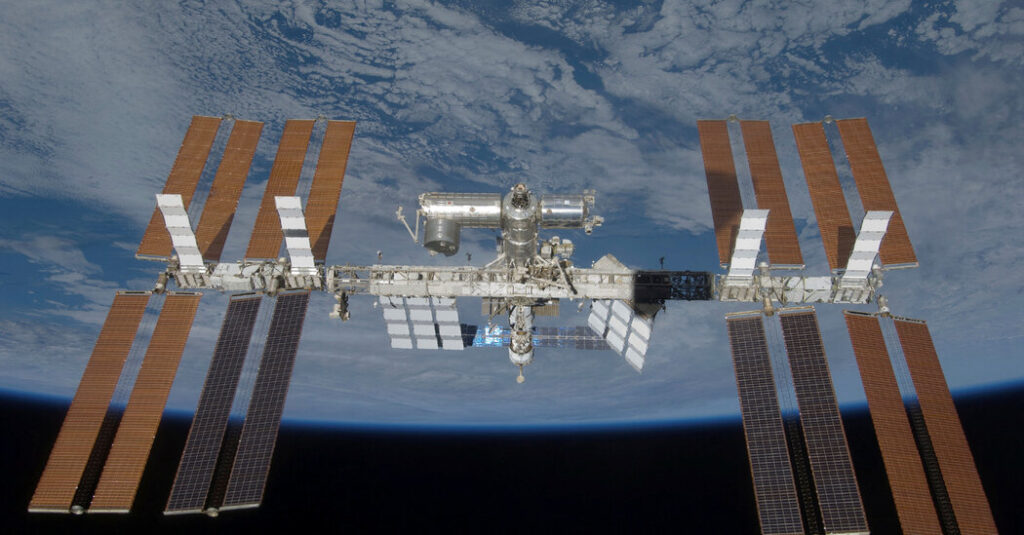
Solar technology already exists in space. Spaceships and satellites use small panels for power, but nothing at the scale that Sophia Space and Caltech envision. It will be years, at least, for their system to reach orbit. But if it proves to be effective, researchers, technology executives and energy companies hope that one day, solar arrays in space could power your home or business.
Solar power has grown as an electricity resource in the last decade or so, becoming cheaper and more efficient while also offering carbon-free energy. But because solar power runs only when the sun shines, there is debate about whether it can meet soaring demand spurred by electric vehicles, heating and cooling systems, and, most significant, A.I. data centers.
The data centers, in particular, have angered nearby residents because they use a lot of land and have contributed to rising electricity costs and water shortages.
Solar power in space would have 24-hour access to the sun’s energy, making it a steady source of power like power plants that run on natural gas and other fuels. On earth, a solar power plant requires batteries to extend the resource beyond daylight.
But some critics of putting solar-powered data centers into orbit argue that it would add to the growing amount of trash in space while increasing consumer costs for power. Some say it may also make the electric grid less reliable.
“The space-based mousetraps are just a distraction,” said Bill Powers, an engineer in San Diego who testifies as an expert witness on behalf of consumers before state utility regulators across the country.
Still, with companies racing to reap rewards from the A.I. boom, they are going to great lengths to create infrastructure for data centers, even if some of those efforts never become a reality.
In a June report on data centers in space, the World Economic Forum noted that finding the technology to cool computer chips would be an appealing pursuit because 70 percent of Americans oppose the construction of data centers in their areas. The report noted that space lacks air and water, which are typically required to rapidly cool computer chips.
Sophia Space devised a computer and data storage unit with a cooling system that uses a combination of tiles and solar power, which ultimately sends waste heat into deep space. The company said its system was “cost competitive” with data centers on earth.
“Sophia was born out of that kind of vision and that goal to provide energy and solve an energy crisis for the earth,” said Leon Alkalai, a co-founder of Sophia Space and its chief technology officer.
Rather than generate electricity in space and transmit that energy to the earth, the solar power system would produce energy in space for an orbiting data center that would then send its data to earth — a much easier and less costly feat, Dr. Alkalai said.
Caltech continues to work on development of space solar, and other academic institutions, like the Georgia Institute of Technology, have teamed up with a South Korean solar company, Hanwha Qcells, to advance the field.
The Energy Department has been exploring space solar-power generation for more than a decade. The most common designs use radio waves or lasers to transmit the energy to a receiver on earth and then deliver it to utility substations.
Solaren, a leading developer of the technology, said it was set to enter a power purchase agreement with a utility company for its system, which it aims to commercialize within the next decade.
“There’s nothing technically preventing us from doing that,” said Gary T. Spirnak, president and chief executive of Solaren.
The post A.I. Data Centers in Space? A System to Cool Chips Could Help. appeared first on New York Times.