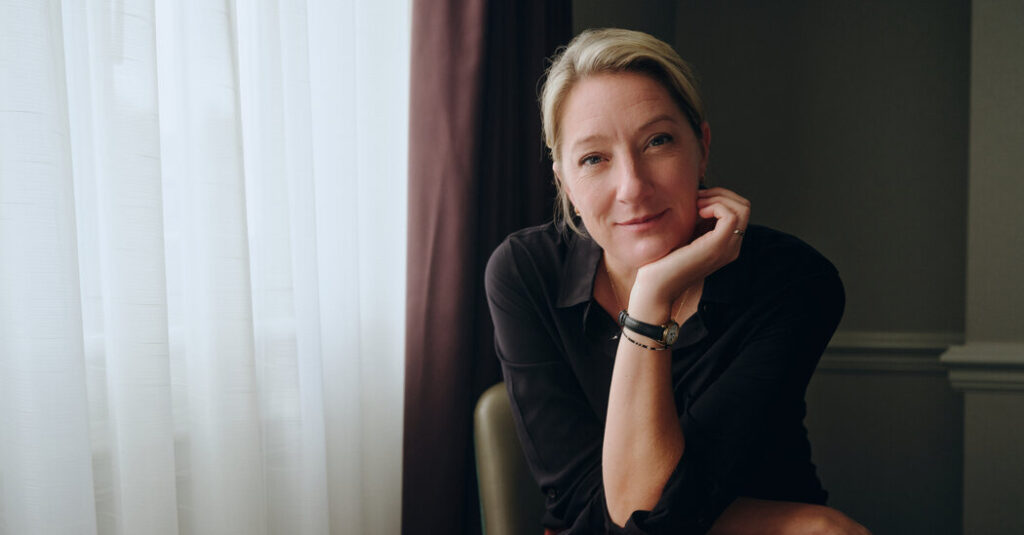
On Nov. 5, 2019, the first two volumes of “The Unselected Journals of Emma M. Lion” quietly entered the world.
The books were a departure from Beth Brower’s typical fantasy novels, instead following the day-to-day adventures and musings of a witty, literary-minded orphan on the cusp of adulthood in a fictional London neighborhood in 1883.
Brower had visited London only once, but she could clearly see Emma’s world in her head — quirky neighbors, whimsical traditions, fantastical balls, cozy tea shops and unexplainable happenings of the ghostly variety. Think “Gilmore Girls,” in Victorian England.
Posting an announcement on Instagram to a smattering of congratulatory comments was the extent of Brower’s marketing, but she trusted the right readers would find the books.
Seven years and six volumes later, the fans have indeed found Emma, and they are obsessed.
“The Unselected Journals of Emma M. Lion” was meant to be a lighthearted diversion as Brower made progress on emotionally heavier work; instead, it’s propelled her to self-publishing fame and, recently, more traditional deals with Bloomsbury Publishing in Britain and 17 other international publishers. (She hasn’t signed with an American publisher, and in fact turned down a promising offer, though describes herself as still open.)
The first volume has garnered more than 100,000 reviews on Goodreads. Facebook groups and bookfluencers churn out new fan theories daily (if not hourly).
And Brower is now regularly recognized in Orem, Utah, where she lives. On a recent outing, she turned to her husband after one such encounter with an amused apology.
“I’m afraid,” she recalled in a Zoom conversation, “we’re going to spend the rest of our lives talking about Emma.”
Orem is where Brower, 41, also grew up, the fifth of 11 siblings. Surrounded by art, music, sports and books in a creatively inclined family, she nurtured a rich inner life and the ability to write in any environment.
It was always a matter of when, not if, she would publish her first novel. She romanticized the traditional publishing path, but rejection letters forced her to examine the drive behind her dream: to be in every bookstore or to find readers who connected with her work? She chose the readers, founding Rhysdon Press in 2016.
She turned to her entrepreneurial family, hiring her sister to edit and her brother-in-law to design book covers. The learning curve was steep but rewarding; she could control every element of the work, including the typeset that she meticulously laid out with InDesign.
“Much like the Brontë sisters had each other, and Virginia Woolf had her sister, I have a lot of talented siblings,” she said.
Brower has self-published 13 novels since 2016. She attempts to catalog her vivid imagination in a “glorious mess of notes and notebooks,” storing snippets of plots until they emerge in her work years later.
The word-of-mouth success of the Emma Lion books is largely thanks to the instantly likable titular heroine. Emma might share the sunny wonder of Anne Shirley, but her wit and modernity are pure Elizabeth Bennet.
“I admit to running counter to most social graces,” Emma explains in the second volume. “I have been accused of throwing a teapot before, as you will no doubt hear before too long.”
Brower plots the books like a long-running television show; each volume spans two months in Emma’s life and each calendar year represents a “season.” Book 9 is slated this year, with fans stalking every digital move for hints of when it might drop.
The books are the first series, and the first self-published works, that Alexis Kirschbaum, the head of Bloomsbury Trade, has acquired. “As a publisher, I like complex female characters,” she said, and the “true originality of imagination” and spot-on capture of the “London spirit” made it an easy gamble, she added.
Lady Smith, co-owner of the independent bookstore Snail on the Wall, in Huntsville, Ala., first stocked the series in January after a customer’s request. Now, she restocks weekly and says they’ve sold almost 100 copies of the first volume — making it one of their best sellers.
Set in an invented corner of London called St. Crispian’s, the books might be wrapped in an unassuming package of Anglophile charm, but readers appreciate that Brower isn’t afraid to explore the darker edges of her characters.
In Book 5, Young Hawkes, an unorthodox vicar more likely to quote poetry than Scripture from the pulpit, offers a challenge to Emma as she’s staring down grief on the brink of a new year: “It takes a great deal to trust the future after one is acquainted with loss.”
This sentiment was a welcome balm to Torri Foster, a 27-year-old reader in Chandler, Ind., who turned to the Emma Lion books the day after a miscarriage.
A friend had begged her to read them the previous year, even offering up her own Kindle. Foster, a classics lover who majored in English, knew she could trust Brower when she spotted a Milton reference in the first book.
When she lost her daughter Ophelia, the world of the series was a safe refuge where she felt deeply understood. “Emma gave me a friend I didn’t have to talk back to,” Foster said. “It’s so much more than just a book.”
Brower deeply appreciates the ardor of her fans, but she’s constructed strict boundaries around St. Crispian’s and its secrets — she is not lurking on Reddit threads for plot suggestions. She confirms the series will contain 25 books in total, chronicling Emma’s life through 1887.
Lucas Page lives in McDonough, Ga., and heard about the books from friends at church. “I’m a 35-year-old man, married, father of two, and I relate,” he says. He recommended them to his 86-year-old grandmother, who read the entire series in three weeks and jokes that she hopes she’ll live long enough to see it to completion.
Page and his grandmother aren’t an anomaly. The series looks to have broad appeal: It has enough literary merit to please self-proclaimed book snobs; it resists explicit scenes driving other BookTok sensations while still giving romance fans fodder for endgame predictions; and it features nuanced spiritual musings yet doesn’t alienate nonreligious readers or veer into saccharine territory.
(For fans who speculate that Emma’s misadventures are inaccurately modern, Brower has a simple rebuttal: “There’s quite a lot of interesting behavior happening in England in the 1800s.”)
While Brower insists that Emma is not autobiographical, the balance of realism and optimism that attracts readers to the character is rooted in the author’s own disposition.
In college, Brower discovered a talent for gardening. She enjoyed her newfound hobby so much that she became a professional, spending seven years as the head gardener at Rivendell, a “Lord of the Rings”-inspired estate outside of Park City, Utah, until chronic illness forced her to leave.
“Most of my days are hard, they’re not bad,” she said. “We have to be brave enough to encounter the dark things.”
Now in better health, Brower enjoys a more consistent writing schedule and the capacity to travel to London. The Bloomsbury editions come out in Britain on Thursday; with them has come her first traditional book launch. (She said she’s delighted by the British book covers, designed by David Mann, which look like “1940s editions of a classic 1800s novel.”)
She’s been meeting and sharing meals with her British and French publishers. In Paris, she stole away to Fnac to purchase her own books — “a moment of triumph for me and my characters,” she said by telephone, “and I wanted to share it with them.”
She’s not sure where she’ll be in London for the publication on Thursday. “I’ll let instinct and serendipity guide me,” she added. “If you want magic, you can’t force it too much.”
The post Who Is Emma M. Lion, and Why Can’t Readers Get Enough of Her? appeared first on New York Times.