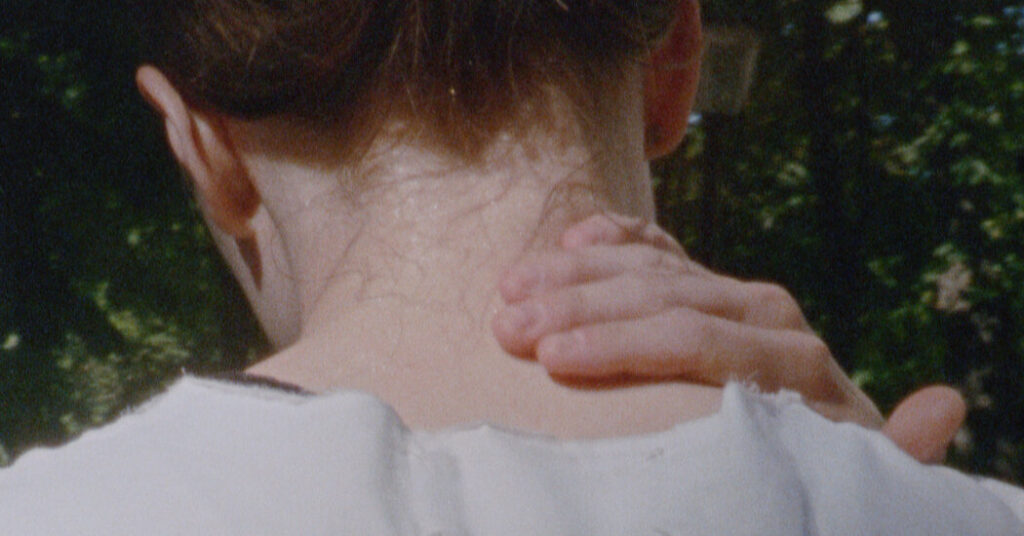
This summer has unleashed a special kind of hell on France: not just several heat waves with temperatures reaching as high as 112 degrees Fahrenheit, but drought and forest fires, some right next to Paris. On my street, the leaves have already turned brown; a once lush lawn now looks like burned straw. Across the country, farmers are reporting that crops have withered in the blistering conditions.
The extreme weather has forced the country in and out of a state of paralysis. Near Bordeaux, a wildfire has burned some 160 square miles; more than 220,000 people have been evacuated. Several nuclear power plants were temporarily shut down; trains were canceled because their route brought them too close to a fire. Paris landmarks like the Louvre and the Eiffel Tower have had to close early because of the heat, leaving tourists and the businesses that cater to them grumbling. As one crisis follows the next, the government has offered only an incoherent response.
Some commenters have suggested that the problem, at least when it comes to heat, lies in France’s supposed aversion to air-conditioning and that the fix must be a cultural one. The far-right leader Marine Le Pen, whose party has a long history of opposing climate-friendly policies, announced a plan to roll out air-conditioning nationwide. On X, right-wing foreigners like Elon Musk mocked Europeans for their lack of air-conditioning and implied that if residents simply learned to love it then all would be well. But it will not be easy to bring cooling to the masses, and it won’t be enough to solve the country’s problems. France needs to take climate adaptation far more seriously as this summer’s blazing heat and wildfires become a deadly, recurring reality.
Until recently, France had rather clement weather. But climate change has hit France and the rest of Europe very quickly. The continent is warming more than twice as fast as the global average, and scientists believe that there will be 10 times as many extremely hot days by the end of the century as there are now. Drought, too, has become a continual problem, leading to failed harvests and water restrictions.
The country’s haphazard response has largely left the French in charge of their own safety. When the second heat wave this year hit in June, many schools closed, leaving parents struggling to keep their children cool while also keeping their jobs.
The heat affects the country in unequal ways. Wealthier people have fled cities for air-conditioned hotels with pools or cooler locales, while those with fewer resources in the dense suburbs have sweltered in their homes. France recorded at least 5,700 more deaths than usual during the heat wave in June; many of the dead were older people who perished in care homes or overheated apartments.
The crisis of rapid heating in France — and in Europe more broadly — is daunting in large part because the housing stock is so poorly adapted to rising temperatures. More than 40 percent of French homes do not have ways to sufficiently block out sunlight. Materials like zinc in Paris’s iconic roofs trap and amplify heat, making homes unbearably hot even after a heat wave has passed. Air-conditioning without other structural improvements has only a limited effect — similar to pouring gasoline into a leaky tank, as one expert told me.
In fact, for dense French cities like Paris, and even for New York City, air-conditioning may provide relief indoors while simultaneously making summers worse. The process of cooling the air indoors heats the outside, aggravating the situation and worsening what are known as urban heat islands, as Vincent Viguié, a climate economist, told me. A recent study from China showed how in a narrow street lined with air-conditioners, the exterior temperature could increase by as much as 18 degrees Fahrenheit.
A lack of coordinated action may be pushing French consumers in the wrong direction. The heat waves have led many to purchase small air-conditioning units, rather than more eco-friendly (and more expensive) options like heat pumps. Around my Paris neighborhood, it’s now common to see windows and doors propped open, and the long tails of portable air-conditioners piping hot air into the street. Even the government has rushed to buy 30,000 portable air-conditioners for health care facilities, but since these units are poorly suited to institutional windows, it’s hard to imagine that they will bring patients much relief.
The frightening heat and fires this summer should be an impetus to those in charge to reckon with how quickly the risks are changing. And yet the French government has hardly addressed the scale of the problem. Even where it has pushed for adaptation, implementation has been at times disorganized or misguided. The government is “still fighting the last war, which is how do we improve energy efficiency in the winter,” said Stéphane Kirkland, an architect and a president of a sustainable design organization. Programs have stopped and started, leaving homeowners confused about what they can and cannot be reimbursed for.
The cost of real adaptation to climate change is undeniably astronomical. Vivian Dépoues, a researcher at the Institute for Climate Economics, told me that renovations to bring France’s buildings in line with its climate goals would cost an estimated $51 billion a year. And that doesn’t take into account all the other costs of climate preparedness, like better forest fire management and figuring out how to bolster the country’s food and water security.
But there is a cost to doing nothing, too: As a 2024 report from the institute notes, the costs associated with the health impacts of heat waves from 2015 to 2020 were estimated at between 22 billion and 37 billion euros (between $25 billion and $42 billion today). One estimate from an insurance company calculates that future heat waves could cost the country more than $230 billion over the next four years. Heat waves could result in 30 times more deaths across Europe by the end of the century than they have caused in recent years.
France is suffering at a time when climate change appears to be leaving the political conversation. This summer, the government shut down a research unit on climate adaptation and passed a law that critics say could exacerbate drought. But the problem won’t go away as soon as fall arrives. Even if France is contributing relatively little to global greenhouse gas emissions, the country needs to prepare for the fact that future summers will be far worse than this one.
Madeleine Schwartz is the editor in chief of The Dial. She is the editor, with the staff of The Dial, of “How We See It: The World Looks at America in the Age of Trump.”
The Times is committed to publishing a diversity of letters to the editor. We’d like to hear what you think about this or any of our articles. Here are some tips. And here’s our email: [email protected].
Follow the New York Times Opinion section on Facebook, Instagram, TikTok, Bluesky, WhatsApp and Threads.
The post 112 Degrees in Paris, Flames Near Bordeaux. France Can’t Go On Like This. appeared first on New York Times.