Anita LeBrun wanted to drink a glass of pinot grigio with her friends at their retirement home.
She was a regular at the facility’s semiweekly happy hours, but she thought it was ridiculous that they were dry. Minnesota law prohibited retirement homes from serving alcohol without an additional license.
“Everybody enjoyed it so much,” LeBrun, 82, said about the happy hours. “I just wanted it to happen that we could have, you know, a couple drinks.”
So LeBrun became the face of a movement to change the law.
LeBrun’s advocacy led her to testify before state lawmakers, gain national fame and stand beside Gov. Tim Walz (D) as he signed the bill, which became known among lawmakers as the “Grandparents’ Happy Hour” bill.
During 59 years of marriage, LeBrun and her late husband, Richard, often enjoyed happy hours at Minnesota bars and restaurants. LeBrun ordered white wine; Richard drank a beer or a vodka tonic.
LeBrun and Richard moved to Amira Choice, a senior home in Champlin, Minnesota, in June 2024. Five months later, Richard, 81, died of stomach cancer.
Amid her grief, LeBrun found a community at Amira Choice, which has about 125 residents. Friends knocked on her door to invite her to bingo, a gardening club and tea time. Tuesday and Friday afternoons were for happy hour, where facility employees served wine and beer, not knowing there was a law banning it. Residents were each limited to two drinks.
In April 2025, Amira Choice planned to celebrate its remodeling with an event that included sparkling wine. City officials, however, stepped in and said state law prohibited retirement homes from serving alcohol without a license. Residents were allowed to drink on their own, but they couldn’t be served alcohol at the facility.
At happy hours, LeBrun, who has five grandchildren, began drinking 7Up. Then she joined facility leaders in meeting with lawmakers to discuss changing the law.
In March, state Sen. John Hoffman (D) and state Rep. Danny Nadeau (R) filed bills that would allow nursing homes and assisted-living facilities to serve alcohol. Soon came the part of the process that was the most nerve-racking for LeBrun: testifying before lawmakers.
LeBrun, who was a day care provider for more than three decades, said she’s shy and used to lean on her husband to lead conversations. But her daughters, Tonya and Kristen, encouraged LeBrun to believe in herself — the same advice LeBrun gave them when they were nervous about sports tryouts and tests when they were growing up. She practiced her speech to lawmakers in front of a mirror.
While waiting to testify before a Senate committee at the State Capitol in St. Paul in March, LeBrun saw a camera nearby, she said, but Abby Dahl, the executive director at Amira Choice, reassured her that most people would likely be watching more consequential hearings.
Dahl testified that her facility already followed the state’s health requirements for food and drinks. Adding a liquor permit would cost the facility between $1,000 and $6,700 annually, depending on the type of license they requested, according to the City of Champlin.
“Requiring a liquor license is simply red tape without value,” Dahl testified. “It is duplicative, not protective.”
Then LeBrun introduced herself, saying she was testifying “on behalf of the entire community of residents.”
“My friends and I love happy hour, just like many of you do, I am sure,” LeBrun said. “Over a shared drink, we get to reminisce about parts of our life, military service, raising a family, the loss of a friend and celebrating the golden phase of our lives.”
In the following days, LeBrun was shocked to see her speech on the news. More than 2 million people watched a video of her speech on Instagram. LeBrun’s friends jokingly asked for her autograph.
Later in March, LeBrun shared a similar message to a House committee. The bill passed the House and the Senate in April.
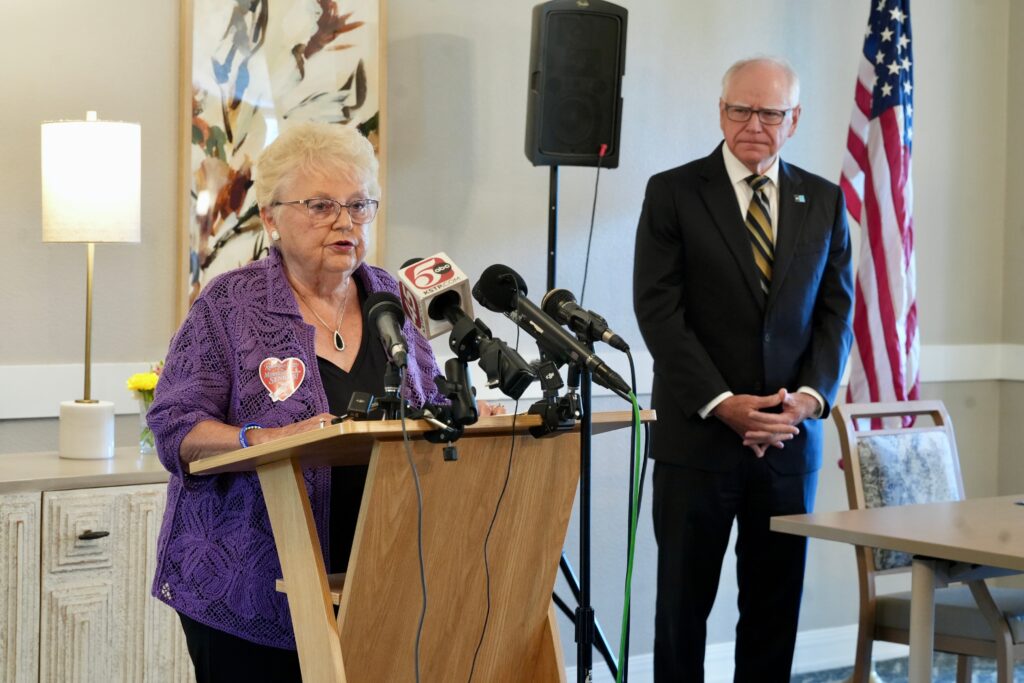
Walz visited Amira Choice on July 14 to sign the bill.
“Sometimes in the best intentions, we get in the way of things,” Walz said. “And this is one of those cases that government can get out of the way.”
LeBrun spoke after the lawmakers, wearing a red sticker that said “Raise your glass TO MINNESOTA SENIORS.”
“We raise our glasses not just for happy hour,” LeBrun said from behind a lectern, “but for independence.”
Five people, including LeBrun, grabbed tall glasses of sparkling wine after Walz signed the bill. The wine was alcohol-free; the law doesn’t take effect until Aug. 1. Before drinking, Hoffman said: “Here’s to good friends. Here’s to community. And here’s to Anita making a compelling argument.”
On Aug. 4 — the first Tuesday under the new law — staff members plan to serve wine and beer to residents. LeBrun said she’ll make sure to have a glass of pinot grigio.
The post This grandma fought for a bill to allow happy hour at retirement homes appeared first on Washington Post.