America’s right-wing elites have a theatrical new indictment of liberals that they warn will lead to catastrophe: They care too much.
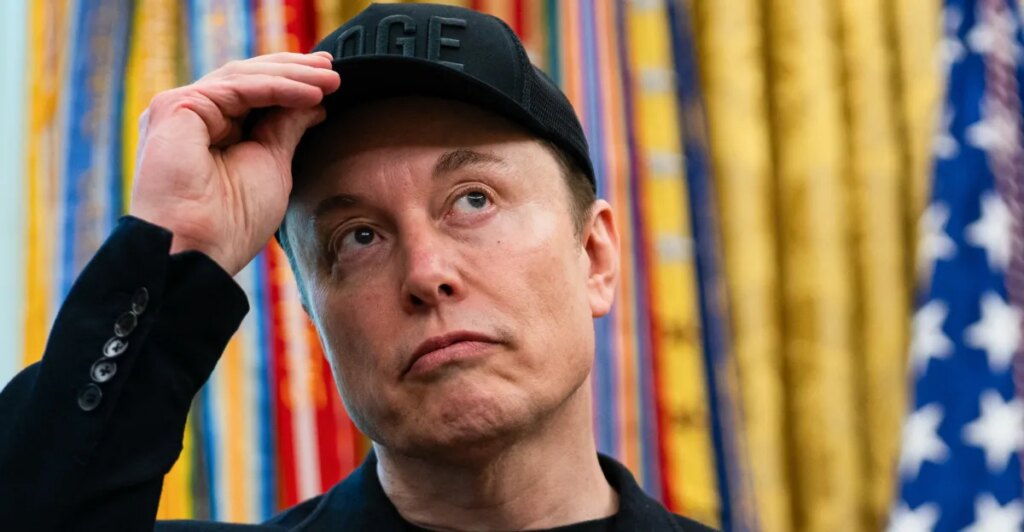
“Suicidal empathy,” the phrase coined by Canadian marketing professor and conservative influencer Gad Saad, is suddenly on the lips of everyone right-of-center — including billionaire Elon Musk, who has promoted Saad’s book by the same name.
The catchy two-word indictment crystallizes a broader critique on the right — that progressive values aren’t just a misdirection of priorities, but an active threat to everything the West has achieved over thousands of years.
The problem, in the view of Musk, Saad, and like-minded conservatives, is that the left is so obsessed with sticking up for those on the bottom — whether it’s aid recipients abroad, asylum-seekers at the border, or the homeless in cities — that they disregard everyone else, with deadly consequences for society.
“People have empathy for the criminals, but not empathy for the victims of the criminals,” Musk told Tucker Carlson in October 2024.
It’s also a convenient new spin on an old idea. The billionaire tech right cohort Musk belongs to has long looked for a way to unshackle itself from the leviathan of basic social responsibility. With the concept of suicidal empathy, they have found an intellectual framework to argue that their policy preferences and bottom lines aren’t just about greed or self-interest, but a matter of cultural survival.
In their quest to make this argument, many on the right have pointed to a study that they see as a sort of intellectual checkmate. In 2019, a group of psychologists gathered participants across political ideologies and asked them to express their level of concern about different groups ranging from their close family to animals to all things in existence. In one section, you see a series of heatmaps that appear to show that liberals focus their moral concerns on groups further away from themselves, whereas conservatives value their close loved ones.
Take a minute to enlarge this image and study it. Conservatives care most about their family, their neighborhood, their own people. Liberals care most about “poor oppressed foreigners” they never met. This explains so much about the cult of suicidal empathy sweeping the West. pic.twitter.com/YWSYXQgkvh
— Matt Bracken (@Matt_Bracken48) January 14, 2025
Conservatives seized on the heatmaps and turned them into a meme, arguing that liberals really do value the lives of distant foreigners and strangers over those of their own family and community.
Venture capitalist and AI Super PAC megadonor Marc Andreessen, for instance, is a fan of the heatmap meme. Rob Henderson, a conservative author, claimed the heatmap proves that “conservatives devote the majority of their empathy and care to family and friends and liberals devote most of their concern to plants, trees, and inert entities such as rocks.” Even the Trump Department of Homeland Security has posted it to respond to a group of protesters opposing the deportation of Kilmar Ábrego García.
But things may not be so simple as this now-infamous set of heatmaps portrays. New research published in the journal Political Psychology last month decided to study liberals’ and conservatives’ moral concerns in a more exhaustive way. It came to a very different conclusion.
What the research says about empathy and politics
Kyle Fiore Law, an assistant psychology professor at the University of Utah and one of the authors of the study, decided to embark on the research in part after seeing the heatmap memes.
“The assertion going around was that liberals had come to care more about strangers and distant causes than about their own families and communities, and that claim is testable,” he told me. “It also sat awkwardly against decades of evidence that favoring close others is a widespread default in human social cognition, so we wanted to check it directly rather than assume either side of the debate was right.”
The problem, in Law’s view, was that the 2019 study was not robust enough to really tell us who liberals and conservatives prioritize.
“The 2019 studies measured how far moral concern extends, and they did that well,” Law wrote to me in an email. “They were not designed to detect whether concern for distant others competes with concern for close others, because both tasks built an outward-expanding structure (e.g., from close humans to distant humans to non-human life to eventually the natural world and non-sentient targets) into the measure itself.”
Instead, Law and his colleagues surveyed liberals and conservatives with what’s called the Moral Expansiveness Scale. This scale lets people rank every group independently, which lets us see how much they value them relative to each other (you can do a simple version of examining how much you care about different groups with the test here).
What Law and his colleagues found was that it isn’t so much that progressives value foreigners and other distant groups more than their close family; they simply extend their moral concern outward further than conservatives do.
“Close others came first everywhere,” Law said. “Across all three datasets and essentially the whole ideological spectrum, people gave their inner circle the highest moral concern, and we found no evidence of an inversion among liberals at any level.”
The only thing ideology seemed to predict in their study was how far out someone’s moral circle of concern goes.
“[Liberals reached] further toward targets like animals, plants, and future generations,” Law said.
They did ask respondents about tradeoffs, and liberals were willing to allocate more theoretical points to outsiders than conservatives did. But the differences were small.
When people were asked to divide a fixed pool of 100 points, people close to them received “by far the largest share in every group, roughly 56 to 62 points out of 100,” Law told me.
Law’s more robust study suggests that the heatmap meme is essentially fake.
“In our data, extending concern outward did not come with reduced concern for close others,” he said.
How far should empathy extend?
But disproving the heatmap meme only tells us how liberals and conservatives tend to think; it doesn’t tell us how they should think.
Tradeoffs are a fact of life. Whether we should be willing to modestly increase the national debt or taxes to increase foreign aid, for instance, is a question of values rather than something that can be empirically derived.
But the heatmap memes and pop psychology theories around “suicidal empathy” that have become so common on the right — from the world’s richest man to the folks who serve in the Trump administration — miss something deep and relevant about human beings.
As a species, we succeeded not just because of our capacity to defend our in-groups — our family, friends, community, nations — but because of our ability to understand the interests and values of those far away.
After World War II, for instance, multilateral organizations — like the United Nations— were established to prevent another global conflict by having diplomatic channels that we can use to anticipate and ameliorate the concerns of other countries; even “Mutually Assured Destruction,” the doctrine that prevented a nuclear war, is based on the shared understanding that you cannot destroy someone else’s country without them deciding to do the same thing to you.
It’s ironic that Saad’s suicidal empathy concept has taken off right as the Trump administration is actively disproving the idea that we can prosper by disregarding everyone else in the world.
Trump’s trade wars and actual wars have been conducted under the concept that we can simply bully the rest of the planet and profit as a result.
By trying to run roughshod over other countries’ economic interests, we’ve helped push them to find support in other major countries, like China. Repeated military attacks on Iran, powered by the idea that we should simply impose our terms on that country instead of coming to a mutually beneficial agreement as former President Barack Obama did, have cost us tens of billions of dollars in warfighting and threaten the global economy.
None of this has been popular with the people close to home that it’s purportedly meant to prioritize. Far from empathetic, the Trump doctrine seems to be suicidal cruelty — lashing out at foreigners even when cooperating with them is in our own best interest.
The heatmap memes and quips about suicidal empathy may make for great social media fodder. But in the real world, seeing life as a constant zero-sum game where we win only if others lose is just as foolish as any progressive who suffers from an excess of empathy.
The post The right says “suicidal empathy” is destroying the West. Here’s the truth. appeared first on Vox.