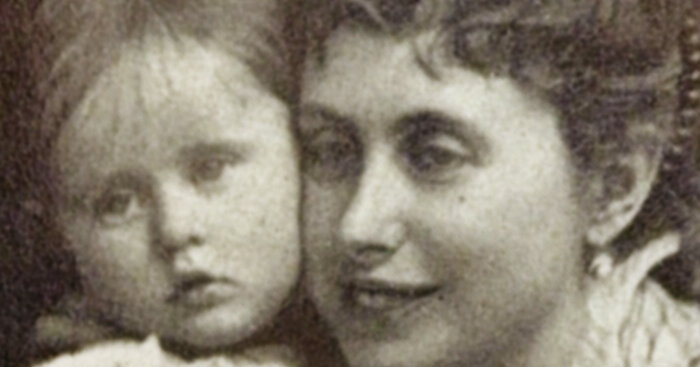
THE RENOIR GIRLS: A Hidden History of Art, War & Betrayal, by Catherine Ostler
In the spring of 1881, a black-clad man, a bit down at the heels and carrying a large bag, knocked on the door of a townhouse on Paris’s elegant Avenue Montaigne.
Following his success at the Salon of 1879, Pierre-Auguste Renoir had been deluged with portrait commissions, though he grumbled at the genre’s low pay and limitations. Now he’d arrived at the home of the Cahen d’Anvers family, tasked with portraying its two youngest daughters.
For their portrait, 4-year-old Alice and 6-year-old Elisabeth stood doll-like, holding hands on a red smyrna carpet, wearing white lace dresses tied with wide satin sashes, the hues reflected in the colors of their hair bows, slips and ankle socks. “Pink and Blue, the Misses Cahen d’Anvers” ranks today among the most popular paintings in the São Paulo Museum of Art, in Brazil — a “duet of sugared-almond-colored sweetness,” in Catherine Ostler’s description.
Yet in “The Renoir Girls,” Ostler employs her research skills like an X-ray technician, peeking beneath the painting’s shimmering surface to reveal secrets and betrayals at the heart of both a single Jewish family and French society. The Belle Époque, after all, received its name only in retrospect, when the horrors of war had made the decades preceding it appear more beautiful in memory.
The portrait’s chilly reception in the household provides an early clue. For years, it hung, overlooked, in the servants’ quarters. Renoir had been a daring choice for the girls’ parents — Louis, a second-generation banker, and Louise, a celebrated beauty and salonnière. Louise’s special friend, Charles Ephrussi, a bachelor of sophisticated tastes, had recommended him. Had Louis finally tired of his wife’s lover’s suggestions?
Renoir, too, was miffed. He was “the only working-class Impressionist,” Ostler notes, and his resentment of his patrons could slide, at times, into something darker. He complained that Louis’s payment for the picture was “pretty stingy” and slow in coming. “I really give up with the Jews,” he wrote to a friend.
His grievances were reflective of a Gilded Age in which class tensions gave rise to anarchist bombings, and the Dreyfus Affair — a notorious miscarriage of justice that dragged on for 12 years, in which a Jewish army officer was framed for treason — tore at the fabric of society.
The Cahen d’Anvers and their circle had long mingled with ancien régime aristocrats at charity balls, the opera and the races at Deauville. Now their world was split: on one side, right-wing French Catholics with faith in the military; on the other, defenders of the French republic’s legacy of secular humanism. Louis and Louise’s Jewish friends mostly belonged to the Dreyfusard camp — but there were defections.
Though raised with little religion, their girls were expected to marry within their milieu. Their brothers managed it. But Elisabeth joined the Catholic Church in 1895 — at the height of the Dreyfus Affair, when the pace of conversions quickened — and the next year wed Comte Jean de Forceville (blue-blooded, short on cash), maintaining his royalist, right-wing convictions for decades after their 1901 divorce.
The eldest daughter, Irène, also converted, leaving her eminently suitable husband, Count Moïse de Camondo, with whom she had two children, to marry the head of his stables, a womanizing Italian nobleman. (The marriage, which produced another daughter, didn’t last.) Passions aside, was it a relief to shed the Jewish name of Camondo, becoming the Countess Sampieri?
Finally, in 1898, at the Château Champs-de-Marne — the former home of Mme. de Pompadour, restored by Louis and Louise — Alice married Col. Charles Townshend, the poor but ambitious scion of an aristocratic English family, in an Anglican service.
Plucky Alice emerges as a heroine in this beguiling, troubling and ultimately heartbreaking book. (As a 64-year-old widow, she daringly rescued her two grandchildren from a France on the verge of occupation, spiriting them by boat to England. Ostler’s book is dedicated to Alice’s surviving granddaughter.)
Yet Irène, who appears to have gotten by in occupied Paris by keeping a low profile and lying, remains the greater mystery. (A new book in French attempts to fill in the gaps in her murky story.)
During the war, Elisabeth — frail and hiding in a small village — may have assumed that her conversion would save her. But the village’s mayor was a right-wing aristocrat whose family and the Cahen d’Anvers went way back. “For four generations, they had spun under the same crystal chandeliers,” Ostler writes. “What intergenerational resentment, historic jealousy or hatred would prompt the mayor to betray Elisabeth?”
In 1944, Elisabeth would die either en route to or at Auschwitz. Béatrice (Irène’s daughter with Moïse), too, was deported and murdered at Auschwitz, with her husband and two children.
Reading “The Renoir Girls,” I sometimes wanted to shake the Cahen d’Anvers and their friends, to wake them from the dizzying rounds of galas, tea dances and weekend hunts. Their wealth had propped up indebted governments. They assembled magnificent collections of 18th-century furniture and Impressionist painting, built and restored remarkable villas, and donated much of it to France. Their young men had fought and died for France. They adored the style of Marie Antoinette. Couldn’t they have figured out this would end badly?
A still more worrisome and timely question arises, amid a global scourge of antisemitism: What is the effect of this age-old hatred on the private lives and choices of individuals today?
I’ve never been a huge Renoir fan. But a few years ago, I stumbled upon his stunning portrait of the young Irène, and gasped. By then, I knew something of the painting’s history and how this vision of tender girlhood, once stolen by the Nazis, had ended up in the collection of a Swiss war profiteer.
The betrayals in this story are endless. Ostler’s book is one more effort, dogged and impressive, to set the record straight.
THE RENOIR GIRLS: A Hidden History of Art, War & Betrayal | By Catherine Ostler | Atria | 410 pp. | $35
The post The Dark Story Behind a Sugary-Sweet Portrait appeared first on New York Times.