The sooner we acknowledge that the United States has lost the war with Iran and stop fighting, the better. Because we now have a lot of work to do.
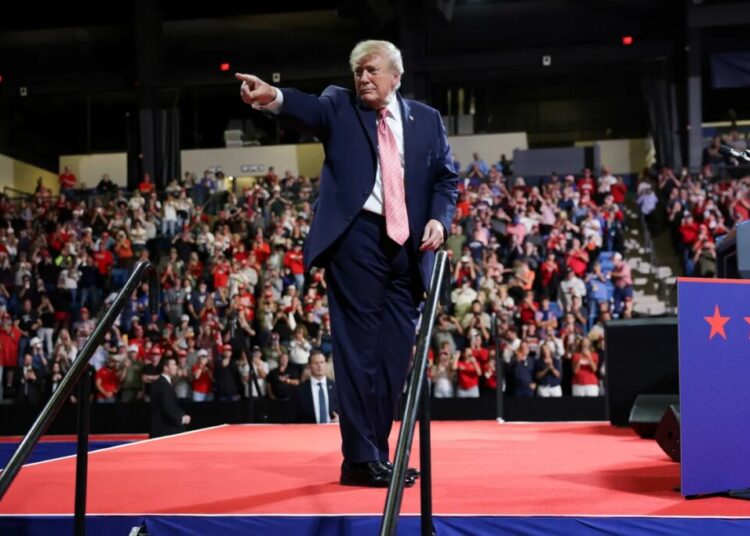
On Tuesday, Defense Secretary Pete Hegseth was pressed to explain before the Senate what the United States had accomplished in its war with Iran. Sputtering with fury at times, he claimed that Washington had won “a historic military victory.” But even if that were so, as a certain dead Prussian once counseled, nations do not fight wars to achieve military objectives. They fight wars to achieve political objectives.
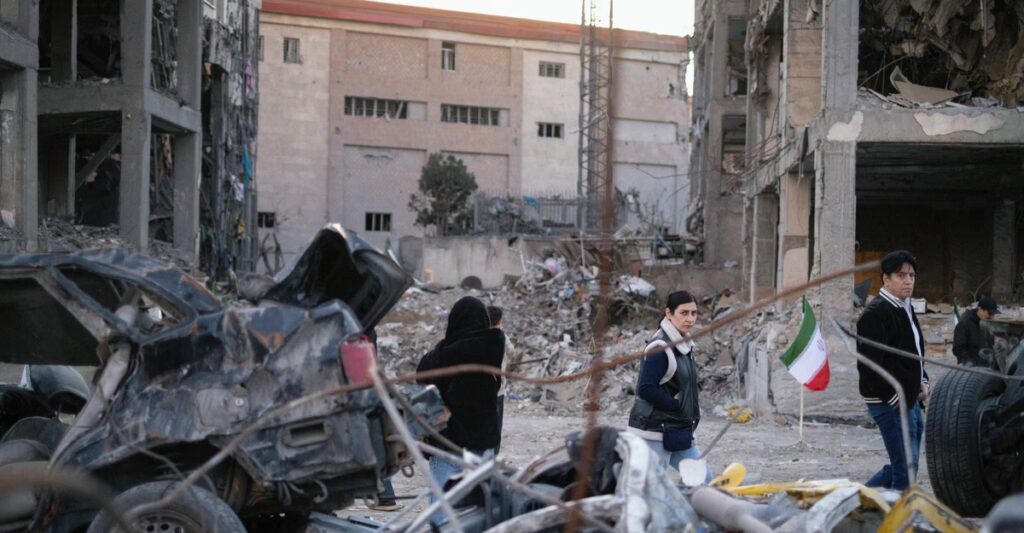
The United States has not secured any of its political objectives in the war with Iran, and indeed, it has produced a situation in July that is markedly worse than the one antebellum: Iran’s former supreme leader, an elderly man known for his extreme views but also his caution, has been replaced by a group of leaders who are, if anything, more extreme and far less cautious about confronting the United States and its partners in the region.
The Strait of Hormuz, which was open prior to the start of the conflict, is now largely closed. And the Arabian Peninsula’s other choke point, the Bab el-Mandeb Strait, appears to have been shut by Iran’s partners in Yemen, the Houthis. In the spring, American energy executives sounded like Chicken Little as they warned of oil and gas shortages that a reduction in Chinese oil imports helped forestall. But Exxon and Chevron have more recently cautioned that an energy crunch really is inevitable if the situation does not improve, and that this could threaten the entire global economy.
[Tom Nichols: The American people need the truth about the Iran war]
The U.S. does not have a workable military solution to this problem. Iran can threaten tankers transiting the Strait of Hormuz with little more than inexpensive drones. And, thanks to this conflict, Tehran has discovered that it has powerful psychological leverage over shipping companies and their insurers—so much so that it hardly needs to lay mines to block the strait.
For the U.S. to finance this war beyond the $37.5 billion that the Pentagon admits it has already spent—the actual number is surely much higher—would be to throw good money after bad. The Trump administration needs to face up to having lost so that it can focus on preventing the effects of an embarrassing but ultimately manageable defeat from spreading beyond the Persian Gulf. This will involve rethinking some fundamentals—such as how the region’s oil reaches world markets, how the United States wages war, and how Iran can be deterred from making trouble for American interests in the future.
The Strait of Hormuz is now, and likely indefinitely will be, under a degree of Iranian control that did not exist prior to the conflict. Washington and its allies, together with private-sector investors, will need to devote considerable time and money toward securing alternate routes for Middle Eastern oil to reach global markets. Some infrastructure already exists. The East-West Pipeline that runs across Saudi Arabia was built during the Iran-Iraq War, which was the last time oil tankers struggled to navigate the strait. This pipeline moves roughly 7 million barrels of oil a day. The Saudis are considering doubling that capacity. The United Arab Emirates has a similar pipeline that bypasses the strait, and whose volume will also likely need to double. Oil and gas pipelines, like other oil infrastructure in the Gulf, are vulnerable to Iranian drone strikes, but they are relatively easy to repair.
The United States should encourage the Saudis and Emiratis to run branches of their pipelines through Yemen and Oman, to keep those countries invested in maintaining the free flow of oil and gas out of the peninsula. Chevron is apparently speaking with Iraq about a new pipeline—through Syria, no less—to move that country’s oil to market. The sooner these conduits are built, the better. (Also, just a friendly suggestion, but this maybe wasn’t the best month to crow about ending federal subsidies for wind- and solar-power generation.)
The Iran war has brought a few things into focus—among them, that the United States needs to rethink its approach to warfare in the region and beyond. For all of the time that the U.S. Central Command undoubtedly spent planning and rehearsing for a confrontation with Iran, the conduct of this war betrays a certain failure of imagination that has cost the U.S. military a great deal. The United States appears to have assumed that its abundance of precision weaponry would give it a huge advantage over the Iranians—which it did, for at least a few weeks. But precision weaponry was not decisive.
Relatively low-cost Iranian missiles and drones have wrought havoc upon U.S. bases and other targets in the Middle East. American planners should have anticipated as much: Ukrainian drones have been inflicting devastating damage on Russian military assets for several years now, demonstrating just how quickly the nature of warfare has changed. Yet American troops are getting killed in their barracks by cheap Iranian missiles and drones, and their leaders haven’t thought through adequate countermeasures.
This failure belongs not only to the Trump administration but also to the military services and their leaders. The Iran war is almost certainly the easiest drone war that America will ever fight. Countering this cheap and widely accessible technology will only get harder. The United States has to dramatically rethink its posture in the Middle East and around the globe until it figures out how to contend with that.
[Phillips Payson O’Brien: Fighter jets are passé]
Finally, Washington will need some fresh ideas if it is to reestablish deterrence with Iran. Prior to last summer, Iran had not made a serious move to stop oil and gas from flowing through the Strait of Hormuz in decades, and likely held back from making rapid advances toward a nuclear weapon, in large part because American military power deterred these actions. But as the American scholar Thomas Schelling noted, the power of a deterrent lies in the threat of its use. Once you actually do the thing you threaten to do, the enemy no longer fears what might happen.
The Trump administration has now squandered not one but two deterrents. Last year’s strikes on Iran’s nuclear facilities did not, as President Trump initially claimed, “obliterate” the country’s nuclear program. I oversaw the contingency planning for such an operation for two years at the Pentagon. The strikes did what we planned them to do: They degraded Iran’s nuclear program, but only temporarily. Likewise, Hegseth is correct that we have done incredible damage to Iran’s conventional military and the industrial base that supports it. But the United States sought above all to deter Iran from doing two things: striking American partners in the region and disrupting maritime traffic. Is Iran now more deterred from taking these actions—or less so?
The answer is clearly the latter. The administration needs either to reach an accord with the Iranians or to establish a credible new deterrent, and fast. The promoters of this war—including The Wall Street Journal’s editorial board and the hawks at various Washington think tanks—have gotten everything they asked for. And it has been a disaster. So now what?
The post The Mess the Iran War Made appeared first on The Atlantic.