If you’re confused about whether you can eat the shredded lettuce on your Doritos Locos tacos again, you’re not alone. I cover food safety for a living—and I love Taco Bell—and I’m not sure when I’ll be comfortable living más.
At the end of last week, the worst concerns about the ongoing cyclosporiasis outbreak seemed to be behind us. Parasite-laden lettuce should no longer be anywhere near a Taco Bell, because all of the iceberg that’s been linked to the outbreak has, according to the company that produced it, been recalled. And yet, somehow, the response has generated only more drama this week. Communication has been shaky from the start. As I’ve previously written, the CDC was slow to alert the public to the warning signs that a multistate outbreak was brewing, even as cases were rising dramatically in Michigan and other states. The messaging got only worse as the government began to figure out why people were getting sick.
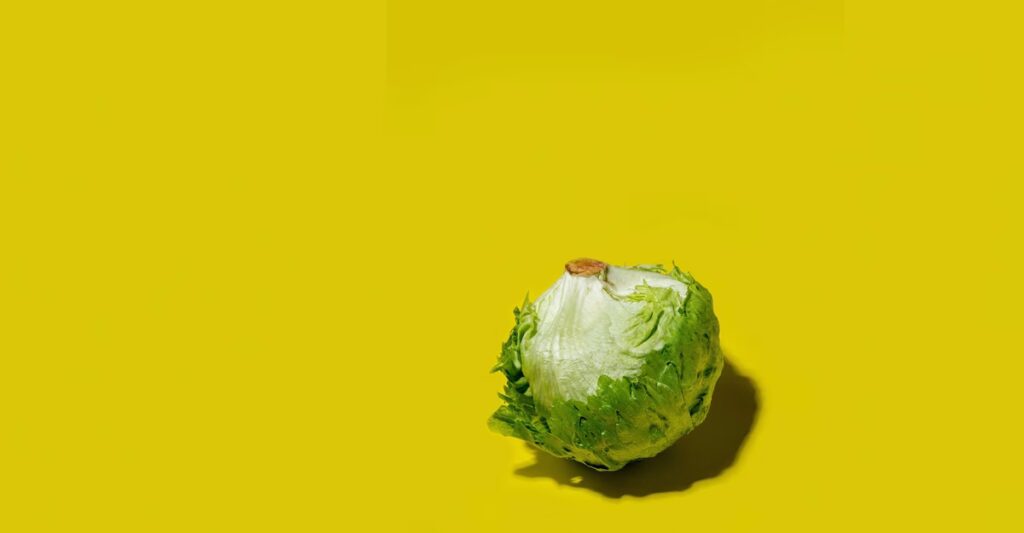
Late Thursday, the CDC and the FDA announced that the Midwest cluster of cyclosporiasis cases stemmed from contaminated iceberg lettuce produced at a single farm in Mexico (later revealed to be a supplier for a large chain called Taylor Farms) and shipped to Taco Bells in five states. That should have been a breakthrough, giving consumers confidence that they could resume their normal eating habits (sans tacos). But almost immediately, the outbreak seemed to be bigger than the government was letting on. Taco Bell’s official statement encouraged “all relevant restaurants, retailers, and foodservice operators”—not just Taco Bells in the five states that the government had identified—to act responsibly, as Taco Bell did by pulling lettuce off their menu. And Taylor Farms’ initial recall included lettuce shipped not just to Taco Bell, but also to a number of major companies such as Sysco, which provides food for restaurants, hospitals, and schools. By Friday evening, Walmart had pulled certain Marketplace-branded bagged lettuce off of shelves in 15 states.
[Read: Cyclosporiasis is solved! Right?]
Then, on Saturday, the FDA posted a since-deleted announcement that it had found cyclospora (the parasite that causes the illness) on iceberg lettuce that was produced by Taylor Farms de Mexico but not part of the initial recall. The result promised to be the most definitive evidence to date that regulators had linked Taylor Farms to the problem. But the FDA reversed course the next day after agency staff reexamined the sample and deemed the earlier result a false positive. The embarrassing mistake was only compounded by Taylor Farms, which issued a statement that began with: “Today, FDA apologized to us.” But the FDA denied that it had issued a formal apology.
The FDA still seems confident that lettuce linked to Taco Bell and Taylor Farms is the culprit behind the spike in cyclosporiasis cases. More than 1,600 people who have tested positive for cyclospora across the five-state outbreak have reported eating Taco Bell, according to the FDA’s website. Seems straightforward! And yet, that website also prominently displays the warning “Don’t eat recalled lettuce at any Taco Bell location or other restaurants.” What other restaurants? The Department of Health and Human Services, Taylor Farms, and Taco Bell did not immediately respond to requests for comment.
Perhaps, as a Chicagoan, I’m particularly sensitive to the uncertainty; after all, the government has not explained how my local Taco Bell is safe when one 40 minutes to the south in Indiana is part of the outbreak. And as regulators continue to try to explain the Midwest’s cyclospora mess, the question remains of what is going on with elevated cyclosporiasis cases in the rest of the country, which the FDA has not publicly linked to iceberg lettuce, Taylor Farms, or Taco Bell. Cyclosporiasis has for decades flared in the United States during summer, which has made pinpointing where cases are truly elevated this year difficult business. The FDA told reporters on Monday that it has investigated five clusters of cyclosporiasis cases across the United States since May, three of which are over, but it has not publicly explained where these clusters have been, which ones are considered over, and what foods have caused the various outbreaks. North Carolina, for example, reported an 83 percent spike in cases over the past week, bringing its total cases to 561 since May. State officials have hinted that the outbreak could be caused by parsley, cilantro, or lettuce, but apparently not Taco Bell’s lettuce. In a press release Friday, the health department said, “At this time, the increase in cyclosporiasis cases in North Carolina does not appear to be associated with the outbreak in other states involving Taco Bell.”
[Read: America’s homegrown-parasite problem]
In the absence of clear information, Americans seem to be doing the only thing they can to protect themselves: opting out. Foot traffic to chain restaurants—not just Taco Bell—is down significantly over the past week, according to news reports. America is still likely in a much better situation than it was just a week ago, before the Taco Bell link was announced: Cyclosporiasis is notoriously hard to trace, and state and federal experts have managed to interview people who caught the bug about everything they ate prior to getting sick and identify a major commonality. It’s a shame that their work has been overshadowed by enough confusing communication that we all still have to look skeptically at a salad.
The post What Is Actually Going On With Cyclosporiasis? appeared first on The Atlantic.