Alberto R. Gonzales served as U.S. attorney general from 2005 to 2007.
Immigration policy can’t rely on force alone. That was one perhaps obvious but profound insight George W. Bush helped me learn in the 1990s. He was the governor of Texas and had asked me, then serving as his secretary of state, to be a liaison on border issues with Mexico. I came to see the Southern divide for what it is: a place where economic and human ties run deep, and security matters.
Equally important, though, is that the rule of law is measured, in part, by how the government upholds it. Enforcement without discipline can turn the law into an instrument of fear. When preserving the homeland ostensibly requires routine confrontations by masked agents in unmarked vehicles, without body cameras, something has gone wrong — tactically and morally.
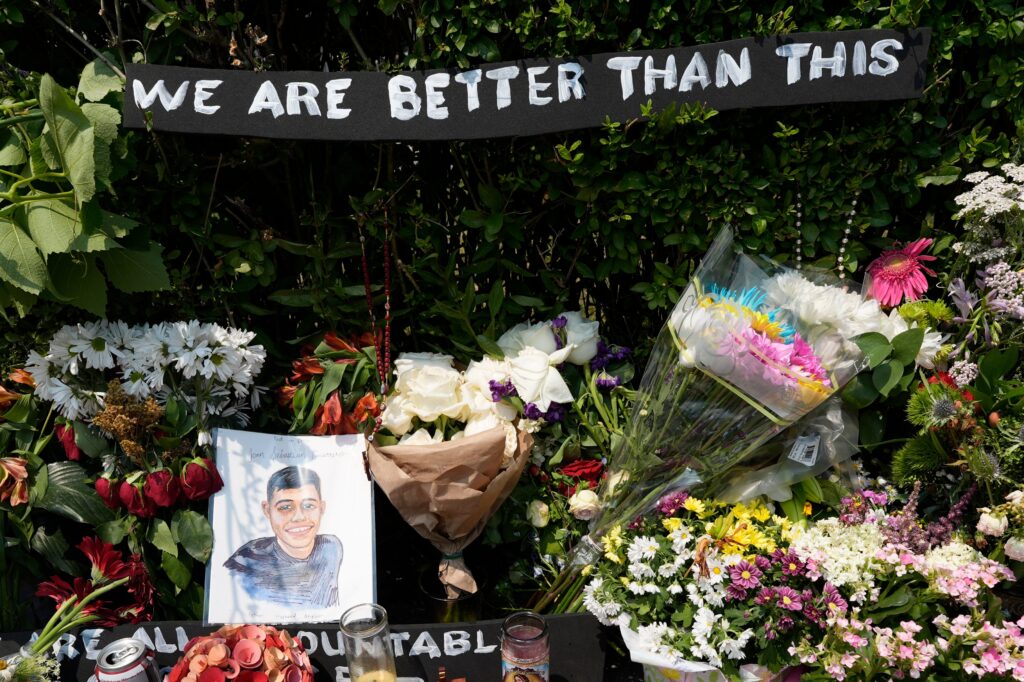
That, evidently, is the dynamic today. Recent fatal encounters involving immigration officers in Texas and Maine should trouble every American. Behind the official phrases — “use of force,” “lawful stop,” “officer-involved shooting” — there is a human being and a government that must answer for what happened in its name. Officers deserve clear rules. The public deserves standards worthy of a constitutional republic. What the nation has gotten instead — the result of Congress’s refusal to pass comprehensive reform — is a system that is neither secure nor humane.
Allow me, then, to outline the ideal. The United States needs secure borders. We need to know who is entering the country, and we need to keep out those who would do us harm. No serious person can dismiss that obligation in a post-9/11 world. We also need a functioning visa tracing system that effectively identifies overstayers.
Yet we also need a steady supply of lawful immigration. Farms, restaurants, hotels, construction sites and caregiving institutions depend on reliable foreign labor.
What we don’t need: dangerous immigration enforcement tactics. President Donald Trump no doubt agrees in principle but errs in practice. Last week, Homeland Security Secretary Markwayne Mullin suspended the use of traffic stops by federal immigration officials. Apparently caught off guard by the decision, the president reversed course. “We must be strong, tough, and smart, and we CANNOT give up one of I.C.E.’s most important and effective Crime Fighting tools,” he wrote on Truth Social.
But, respectfully, such stops aren’t smart. Even if they may be technically lawful in some circumstances, they are wrong as a routine method of enforcement. If someone is followed by an unmarked vehicle and confronted by armed, masked men without visible government identification, his natural emotional response will probably be fear. It may not be legally justified to flee or resist, but it is to be expected. Law enforcement policy must account for what ordinary people are likely to perceive in such moments.
As a Hispanic American, I can’t ignore the personal dimension. I support lawful immigration enforcement. I also know that, in the wrong place, at the wrong time, I could be mistaken for someone else. If masked agents in an unmarked vehicle suddenly confronted me on the street, I honestly don’t know whether I would clam up or comply. In that narrow space between command and confusion, a misunderstanding could become a tragedy.
Congress, thus far intent on doing little, could help make such encounters safer. Why not force Immigration and Customs Enforcement, which operates under federal statute, to suspend routine vehicle stops and street arrests by masked agents in unmarked vehicles? Lawmakers could allow for the procedure if it satisfied strict, documented criteria, such as a demonstrated need for tactical or officer safety.
Three more ideas for our legislators: Mandate body-worn cameras for public-facing enforcement operations, with narrow exemptions for, say, undercover missions or sensitive interviews. Recruit experienced, independent law enforcement staff to review new training and protocol standards. Ensure that every fatal encounter triggers prompt public accounting, consistent with legitimate investigative needs. The public has a right to know the reason a person is killed or seriously harmed on our streets at the hands of our government.
Identification, body cameras and clear rules aren’t bureaucratic obstructions. They are safeguards that protect the public and the legitimacy of law enforcement. Accountability strengthens authority. Enacting such provisions, moreover, would affirm that Americans can support immigration laws and insist that they be enforced in a manner consistent with public safety and common sense.
The country needn’t choose between border security and human dignity. Nor does enforcing the law preclude reforming it. Nearly two years ago, speaking with journalists about his plans for the “largest deportation operation in the history of our country,” Trump said that “we have to have the heart, too.”
He was right on the second part; our policy needs to be compassionate. A nation serious about its security must also be serious about its limits — because when the government enforces the law through fear, it harms the people it claims to protect.
The post How to make ICE smart again appeared first on Washington Post.