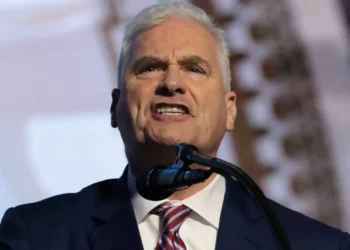
Defense Secretary Pete Hegseth is meeting Tuesday with members of the U.S. Senate, where he is expected to face bipartisan scrutiny over the Trump administration’s escalating war in Iran.
The hearing before the Senate Appropriations Committee marks Congress’s first public oversight of the administration’s request for $67 billion in additional funding to cover the costs of the war.
Hegseth, who is testifying alongside Joint Chiefs of Staff Chairman Gen. Dan Caine, is set to defend the funding request as a necessary step to restock the Pentagon’s arsenal of precision weaponry diminished during the fighting and to avoid looming shortfalls in the military’s budget.
But lawmakers also are also likely to press Hegseth and Caine to explain the Trump administration’s handling of the Pentagon’s nearly $1 trillion budget and its strategy for the war.
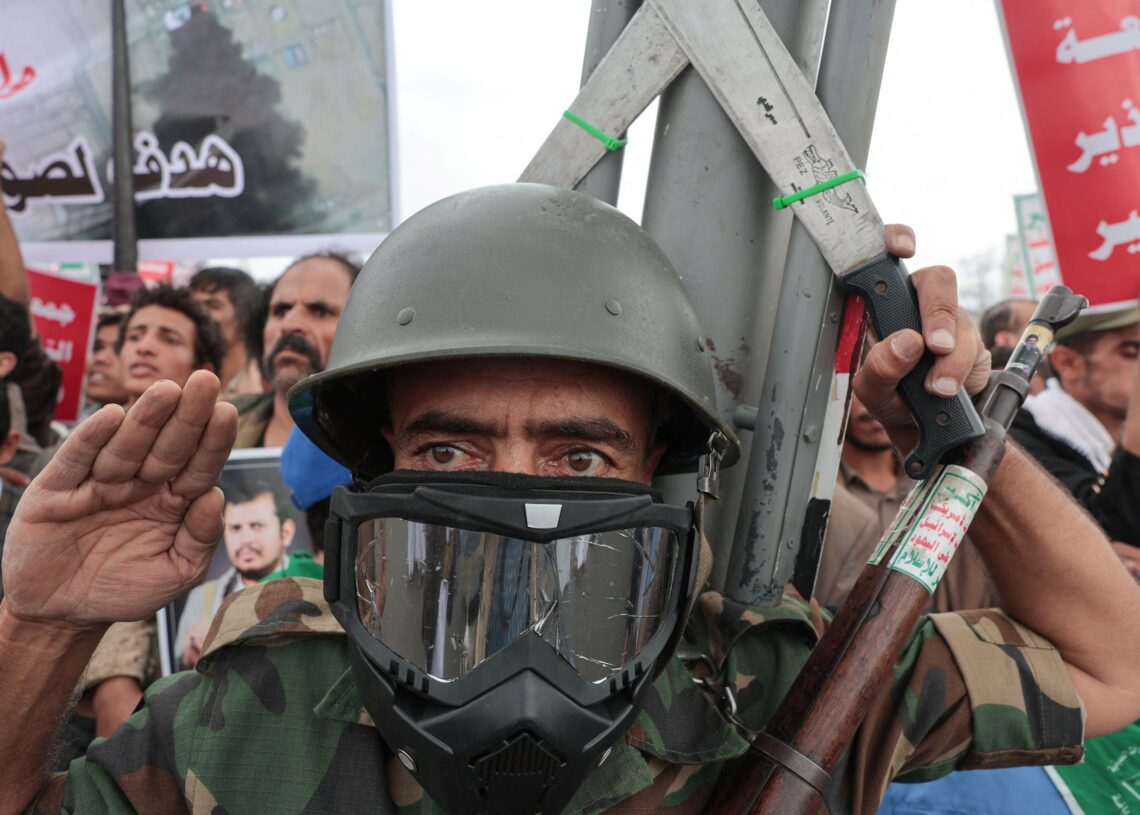
After a ceasefire between Washington and Tehran collapsed earlier this month, the conflict is threatening to widen. On Monday, the Iranian-backed Houthis in Yemen announced a blockade against Saudi Arabia’s oil shipments in the Red Sea. And the Trump administration has launched more than a week of consecutive strikes on Iran, pledging to retaliate for the recent deaths of American service members.
Iranian officials “want to desperately meet, and until they’re ready to meet in a meaningful way, we have no interest,” President Donald Trump said Tuesday.
He said U.S. forces planned to strike Pickaxe Mountain, the site where Iran is believed to have deeply buried nuclear facilities.
The mounting U.S. attacks have thus far failed to loosen Tehran’s chokehold over the Strait of Hormuz, another vital corridor for the world’s oil supply.
A tanker came under attack in the strait early Tuesday, near Oman, forcing the crew to abandon the ship on a lifeboat, the British navy’s maritime trade operations center said. Iran said fires broke out on two tankers that passed through an unauthorized route.
“As long as American hostilities in the region continue, the Strait of Hormuz will remain closed,” Iran’s Islamic Revolutionary Guard Corps said in remarks carried by the semiofficial Tasnim News Agency.
If successful, the Houthis’ move targeting the Bab el-Mandeb Strait could choke off one of the few viable alternatives for oil exports and reduce global supply by an estimated 7 percent. Already, 10 percent of global oil shipments are halted by disruptions in the Strait of Hormuz, which has been largely shut by Iranian threats and mines since the U.S. and Israel launched the war five months ago.
The price of a barrel of Brent crude oil, the international benchmark, rose Tuesday to around $90 a barrel as investors weighed hopes of a resolution with renewed fighting. The benchmark oil price has risen sharply since the $70 seen in early July as some shipments began to resume transiting the Strait of Hormuz. In the United States, the national average gas price rose above $4 per gallon this week, following an average of $3.85 one week ago.
The reimposition of a U.S. blockade on Iranian ports appears to have failed to disrupt Tehran’s oil revenue in the way Washington might have hoped, some analysts said.
On Tuesday, Tehran claimed fresh attacks on U.S. military assets in Jordan and Bahrain, after a 10th consecutive night of U.S. bombardment in Iran. U.S. Central Command said overnight that its strikes hit Iranian command centers, missile and drone launch sites and air defense systems.
The U.S. strikes followed a pledge from Trump to make Iran pay “many times over” for the killing of U.S. forces in the region in recent days.
Iran’s forces also launched attack drones at U.S. military hubs and installations in Kuwait. Iranian media said that the drones targeted Camp Arifjan in Kuwait, along with a helicopter parking station at Camp Udairi and U.S. military housing at Ahmad al-Jaber Air Base.
The Pentagon has disclosed that nearly 100 U.S. troops have been injured in the U.S. war with Iran over the last two weeks, underscoring the extent of Tehran’s retaliation against U.S. military sites in the region as negotiations faltered.
The Pentagon on Tuesday identified a soldier killed in Northern Iraq over the weekend. Sgt. Michael Emmanuel Swinton, 30, of Fayetteville, North Carolina, was killed during a controlled detonation of a downed Iranian one-way attack drone on Sunday at Erbil Air Base, Iraq. Swinton was one of three soldiers reported killed over the past few days as the U.S. resumed strikes against Iran.
The Pentagon is still awaiting identification of remains it has found of a potential fourth service member still listed as missing after an Iranian missile attack in Jordan last week.
Even as the U.S. and Iran appear to dig in, Iranian Interior Minister Eskandar Momeni traveled Monday to neighboring Pakistan, which helped mediate the ceasefire.
A separate track of talks between Lebanon and Israel has continued under U.S. auspices, despite ongoing fighting between Israeli forces and Iran-backed Hezbollah on another front of the regional conflict. As the two governments hold negotiations, Hezbollah has opposed the talks and Israeli airstrikes have still pounded Lebanon’s battered south.
President Joseph Aoun is in Washington for the first visit to the White House by a Lebanese president since Barack Obama was in office. Lebanese leaders have appealed to the Trump administration to help end Israel’s occupation in southern Lebanon and mobilize aid for the Lebanese military to disarm Hezbollah.
Suzan Haidamous in Beirut and Tara Copp in Washington contributed to this report.
The post Hegseth, Caine appear before Senate as Iran war escalates appeared first on Washington Post.