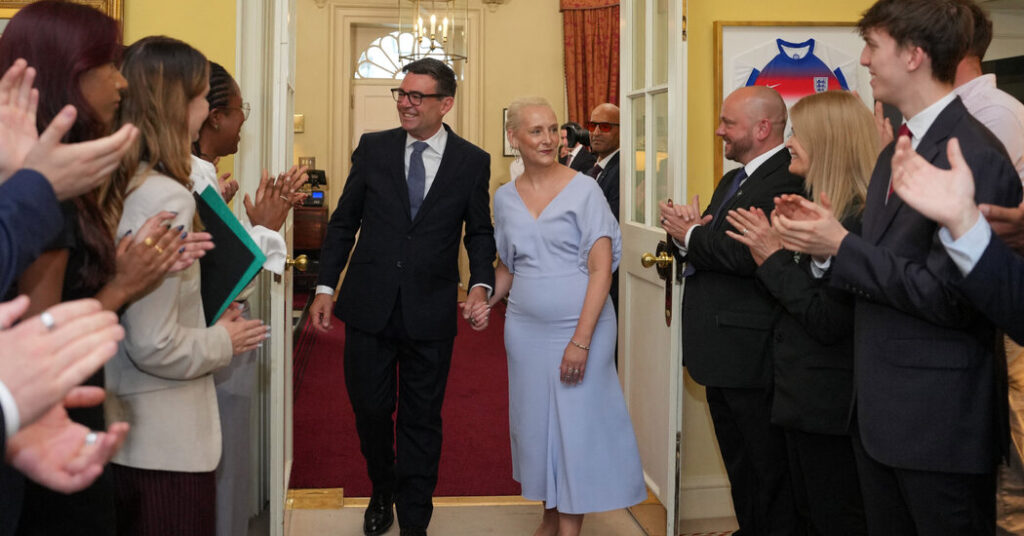
When power changes hands in Britain, the transition happens quickly. On Monday, Andy Burnham entered Downing Street as prime minister for the first time and took charge of the government.
In keeping with tradition, Mr. Burnham passed through the famous front door of No. 10 Downing Street, where the staff there lined up to greet him and his wife, Marie-France van Heel. He was met by the country’s top civil servant, the cabinet secretary, Antonia Romeo. Then, the cameras departed.
All incoming prime ministers are then given key information prepared by the British civil service. That’s likely to include details of his new living arrangements and sensitive briefings on security and intelligence.
He will make and receive calls from international leaders and soon begin announcing the ministers in his cabinet, one of the key decisions that a new prime minister faces.
Usually, the most important of these appointments are made in person, meaning broadcast news media will train their cameras on the politicians walking up Downing Street and speculate about what role they have been offered. The most significant roles are chancellor of the Exchequer, the country’s top financial official, and foreign secretary. Occasionally, if someone who is offered a job tries to bargain or declines it, the appointment process can be complicated.
At some point soon after he takes over, Mr. Burnham will face another sobering task required of every new prime minister: writing the “letters of last resort” to the commanders of the four submarines that provide Britain’s continuous at-sea nuclear deterrent.
These letters, which are sealed and kept in a safe on board each submarine, tell the commanders how to respond in the event of a devastating nuclear strike that prevented them making contact with Britain.
The post What Happens Behind the Scenes Once Burnham Enters 10 Downing Street appeared first on New York Times.