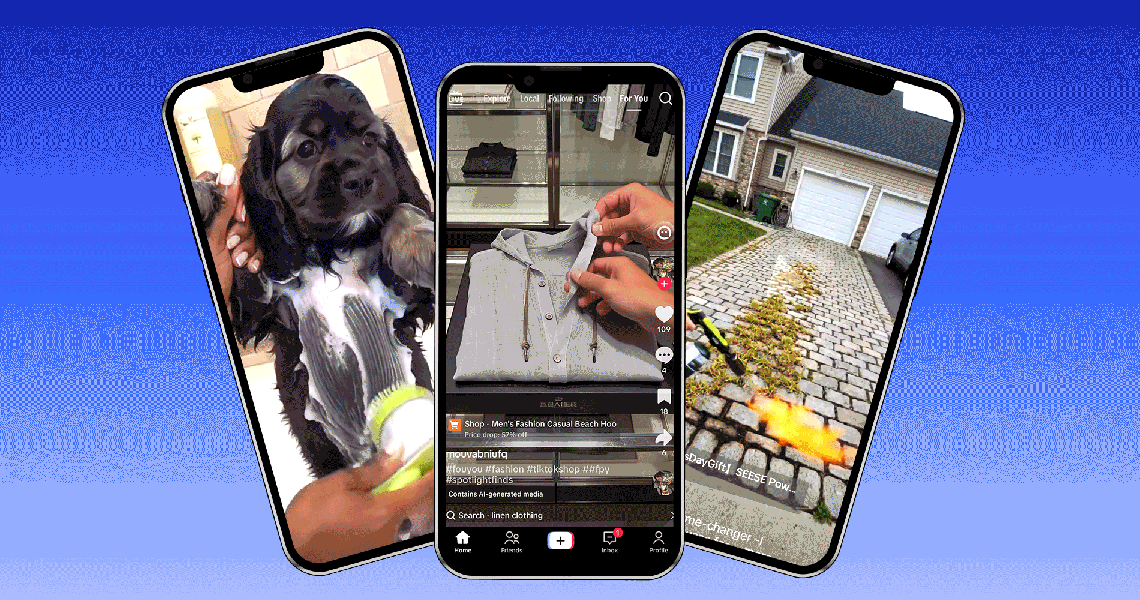

TikTok Shop side hustlers should watch their backs.
Brands — and TikTok’s algorithm — are increasingly embracing videos with AI-generated influencers and product imagery. The tech could put a dent in the businesses of creators who focus their content on shoppable videos designed to make them money through TikTok’s e-commerce affiliate program.
These creators aren’t household names like MrBeast, or “micro influencers” who have cultivated a small but loyal following. They are often side hustlers focused on one goal: selling you products.
Their videos can loom large on the feed, particularly during key e-commerce periods like the Black Friday-Cyber Monday rush, when creators posted about 10 million shoppable videos.
Fabian Ouwehand, founder of the social-commerce firm Socialscale.ai, likened their content to “little billboards you see along the road out of the side of your eye.”
AI can imitate and iterate on these creators’ gimmicky videos that use similar scripts around flash sales and short-window price drops. These AI-generated product videos are increasingly showing up in the feed as TikTok’s automated ads system, GMV Max, surfaces them. They can be lucrative: One AI-video maker drove tens of thousands of dollars in product sales, according to a screenshot of their affiliate profile that was viewed by Business Insider.
The rise of AI posts is beginning to reshape the look and feel of the TikTok Shop ecosystem. A TikTok Shop employee said it had become a “hot topic” internally.
Some brands are now using AI to recreate multiple versions of an influencer’s post that performed well, three Shop marketers said. Others are using the tech to post hundreds of times a month without having to pay creators or send them free samples, they said.
AI influencers can provoke backlash, however, leading some brands to opt out of using generative AI entirely. The Wall Street Journal recently reported that the vacuum and smoothie-machine maker SharkNinja had barred creators from using AI for its affiliate program.
Ashley Wright, CEO of the TikTok Shop agency Social Tale, said some brands are “happy” to use AI if it brings them more sales, while others worry it could damage their reputations.
Many brands still favor human creators with established followings and influence, especially when they’re trying to drive product awareness rather than make a hard sell.
“We use the AI tools to basically test to see what works and what doesn’t, and then we double down with a real creator for the concepts that are working,” said Anish Dalal, an executive at the social commerce and marketing firm Third. “If it’s really working well with a synthetic creator, it’s going to work even better with a real creator.”
The generative AI debate has gone well beyond TikTok. Marketers on social platforms like Meta are struggling to strike the right balance between using AI to improve workflow efficiency and avoiding deceptive “slop” ads.
AI is still turning off a lot of viewers
Today, the main obstacle for generative AI on TikTok is that videos often veer into the uncanny valley, as synthetic characters with tinny computer-generated voices try to sell stuff.
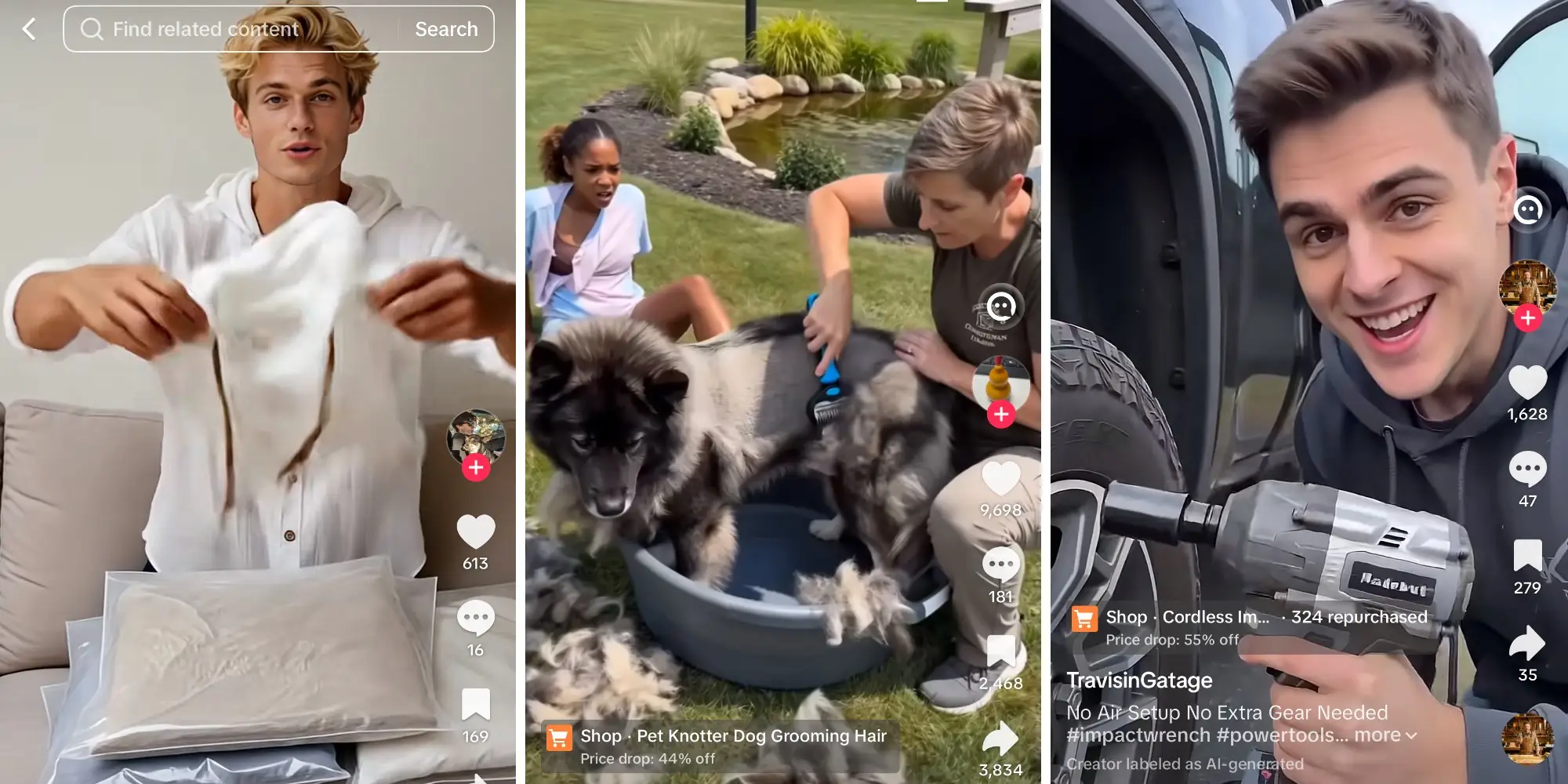
In one post, for example, an AI-generated influencer with coiffed blond hair tugged on a hooded shirt to show how its soft collar was made from a material with a “good amount of give to it.”
Other AI Shop videos showcase products being used in ways that appear to defy real-world physics. In a series of posts viewed by Business Insider over the last few months, synthetic avatars used power washers and propane torches, pet brushes, and microfiber dusters to spotlessly clean their driveways, pets, and air conditioner vents in seconds.
Even in cases where AI videos aren’t labeled, users are still taking notice.
“Never seen green grass burn like that. Stupid AI,” one user commented on a video of a driveway being rapidly de-weeded using a propane torch.
“It’s good, but not that good,” another user wrote.
Bad AI can create marketplace quality problems
TikTok’s ability to keep its video feed compelling is important to its long-term success as it fights for sales in the highly competitive US e-commerce industry.
The company has grown into a formidable e-commerce player since its 2023 US launch, tracking toward over $23 billion in US sales this year, according to a forecast from EMARKETER, Business Insider’s sister company. Its US sales are still a far cry from Amazon’s, which EMARKETER projects will surpass $500 billion this year. Its advantage over incumbents like Amazon or Walmart is its army of influencers.
Marketplace quality doesn’t come easy in the AI age. In November, Nicolas Waldmann, who leads TikTok Shop’s governance and experience external affairs team, told Business Insider that some fraudulent sellers were using generative AI to make fake storefronts for products that didn’t actually exist.
AI-generated videos could also create legal problems for brands selling real products, said Robert Freund, an advertising and e-commerce lawyer. Beyond potentially deceiving viewers about a product’s capabilities, having synthetic influencers claim they’ve used a product could run afoul of an FTC requirement that advertising spokespeople offer “honest opinions” in testimonials, he said.
Freund said that, with AI, “It’s just much easier to create deceptive content at scale, intentionally or not.”
Recently, governing bodies like the European Union and New York state have developed laws requiring brands to disclose when synthetic characters are used in ads. TikTok, which didn’t respond to requests for comment, wrote in its seller documentation that generative AI is permissible as long as the videos are labeled, don’t misrepresent a product or imitate a real person, and respect intellectual property rights.
More blue-chip brands may embrace generative AI videos as the technology gets better.
“Why spend so much money and time and effort on getting whatever [user-generated content] done when AI can do it for a tenth of the cost?” Socialscale.ai’s Ouwehand said. “It’s a huge opportunity for companies.”
Read the original article on Business Insider
The post TikTok side hustlers beware: AI is coming for your job appeared first on Business Insider.