Emma Rosenblum is the author of “Bad Summer People” and “Mean Moms.”
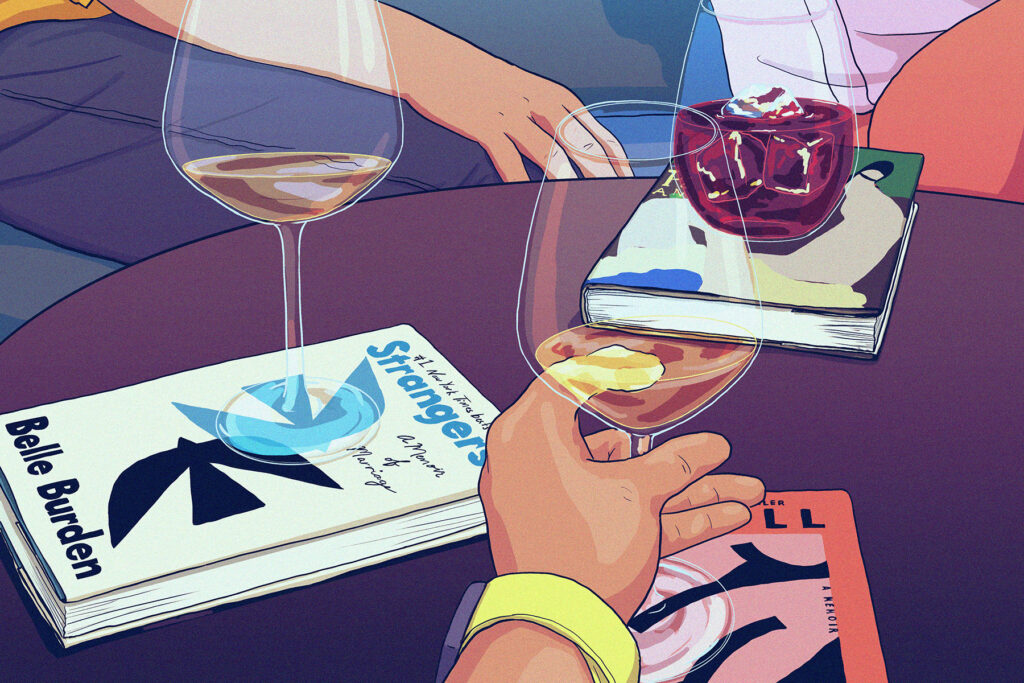
I was recently standing with a group of moms, semi-watching our sons playing soccer, when the conversation ebbed, fading into polite, somewhat awkward silence. We had covered school. The weather. No one would dare bring up politics. And so the topic turned to ye old faithful: “Strangers,” Belle Burden’s best-selling account of the collapse of her seemingly perfect marriage. Everyone was thrilled to offer an opinion.
Was Burden weak or strong or just living in denial? How could she have signed a portion of her money away like that? Is her ex a sociopath? Her poor kids!
From there, we veered seamlessly into a dissection of Lena Dunham’s memoir “Famesick,” which all the moms had also read.
Was she weak or strong or just living in denial? How about her penchant for toxic relationships? Will she have a baby? Her poor parents!
Then there is Amy Griffin’s 2025 memoir “The Tell,” in which the billionaire author details her MDMA-recovered memory of sexual assault as a teenager. Book club grandes dames Oprah Winfrey, Jenna Bush Hager and Reese Witherspoon joined forces to promote it, and the memoir has stayed in the zeitgeist thanks to dueling lawsuits sparked by an investigative piece in the New York Times.
In March, Griffin’s former middle school classmate sued the author, alleging that the abuse in “The Tell” happened to her, not to Griffin. Last month, Griffin countersued, vehemently disputing the woman’s claims, sparking another round of online and offline discourse.
Was Griffin weak or strong or just living a fantasy? Did she make it all up? Can MDMA really allow you to recover memories? Poor Oprah! (Kidding.)
Purely from a plot perspective, the books have little in common, but they are linked in a broader sense: All three are gripping accounts of catastrophe in otherwise supremely fortunate lives. It is a winning formula for publishers. As of late last month, “Strangers” had sold some 195,700 physical copies since its release in January, according to Circana BookScan data (which does not include e-book or audiobook sales). By the same metrics, “Famesick” sold 68,500 copies since it was published in April. “The Tell,” which came out in March 2025, sold 78,800 copies.
All have spawned endless think pieces and copious media coverage. A month ago, the New Yorker published an article with new details about Burden’s divorce settlement, investigating whether she was as financially vulnerable as she presented herself in her memoir. On its face, the article was about her money — but it also sparked a familiar argument about whose suffering matters and why. Are these women worthy of our sympathy?
Burden is tidy, quiet, a person who swallows her own feelings until circumstances force her to reckon with them. Dunham is messy, hilarious, a creative genius who, at times, cannot get out of her own way. Griffin hides her overwhelming anxiety behind a perfect facade of glamour and power.
The overriding theme of their memoirs is betrayal: Burden by her husband, who abandons her without warning; Dunham by her body, which is plagued with chronic illness and constantly at the mercy of public scrutiny; and Griffin by her mind, which conceals the most traumatic parts of her past. All three eventually make peace with what they cannot control.
Of course, lots of memoirs feature tales of personal resilience. But most do not shoot to the top of the bestseller list or take over the bookish zeitgeist so completely. Why these three? And why now?
When I was an editor at women’s magazines in the 2010s, we used to have a little joke about the need to add a “privilege clause” to certain first-person pieces — a few lines acknowledging that, though the writer was surely suffering, she was not suffering like those in genuine distress.
This sort of pain disclaimer stretched across the last decade of memoirs, with protagonists often sounding defensive about the right to share their own stories. Such self-doubt almost certainly kept many juicy tales from being told.
But Burden, Dunham and Griffin have broken the spell. They write openly and unapologetically, without telling readers what to think, without feeling obliged to say that their own anguish does not matter. Yes, they have resources. They live in nice homes, have family support and avail themselves of the best lawyers and doctors. No one is saying otherwise.
But in these accounts, too easily dismissed “first-world problems” are real problems, and the writers are not ashamed to say so. As one friend describes the genre, “It’s rich, White lady disaster porn.”
One of the main storylines in “Strangers” is whether Burden or her husband would get to retain membership at their country club. In Dunham’s quest to figure out the source of her physical deterioration, she visits specialist after specialist. Griffin surely did not worry about the cost of MDMA therapy in her journey to remembering the past. Anxiety over the limits of medical insurance — or the price of care — is not a part of the narrative.
I think this is precisely why these books are so fun to dissect. In today’s volatile, rapid-fire, bad-news environment, it is a relief to obsess over stories in which the fate of the planet is not at stake. No one is dead; no one is facing destitution or deportation.
These authors are writing about the most difficult times of their lives, letting readers peek behind the Instagram perfection of their existence. But the audience knows how it ends. Burden appeared on “Oprah”; Gwyneth Paltrow is set to play her in the movie version of the book. Dunham has promoted “Famesick” via performances from a bed; she made a triumphant return to the Met Gala. Griffin, for her part, is the only one whose future arc is uncertain. The lawsuits surrounding “The Tell” will surely drag on, providing even more fuel for chitchat at the mah-jongg tables of Manhattan and Chevy Chase.
“Women need escape right now — they’re looking for entertainment that takes them away from the darkness of the world,” says my former colleague Charlotte Owen, the editor in chief of Bustle and host of the “One Nightstand” podcast. “These memoirs hit the sweet spot between voyeurism and relatability. They have heartbreak, health problems, family drama, and money disputes, but it takes place in the kinds of rooms that most of us can only dream of. It’s radical vulnerability delivered on a ‘Gossip Girl’ set.”
All three books wrap on a note of hope. The ospreys return to Burden’s home as she finds her own voice. Dunham moves to London and finds a calmer existence. Griffin opens up about her abuse and is on the path to healing. The endings are not happy, exactly, but they are happy-ish, allowing readers to pick apart the authors’ actions and foibles without feeling guilty.
I wish these women only the best. They have been through a lot. But if more bad stuff happens and they choose to write about it, my friends and I would not be upset. What are we supposed to talk about now?
The post These three memoirs are chock-full of disasters. I can’t resist. appeared first on Washington Post.