With Spain and Argentina tied zero to zero midway through Sunday’s 2026 World Cup final, it was up to FIFA’s first-ever halftime show to put some figurative points on the board. If you were judging by the sheer quantity of superstar entertainers who took their turns on the mic—Madonna! BTS! Shakira! Justin Bieber!—then it would be hard to deny that curator Chris Martin of Coldplay and the event’s producers scored a coup. But that overstuffed roster also proved to be the all-too-brief spectacle’s biggest problem. So much was happening on the briefly tarp-covered field at New York New Jersey Stadium, and on our screens at home, that it was impossible to follow it all without giving yourself whiplash. And the show as a whole was so blandly, sappily crowd-pleasing that few individual moments stood out as highlights.
That focus-grouped vibe was, in all likelihood, precisely what the organizers were going for. This year’s North American World Cup saw no shortage of controversy, from substantive conflicts like the reversal of U.S. striker Folarin Balogun’s red card after a phone call by Donald Trump and the tight restrictions American officials placed on the Iranian team to the sideshow that was frugal fans’ idea to avoid high transit costs by walking from New York City to matches in New Jersey. Casual viewers might presume that a halftime show promoted as a celebration of “football, music and our shared values” would be considered the tournament’s least divisive element. In fact, as the first performance of its kind—and one that seemed impossible to pull off within soccer’s customary 15-minute halftime break—the show faced quite a bit of advance backlash. (The Cure frontman Robert Smith summed up many fans’ attitudes about it, going into the final, when he wrote in an Instagram post: “AAAAAAAAAAAAAAAAAAGH…”)
Nor is it easy to program entertainment for an event of this scope. While the obvious point of comparison for most U.S. viewers is our annual Super Bowl halftime show, which usually features a single superstar act, 48 national teams competed in the World Cup. The global audience for the final was expected to approach 2 billion. So—unlike the ceremonies that open the Olympics, which span hours and spotlight the culture of the host nation, even if they do incorporate some performers from abroad—the World Cup halftime show took on the absurd challenge of representing an entire planet’s worth of popular music in roughly half the runtime of a network sitcom. This might have been an unthinkable approach to an event held in the States as recently as a couple of decades ago, before the globalization of pop got vast American audiences singing along with hits in languages other than English. At this point, two of the last seven Super Bowl headliners performed at least partly in Spanish: Bad Bunny this past year and, in 2020, a selection of Latin pop all-stars led by Shakira and Jennifer Lopez. It has never been more feasible to book acts that hail from six continents and feel sure that hundreds of millions of viewers tuning in around the world will be excited to see the majority of them.
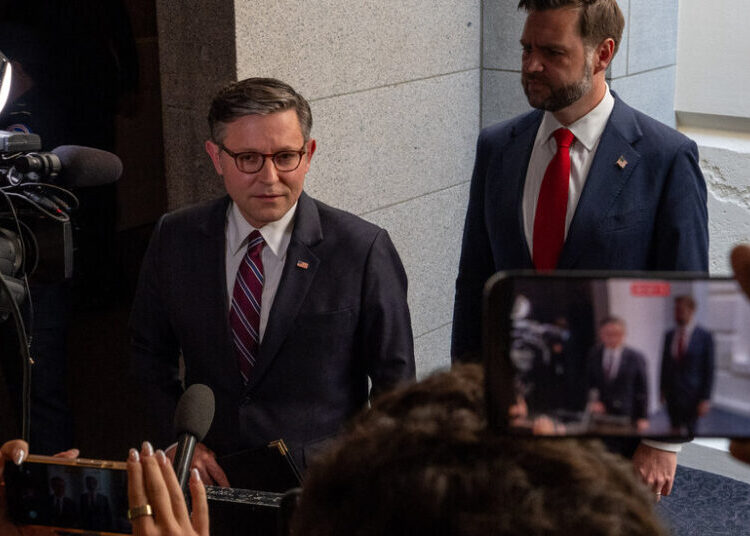
But that’s not the same as making them all make sense together in one 11-minute show. Halftime opened with Madonna singing her Y2K hit “Music” amid dancers decked out to look like skaters and/or revelers at some kind of underground club—a safe but solid, vintage-Madge start. Almost immediately after she parked her dune buggy and walked out into the stadium, flanked by Brazilian soccer icons Ronaldinho and Ronaldo, the scene shifted. As a giant ground covering with a rainbow-colored globe at its center stretched out across the field, Venezuelan conductor Gustavo Dudamel led the New York Philharmonic, the Simón Bolívar Symphony Orchestra of Venezuela, and, why not, the Muppets in an instrumental rendition of the White Stripes hit turned jock jam “Seven Nation Army.” Then, suddenly, members of BTS started showing up in red, black, and white, to serenade the masses with their international smash “Dynamite” as dancers fanned out around them and lyrics flashed across screens in the stands.
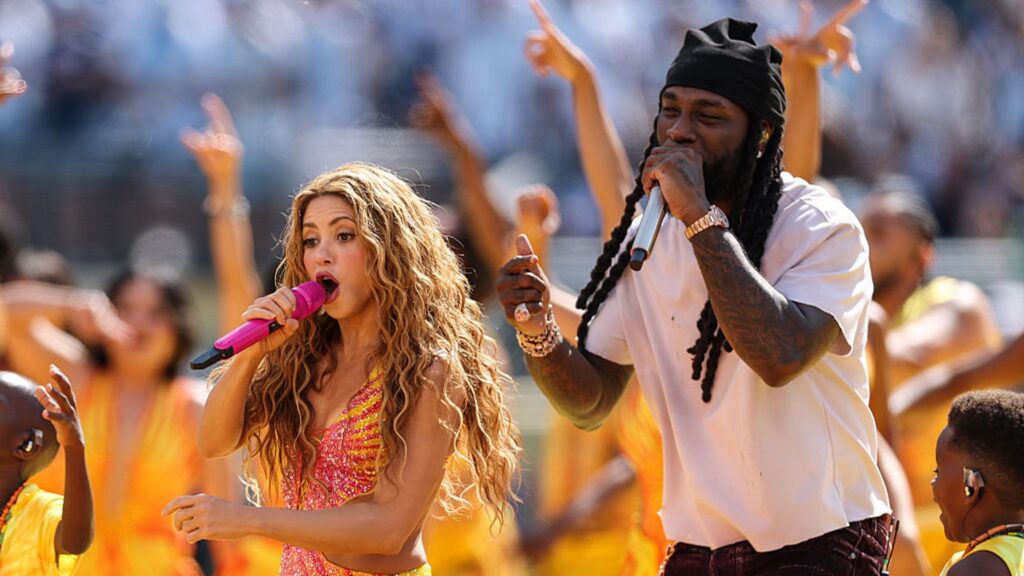
All of the above happened within less than five minutes, so maybe the halftime show earned the halftime break of its own that was inserted at that point. Surprise guests Jason Sudeikis and Brendan Hunt, appearing as their respective characters Ted Lasso and Coach Beard, strolled the sidelines, just in time for Ted Lasso’s return next month. For some reason, Ted gave Justin Bieber a pep talk before Canada’s pop prince took the field with an acoustic guitar and a bushy beard for a performance of his stripped-down ballad “Everything Hallelujah”—a song whose vague expression of gratitude suited the event’s nonspecific, studiously apolitical agenda of uplift. (You could call it the Good Vibes Only Halftime Show, if only there weren’t so many preexisting bad vibes.) As TV cameras framed Bieber in closeup, I had to wonder what anyone in the stadium was getting out of his solo act. But Shakira and the Nigerian star Burna Boy brought the energy up with their World Cup anthem “Dai Dai” and the Ugandan youth dance crew Ghetto Kids. It was, in its pure exuberance, the show’s finest moment. New York’s PS22 Chorus were sweet enough, closing out the show with more Muppets and a new Coldplay track, “We Dance.” But there were so many people on the field by then, urging us in song to embrace that bland panacea love, it took me a while to spot Martin and his band in the background.
It was certainly an improvement over the halftime show at last year’s Club World Cup—which took place at the same venue, was also curated by Martin, and featured J. Balvin and Doja Cat—which was widely seen as a dry run for Sunday’s event. Set on a stage at the very highest level of the stands, that similarly crowded performance looked like a Grammys medley on video but must have resembled ants scurrying around a screensaver to much of the in-person audience. This one was clearly conceived with both TV audiences and the people who paid thousands to be in the stadium in mind, even if its tie-dye-tarp aesthetic was kind of hokey.
From an artistic perspective, though, the halftime show did so much that it ended up saying nothing. Compare it to Bad Bunny’s personal, culturally specific, politically resonant, and wildly entertaining Super Bowl performance, and FIFA’s first World Cup final entertainment interlude comes out looking like a commercial for some undated edition of the Now That’s What I Call Music! compilation series. Which is, of course, to be expected of a production charged with representing the whole world and not making anyone mad. Now that’s what I call a letdown.
The post The World Cup’s First Halftime Show Did Too Much and Meant Too Little appeared first on TIME.