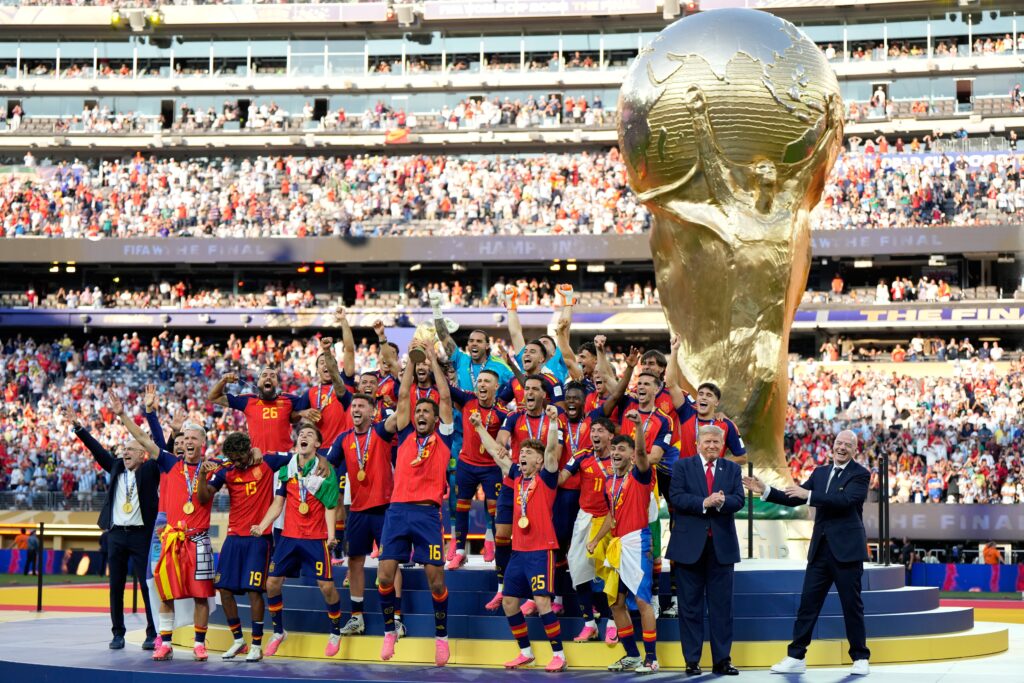
New York and New Jersey planned to spend roughly a half billion dollars hosting eight World Cup matches, including today’s final. But once it’s over, lawmakers in both states want to know if they got their money’s worth.
In New York City, Councilmember Virginia Maloney, who leads the chamber’s committee on economic development, is going to lead that examination.
“First I want to make sure we recouped our cost,” she said in an interview on Friday at a coffee shop in her Manhattan district, which includes the Upper East Side. “I’m not confident we can say that.”
She said data seems mixed on how well hotels did because of the World Cup. Bookings initially appeared low, but it seems like hotels recovered closer to the matches. However, it’s not clear if that’s because of the World Cup or the other major events happening this summer in the city, including the July 4th festivities and the Knicks’ championship win — which means an analysis will have to try to untangle what economic activity happened because of the World Cup and what would have happened anyway.
“What is irrefutable is that bars and restaurants were seeing a lot more activity and action in New York, and that translates into real economic benefit for New Yorkers,” Maloney said.
Maloney attributes that to a lot of things, including a law signed by Gov. Kathy Hochul to temporarily extend hours for bars and restaurants.
One report from the Queens Chamber of Commerce found a 30 percent increase in businesses for people going out to drink and eat.
“The economic benefit was not necessarily people who were going to the World Cup, but just people participating in the summer of New York, going to all five boroughs to celebrate or be out together,” she said.
The host committee released a study last summer predicting $3.3 billion in economic impact across New York and New Jersey, including about $432 million in state and local tax revenues.
Maloney worried about rosy projections from FIFA and its boosters compared to the reality on the ground. A preliminary study by the host committee of just the group stage found $1.2 billion in direct economic impact, Bloomberg reported.
Maloney views the experience as a learning opportunity for other big events the city puts on, including future political conventions and the 2042 Olympics, which the state and city are exploring a bid for.
“It should be something that you can make a playbook out of, not where you’re starting from scratch every time there’s a major event,” Maloney said.
The post New York, New Jersey to examine whether World Cup funds were money well spent appeared first on Politico.